Consumer Spending Indicators and Market Leadership Dynamics: Navigating Economic Uncertainty in 2026
Unlock More Features
Login to access AI-powered analysis, deep research reports and more advanced features
About us: Ginlix AI is the AI Investment Copilot powered by real data, bridging advanced AI with professional financial databases to provide verifiable, truth-based answers. Please use the chat box below to ask any financial question.
Related Stocks
The ratio between consumer discretionary and consumer staples stocks serves as a meaningful barometer of investor sentiment toward economic growth. According to StoneX research, this ratio “reflects how investors are positioning for growth or slowdown” [3]. When the ratio rises, it signals confidence in economic expansion and willingness to invest in cyclical consumer spending. Conversely, a declining ratio suggests risk aversion and anticipation of economic weakness, as investors rotate toward defensive staples that maintain demand regardless of economic conditions.
The latest sector performance data reveals a striking divergence that validates Dawson’s monitoring framework [4]:
| Sector | Daily Change | Interpretation |
|---|---|---|
| Consumer Cyclical (Discretionary) | -0.19% | Under pressure |
| Consumer Defensive (Staples) | +0.91% | Outperforming defensively |
| Technology | -0.95% | Growth concerns |
| Financial Services | -2.26% | Risk aversion |
This pattern—where staples are outperforming discretionary while risk-sensitive sectors decline—suggests a rotation toward defensive positioning that market participants should monitor closely. The Consumer Staples Select Sector SPDR Fund (XLP) has risen approximately 13% year-to-date through early February 2026, marking one of its strongest starts in over a decade [9].
Intermarket analysis, particularly high-yield (junk bond) spreads, provides critical insight into credit market conditions and systemic risk perception. According to Janus Henderson’s 2026 high-yield outlook, credit spreads “remain tight on average, reflective of generally favourable corporate conditions” [5]. Key metrics include:
- Default rates: The par-weighted global default rate on high-yield bonds stood at1.7%as of November 2025, well below the 20-year average of 3.6% [5]
- Spread levels: BB-rated bonds are near their tightest levels, though CCC-or-lower spreads widened during 2025 [5]
- Yields: U.S. high-yield bonds averaged6.7%yields at end-November 2025 [5]
- Investment-grade spreads: Bloomberg data indicates U.S. high-grade corporate bond spreads tightened to just 71 basis points—a fresh three-decade low—in January 2026 [6]
These tight spreads, while currently indicating benign credit conditions, may also suggest compressed risk premiums that could deteriorate rapidly if economic fundamentals weaken. This creates a potential vulnerability if the anticipated consumer spending slowdown materializes more sharply than expected.
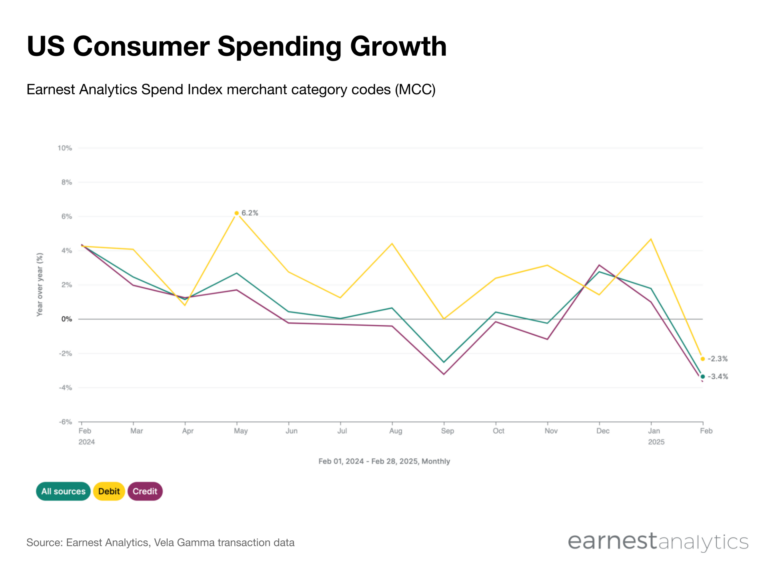
The significance of consumer spending as Dawson’s focal point is underscored by economic forecasts:
- Deloitte’s U.S. Economic Forecastprojects1.9% GDP growth in 2026, down from an anticipated 2% in 2025, with a “pronounced slowdown in consumer spending” as a contributing factor [7]
- Morningstar’s recession indicator analysisnotes that despite Fed tightening, “credit spreads have remained positive and therefore are not indicative of a recession” as of Q3 2025 data [8]
- The CBO projects inflation (PCE price index) will slow from 2.8% in 2025 to 2.7% in 2026, while GDP growth remains positive albeit moderating [14]
The competitive landscape among consumer-facing sectors is undergoing significant restructuring that merits close attention from market participants:
-
Consumer Staples Revival: After struggling in 2025, Fidelity’s sector outlook notes that “fiscal stimulus and easing sector-specific pressure” could boost staples demand and valuations in 2026 [10]. The defensive sector, long overshadowed by AI-driven growth stocks, is experiencing renewed investor interest. Fidelity identifies specific mispricing opportunities in staples, citing Mondelez International (MDLZ), Keurig Dr Pepper (KDP), Energizer Holdings (ENR), and Kenvue (KVUE) as potential beneficiaries of mean reversion [10].
-
Consumer Discretionary Pressure: According to Apollo Academy analysis, consumer discretionary stocks had been outperforming staples through mid-2025, but the dynamic has shifted [11]. The sector faces headwinds from high valuations following the 2024-2025 AI-driven market rally and shifting consumer spending patterns.
-
Morgan Stanley’s Defensive Rotation: Morgan Stanley and other analysts note a “rotation into consumer staples” as investors seek defensive strength amid uncertainty [9]. This rotation is particularly notable given technology’s previous dominance, suggesting a meaningful shift in market leadership dynamics.
The divergence between tight credit spreads (indicating confidence) and weakening leading indicators (suggesting slowdown) represents a critical tension for analysts to monitor. The 10-2 Treasury yield spread—a traditional recession predictor—remains a “reliable leading indicator” despite recent volatility [12]. The trade wars of early 2025 may have accelerated recession timing according to some analysts [13], creating additional uncertainty around the economic trajectory.
-
Consumer Spending Slowdown: Deloitte’s projection of “pronounced slowdown in consumer spending” in 2026 poses a meaningful risk to economic growth given consumer spending’s 67% weight in GDP [7]. Companies heavily reliant on discretionary consumer spending may face revenue pressures.
-
Compressed Risk Premiums: While high-yield spreads remain historically tight, this compression may leave markets vulnerable to rapid deterioration if economic fundamentals weaken more than currently anticipated [5][6]. The current benign credit conditions could reverse quickly under adverse scenarios.
-
Valuation Vulnerability: Consumer discretionary stocks face headwinds from elevated valuations following the 2024-2025 AI-driven market rally. Any earnings disappointment could trigger significant corrections in this sector.
-
GLP-1 Drug Impact: Weight-loss drugs are affecting food and beverage consumption patterns, creating uncertainty for certain consumer staples categories regarding volume and product mix impacts.
-
Defensive Sector Outperformance: The emerging rotation into consumer staples presents opportunities for investors seeking quality defensive exposure. Companies with strong balance sheets and sustainable dividend yields (typically 3-4%) may offer attractive risk-adjusted returns [10].
-
Mean Reversion Potential: Fidelity identifies several staples companies trading at depressed valuations relative to historical norms, potentially offering upside as the sector rotation matures [10].
-
Credit Market Stability: Low default rates (1.7% vs. 3.6% 20-year average) and tight spreads suggest corporate fundamentals remain sound, providing a supportive backdrop for credit-sensitive strategies [5].
-
Fed Policy Support: Expected continued rate cuts from the Federal Reserve provide monetary policy support for economic growth and risk assets [14].
The analysis reveals several interconnected themes that market participants should integrate into their frameworks:
[0] Ginlix Analytical Database - Market Sector Performance Data
[1] YouTube - “Why the Consumer is a Critical Indicator to Watch for Any Economic Downturn” (Cameron Dawson, NewEdge Wealth CIO)
[2] Financial Content - “LEI Index Slips 0.3% as US Economy Navigates a Fragile 2026 Start”
[3] StoneX - “Recession: Warnings, Context and Leading Indicators”
[4] Ginlix Analytical Database - Sector Performance Analysis (2026-02-11)
[5] Janus Henderson - “High Yield Bonds Outlook: Increasing Selectivity in 2026”
[6] Bloomberg - “US High-Grade Corporate Bond Spreads Hit Fresh Three Decade Low” (January 22, 2026)
[7] Deloitte - “United States Economic Forecast Q3 2025”
[8] Morningstar - “The Advisor’s Cheat Sheet to Recession Indicators”
[9] Yahoo Finance - “The Rotation into Consumer Staples: Defensive Strength in an Uncertain 2026”
[10] Fidelity Investments - “Consumer Staples Sector Outlook”
[11] Apollo Academy - “Consumer Discretionary Stocks Outperforming Consumer Staples” (Chart Analysis)
[12] Advisor Perspectives - “Treasury Yields Snapshot: February 6, 2026”
[13] First Tuesday Journal - “Using the Yield Spread to Forecast Recessions and Recoveries”
[14] CBO - “The Budget and Economic Outlook: 2026 to 2036”
Insights are generated using AI models and historical data for informational purposes only. They do not constitute investment advice or recommendations. Past performance is not indicative of future results.
About us: Ginlix AI is the AI Investment Copilot powered by real data, bridging advanced AI with professional financial databases to provide verifiable, truth-based answers. Please use the chat box below to ask any financial question.