Options Volatility & "Mag 10" Trading Trends: February 12, 2026 Market Analysis
Unlock More Features
Login to access AI-powered analysis, deep research reports and more advanced features
About us: Ginlix AI is the AI Investment Copilot powered by real data, bridging advanced AI with professional financial databases to provide verifiable, truth-based answers. Please use the chat box below to ask any financial question.
Related Stocks
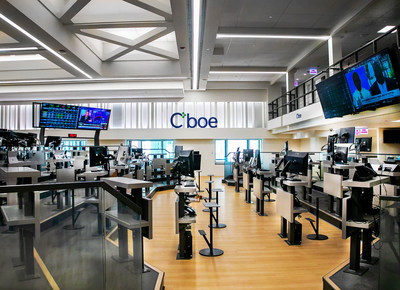
The options market is experiencing unprecedented activity levels on February 12, 2026, with Henry Schwartz, Vice President of Market Intelligence at Cboe Global Markets, highlighting record participation across stocks, ETFs, and indices [1]. This surge in options trading volume coincides with a period of significant sector rotation, as investors shift allocations from growth-oriented technology stocks toward defensive and value-oriented positions. The heightened volatility environment creates both opportunities and risks for traders and investors navigating the Mag 10 derivatives landscape.
The Magnificent 10 Index (MGTN) represents Cboe’s newest derivatives product, officially launched on December 8, 2025, providing institutional and retail investors with a mechanism to trade broad technology sector sentiment through a single, equal-weighted instrument [2]. This innovation arrives at a critical juncture, as individual Mag 10 constituents face company-specific headwinds while the broader tech sector experiences sustained pressure from macroeconomic factors including Federal Reserve policy expectations and valuation concerns.
Tesla shares traded at $417.07, representing a 2.62% decline on the session with substantial trading volume of 61.13 million shares [0]. The stock currently trades within its 52-week range of $214.25 to $498.83, reflecting continued volatility as investors digest the impending Full Self-Driving purchasing option closure effective February 14, 2025 [5]. This transition to a subscription-only model targets Elon Musk’s publicly stated goal of achieving 10 million active FSD subscriptions, a milestone that would unlock additional compensation tranches under his compensation package arrangement.
The technical analysis reveals Tesla trading in a sideways pattern between established support at $409.06 and resistance at $425.78, with the stock’s beta of 1.89 indicating moderate sensitivity to broader market movements [0]. Tesla’s elevated price-to-earnings ratio of 249.74 suggests the market maintains high expectations for future growth, making the company particularly vulnerable to any disappointment in execution or macroeconomic developments that could delay adoption timelines.
Nvidia demonstrated relative resilience compared to its Mag 10 peers, declining only 1.64% to trade at $186.94 with robust volume of 186.29 million shares [0]. The stock’s 52-week range spans $86.62 to $212.19, and notably, current levels remain significantly above the 52-week low, suggesting some underlying support exists despite broader tech sector weakness. However, Nvidia’s elevated beta of 2.31 indicates the highest sensitivity to market movements among the highlighted stocks, meaning the company could experience amplified moves in either direction.
The technical indicators for Nvidia show no clear trend signals, with MACD indicating neutral conditions and KDJ indicators demonstrating bullish momentum within normal trading ranges [0]. Key support resides at $183.73, with resistance at $190.15, establishing a relatively tight trading range that market participants appear to be respecting.
Netflix experienced the sharpest decline among the Mag 10 stocks highlighted, falling 4.72% to $75.86 and hitting a new 52-week low at $75.23 during the session [0][4]. The dramatic selloff reflects escalating regulatory uncertainty surrounding Netflix’s proposed $82.7 billion acquisition of Warner Bros. Discovery, following the Department of Justice’s ousting of antitrust chief Gail Slater, who had been actively reviewing the transaction [4].
Activist investor Ancora Holdings has publicly opposed the Netflix-WBD deal, instead favoring Paramount Global’s rival takeover bid valued at $30 per share [4]. This combination of regulatory ambiguity and activist opposition creates binary outcome risk for Netflix shareholders, as the merger’s success or failure would fundamentally reshape the company’s competitive positioning in the streaming landscape. The Communication Services sector, which contains Netflix, declined 2.16% on the session, compounding company-specific headwinds with broader sector rotation pressures [0].
Palantir shares declined 4.83% to $129.13, also reaching a new 52-week low, with the stock’s 52-week range spanning $66.12 to $207.52 [0]. The selling pressure intensified following Michael Burry—the famed “Big Short” investor—unveiling a comprehensive bearish thesis suggesting fair value could be as low as $46 per share, representing approximately 66% downside from current levels [3].
Burry’s analysis highlighted several concerning characteristics including aggressive accounting practices allegedly inflating gross margins, elevated stock-based compensation relative to revenue, and over $450 million in pandemic-era losses from SPAC investments [3]. The thesis challenges the sustainability of Palantir’s AI-driven growth narrative, suggesting the market may be extrapolating current momentum too aggressively. Despite these concerns, Palantir received a tailwind on February 12, 2026, when the Defense Information Systems Agency (DISA) authorized the use of Palantir’s Foundational Cloud Services (PFCS Forward) for government applications [7], providing some counterbalance to the bearish thesis.
Friday’s U.S. jobs data release significantly influenced market dynamics, with strong employment figures reducing expectations for aggressive Federal Reserve interest rate cuts [3]. This development particularly pressures AI and growth-oriented technology stocks, as higher-for-longer interest rate scenarios increase the discount rate applied to future earnings and reduce the present value of growth stock valuations. The rotation from growth to value reflects this shifting macroeconomic calculus, with investors repositioning for an environment where rate relief may arrive more gradually than previously anticipated.
The technology sector’s 2.39% decline represented the second-worst sector performance on February 12, 2026, while Consumer Cyclical (containing Tesla) dropped 2.88% [0]. In contrast, major indices showed significant divergence: the Dow Jones Industrial gained 5.11% over the 60-day period, the Russell 2000 surged 9.83%, the S&P 500 rose 1.79%, while the NASDAQ Composite declined 0.85% [0]. This divergence clearly illustrates the ongoing rotation from growth and technology exposures toward value and cyclical positions, a dynamic that may persist if economic data continues to support a moderate Federal Reserve trajectory.
The expiration of approximately $2.6 billion in Bitcoin and Ethereum options introduces additional market volatility potential, with implied volatility surging to 100% [6]. Bitcoin trading near $64,686—significantly below the max pain level of $80,000—creates potential for significant post-expiry price swings that could spill over into equity markets given the increasing correlation between crypto and risk asset valuations.
The MGTN Index tracks 10 technology and growth-oriented U.S. stocks, including Apple, Amazon, Alphabet, Meta, Microsoft, Nvidia, and Tesla among its constituents [2]. The index’s equal-weighted methodology reduces concentration risk compared to market-capitalization-weighted alternatives, while the cash-settled options and futures products provide flexibility for various trading strategies.
Key product features include 24/5 trading availability through Global Trading Hours for futures, enabling around-the-clock position management [2]. Henry Schwartz has been prominently featured in Cboe’s educational content marketing the MGTN product suite, emphasizing its utility for traders seeking to express views on broad technology sector sentiment through a single derivatives instrument rather than managing multiple individual stock positions.
The simultaneous weakness across Mag 10 stocks, combined with elevated options activity and crypto volatility, suggests a coordinated risk-off sentiment pervading the market. Options data indicates that traders are increasingly using protective strategies across the technology sector, consistent with repositioning for continued volatility rather than mean reversion. The concentrated selling in high-profile growth names indicates institutional portfolio rebalancing rather than company-specific fundamental deterioration alone.
The Netflix-WBD merger uncertainty and Palantir accounting concerns highlight expanding regulatory and governance risk premia across the market. The DOJ’s involvement in the Netflix transaction signals continued scrutiny of large-scale media consolidation, while Burry’s Palantir thesis reflects growing attention to accounting practices in high-growth technology companies. These developments may increase compliance costs and due diligence requirements for market participants evaluating growth-oriented investments.
Cboe’s launch of the MGTN Index derivatives responds to investor demand for efficient exposure to technology sector performance. The equal-weighted approach and cash-settlement features address specific pain points identified in existing products, suggesting derivatives exchanges are innovating to capture growing options trading volumes amid heightened volatility environments.
The crypto options expiry on February 12, 2026, introduces immediate volatility potential that may affect equity markets [6]. Tesla’s FSD purchasing option closure effective February 14 represents a near-term catalyst that could influence Tesla options dynamics [5]. The DOJ’s timeline for the Netflix-WBD merger review remains unclear, creating ongoing uncertainty that may persist for several weeks or months [4].
The February 12, 2026 options market activity report from Cboe Global Markets highlights significant selling pressure across the “Mag 10” technology stocks, with Netflix and Palantir reaching new 52-week lows amid company-specific headwinds [0][1]. Michael Burry’s bearish Palantir thesis suggests fair value could be 66% below current levels based on accounting and growth sustainability concerns [3]. Netflix faces regulatory uncertainty regarding its $82.7 billion Warner Bros. Discovery acquisition following DOJ leadership changes [4]. Tesla’s transition to FSD subscription-only purchasing effective February 14 targets 10 million subscription milestone [5]. The $2.6 billion crypto options expiry with implied volatility at 100% creates near-term volatility potential [6]. Cboe’s Magnificent 10 Index (MGTN), launched December 2025, offers equal-weighted tech exposure through cash-settled derivatives [2]. Palantir received DISA government services authorization as a partial counterbalance to bearish concerns [7]. The technology sector declined 2.39% amid broader rotation from growth to value, with the NASDAQ falling 0.85% over 60 days while the Russell 2000 gained 9.83% [0]. Technical analysis shows Tesla and Nvidia trading in sideways ranges without clear trend signals, with beta metrics indicating elevated sensitivity to market movements [0].
Insights are generated using AI models and historical data for informational purposes only. They do not constitute investment advice or recommendations. Past performance is not indicative of future results.
About us: Ginlix AI is the AI Investment Copilot powered by real data, bridging advanced AI with professional financial databases to provide verifiable, truth-based answers. Please use the chat box below to ask any financial question.