Vale's Q4 2024 Loss and Iron Ore Market Implications
Unlock More Features
Login to access AI-powered analysis, deep research reports and more advanced features
About us: Ginlix AI is the AI Investment Copilot powered by real data, bridging advanced AI with professional financial databases to provide verifiable, truth-based answers. Please use the chat box below to ask any financial question.
Related Stocks
Based on my comprehensive research, here is a detailed analysis of the factors behind Vale’s Q4 loss and their implications for iron ore market sentiment.
Vale S.A. reported a shocking Q4 2024 net loss of
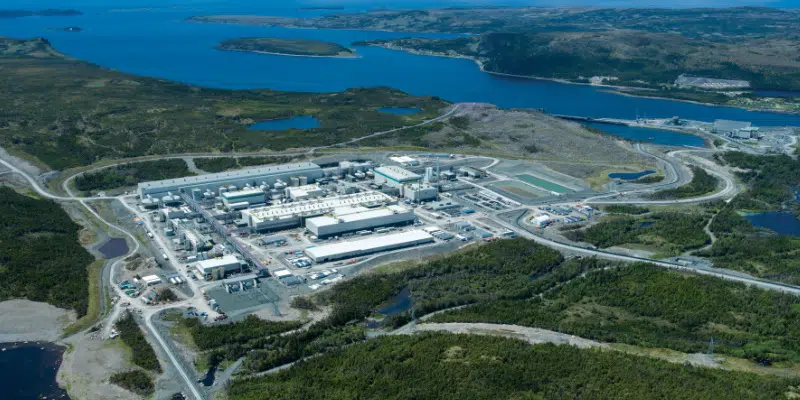
The largest contributors to Vale’s Q4 loss were significant impairment charges on base metals assets in Canada:
| Impairment Type | Amount | Asset/Operation |
|---|---|---|
| Thompson Nickel Belt | $1.4 billion | Canadian nickel operations |
| Voisey’s Bay Mine Extension | $540 million | Canadian mining extension |
| Brumadinho Dam Provisions | $396 million | Dam decharacterization costs |
These impairments alone totaled approximately
Vale’s iron ore segment faced meaningful headwinds during Q4:
- Production decline: Iron ore output fell4.6% year-over-yearto approximately 85 million tonnes, reflecting the company’s strategic shift toward higher-margin products [4]
- Sales volume collapse: Iron ore fines sales declined10% year-over-yearto 69.9 million tonnes, with pellet sales down 2% to around 10 million tonnes
- Total sales drop: Combined iron ore sales fell 10% year-over-year to 81.2 million tonnes
The reduction in sales was attributed to portfolio optimization based on market conditions, with high-silica products redirected to Chinese concentration plants [4].
Iron ore prices experienced significant pressure during Q4 2024:
- Prices softened after shipment risks were repriced lower
- The quarter closed around $105 per tonne, down from approximately $130 at the start of 2024
- Fitch’s BMI Research maintained a 2025 annual average forecast of $100/tonne[5]
This pricing environment directly impacted Vale’s revenue generation capacity despite producing its highest annual iron ore output since 2018.
Vale’s adjusted metrics showed severe deterioration:
| Metric | Q4 2024 | Change |
|---|---|---|
| EBITDA | $3.79 billion | -41% YoY |
| Adjusted EBIT | Significant decline | -21% YoY |
| Net Revenue | $10.1 billion (IFRS) | -22% YoY |
Excluding impairment charges, Vale would have reported net profit of approximately $872 million—still representing a
Vale’s results have reinforced the bearish sentiment prevailing in iron ore markets:
- Price forecasts have narrowed downward: Steelhome consultancy expects prices to range between$75-$120 per tonnein 2025, compared to $88-$144 in 2024 [6]
- Morgan Stanley’s base case: Iron ore prices averaging approximately$100 per tonnein 2026, with a trough near $95 per tonne in Q3 as the market moves into surplus [7]
- UBS outlook: Base case assumes a moderate surplus with prices holding around$95-100 per tonne[6]
Several structural factors are weighing on sentiment:
| Factor | Impact |
|---|---|
| Australian supply growth (+20 Mt) | Rio Tinto, Fortescue, and Mineral Resources increasing output |
| Vale’s 2025 guidance (325-335 Mt) | Continued strong Brazilian supply |
| Simandou project (Guinea) | Giant new project launching later in 2025 |
| Chinese stockpiling | Port inventories expected to reach 170 million tonnes |
These supply increases come amid
China’s role remains central to sentiment:
- Resilient imports: Despite weaker domestic steel demand, China’s iron ore imports are projected to hit arecord 1.27 billion tonnesin 2025, up 10-40 million tonnes from 2024 [6]
- Property sector weakness: The protracted property crisis continues to limit steel consumption
- Policy uncertainty: Potential yuan depreciation and push for electric-arc furnaces could reduce import demand [6]
Vale’s results have implications beyond the company itself:
- VALE stock performance: The shares have declined approximately19.6%over the October 2024 to February 2025 period, currently trading around$9.56with significant volatility [8]
- Analyst sentiment: BofA named Vale a top pick for 2026 after the stock rallied 47% in 2025, but the Q4 loss may temper enthusiasm [9]
- Sector-wide implications: Results from major producers (Rio Tinto also reported 1% production decline) suggest broader industry challenges [4]
- Dam remediation costs: Ongoing Brumadinho decharacterization provisions will continue affecting results
- Nickel market weakness: Impairments on Canadian assets reflect structural challenges in base metals
- Price volatility: Iron ore remains susceptible to Chinese policy surprises and supply disruptions
- China stimulus measures: Any significant infrastructure or property sector support could boost demand
- Production optimization: Vale’s shift toward higher-margin products may improve profitability
- Cost discipline: Continued focus on operational efficiency could offset price weakness
The convergence of Vale’s operational challenges and broader market oversupply concerns suggests
- Q1 2025 production updates for evidence of operational stabilization
- Chinese policy developments for demand signals
- Iron ore price movements relative to the $95-100 per tonne cost support level
Vale’s unexpected Q4 loss stemmed primarily from substantial asset impairments (notably Canadian nickel operations) combined with declining iron ore production and weakening prices. These factors collectively reflect broader structural challenges in the iron ore market, including oversupply concerns from Australia and new projects like Simandou, against a backdrop of only modestly declining steel demand.
The market sentiment has shifted decidedly bearish, with most analysts projecting iron ore prices to average between
[1] Vale Q4 Financial Results Coverage - Multiple financial news sources
[2] Mining Technology - “Vale reports $694m loss in Q4 financial results” (https://www.mining-technology.com/news/vale-q4-financial-results/)
[3] Latibex - “Vale’s Performance in 4Q24 and 2024” (https://www.latibex.com/docs/Documentos/esp/hechosrelev/2025/Vale’s Performance in 4Q24 and 2024.pdf)
[4] Nasdaq - “Vale Q4 Iron Ore Output Declines Y/Y, Copper & Nickel Rise” (https://www.nasdaq.com/articles/vale-q4-iron-ore-output-declines-y-y-copper-nickel-rise)
[5] MSN/Bloomberg - “Commodities Roundup: Bearish iron ore demand outlook” (https://www.msn.com/en-us/money/markets/commodity-roundup-bearish-iron-ore-demand-outlook-to-drag-on-prices-in-2025-bmi-says/ar-AA1EKA11)
[6] Reuters - “China’s 2025 iron ore imports set to hit new high even as steel demand dwindles” (https://www.reuters.com/markets/commodities/chinas-2025-iron-ore-imports-set-hit-new-high-even-steel-demand-dwindles-2025-01-02/)
[7] Yahoo Finance - “Can iron ore hold its floor amid new supply and cooling China engine?” (https://finance.yahoo.com/news/iron-ore-hold-floor-amid-093003160.html)
[8] Ginlix API Data - VALE stock price analysis
[9] Yahoo Finance - “BofA Names Vale (VALE) a Top Pick for 2026” (https://finance.yahoo.com/news/bofa-names-vale-vale-top-093439094.html)
Insights are generated using AI models and historical data for informational purposes only. They do not constitute investment advice or recommendations. Past performance is not indicative of future results.
About us: Ginlix AI is the AI Investment Copilot powered by real data, bridging advanced AI with professional financial databases to provide verifiable, truth-based answers. Please use the chat box below to ask any financial question.