Trump Administration USMCA Withdrawal Consideration: Stephen Moore Interview Analysis
Unlock More Features
Login to access AI-powered analysis, deep research reports and more advanced features
About us: Ginlix AI is the AI Investment Copilot powered by real data, bridging advanced AI with professional financial databases to provide verifiable, truth-based answers. Please use the chat box below to ask any financial question.
Related Stocks
This analysis synthesizes the Fox Business interview with Stephen Moore alongside broader market and political developments surrounding USMCA trade policy. The event represents a significant moment in the ongoing debate over US trade policy direction under the Trump administration.
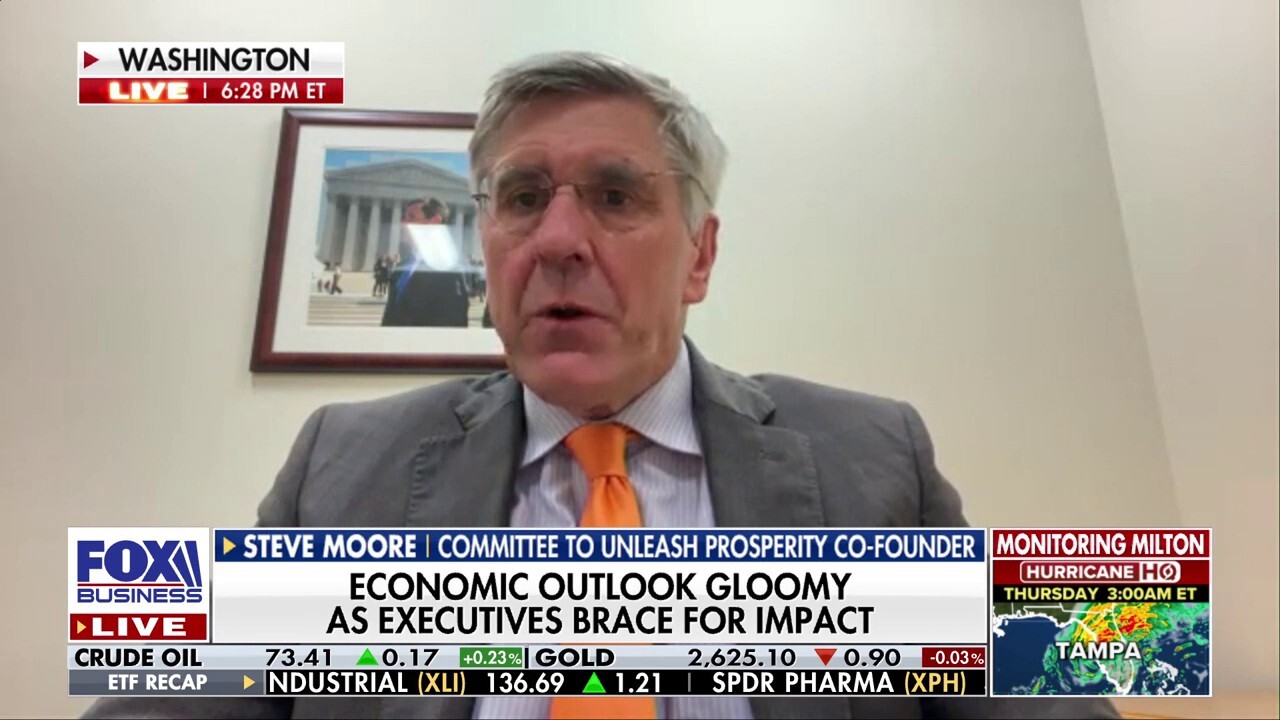
Stephen Moore’s appearance on “The Bottom Line” serves as an administration-aligned perspective on what withdrawal from USMCA would mean for the US economy [4]. His characterization of Trump’s approach as “realigning” the economy suggests the administration views tariff actions as strategic repositioning rather than mere protectionism. This messaging comes at a critical juncture, as President Trump is reportedly privately considering withdrawing from USMCA before the July 1, 2026 mandatory review deadline [1].
The market context is particularly noteworthy. Today’s significant selloff, with the S&P 500 falling 1.79% and NASDAQ dropping 2.36%, may partially reflect investor concerns about trade policy uncertainty [0]. The timing of Moore’s interview, appearing in the overnight hours following this market turbulence, suggests an effort to shape the narrative around the administration’s trade policies.
The political landscape presents a complex picture. Senate Republicans, led by Finance Chair Mike Crapo, have publicly opposed USMCA withdrawal, creating a potential governance conflict [2]. This congressional opposition provides a significant check on the administration’s ability to follow through with withdrawal, as the USMCA was negotiated and ratified with strong bipartisan support.
Moore’s support for the tariff strategy as “paying off” [3] contrasts with market reactions and congressional concerns, highlighting the divergent perspectives on trade policy effectiveness. The analysis suggests the administration views these tariffs primarily as negotiating leverage rather than permanent policy, though the actual trajectory remains uncertain.
This analysis presents informational findings based on the Fox Business interview with Stephen Moore and related developments:
- Stephen Moore characterized Trump’s trade policy as successful “realigning” of the US economy during a Fox Business “The Bottom Line” interview [4]
- President Trump is privately considering withdrawing from USMCA before the July 1, 2026 mandatory review deadline [1]
- Senate Republicans have publicly opposed withdrawal, with Finance Chair Mike Crapo leading the opposition [2]
- Market volatility on February 12 showed significant declines (S&P 500 -1.79%, NASDAQ -2.36%) potentially reflecting trade policy concerns [0]
- North American trade under USMCA amounts to approximately $2 trillion in goods and services annually [1]
- The automotive sector faces particular exposure due to integrated cross-border supply chains [1]
- Moore’s support suggests administration views tariffs as negotiating leverage rather than permanent policy [3][4]
This summary provides objective context for understanding the current trade policy dynamic without prescribing specific courses of action.
Insights are generated using AI models and historical data for informational purposes only. They do not constitute investment advice or recommendations. Past performance is not indicative of future results.
About us: Ginlix AI is the AI Investment Copilot powered by real data, bridging advanced AI with professional financial databases to provide verifiable, truth-based answers. Please use the chat box below to ask any financial question.