Political Risk Premium Analysis: US-Denmark-Greenland Tensions
Unlock More Features
Login to access AI-powered analysis, deep research reports and more advanced features
About us: Ginlix AI is the AI Investment Copilot powered by real data, bridging advanced AI with professional financial databases to provide verifiable, truth-based answers. Please use the chat box below to ask any financial question.
Now I have comprehensive information to provide a detailed analysis of how geopolitical ambitions conflicting with public opinion could create political risk premiums for US-Denmark related investments.
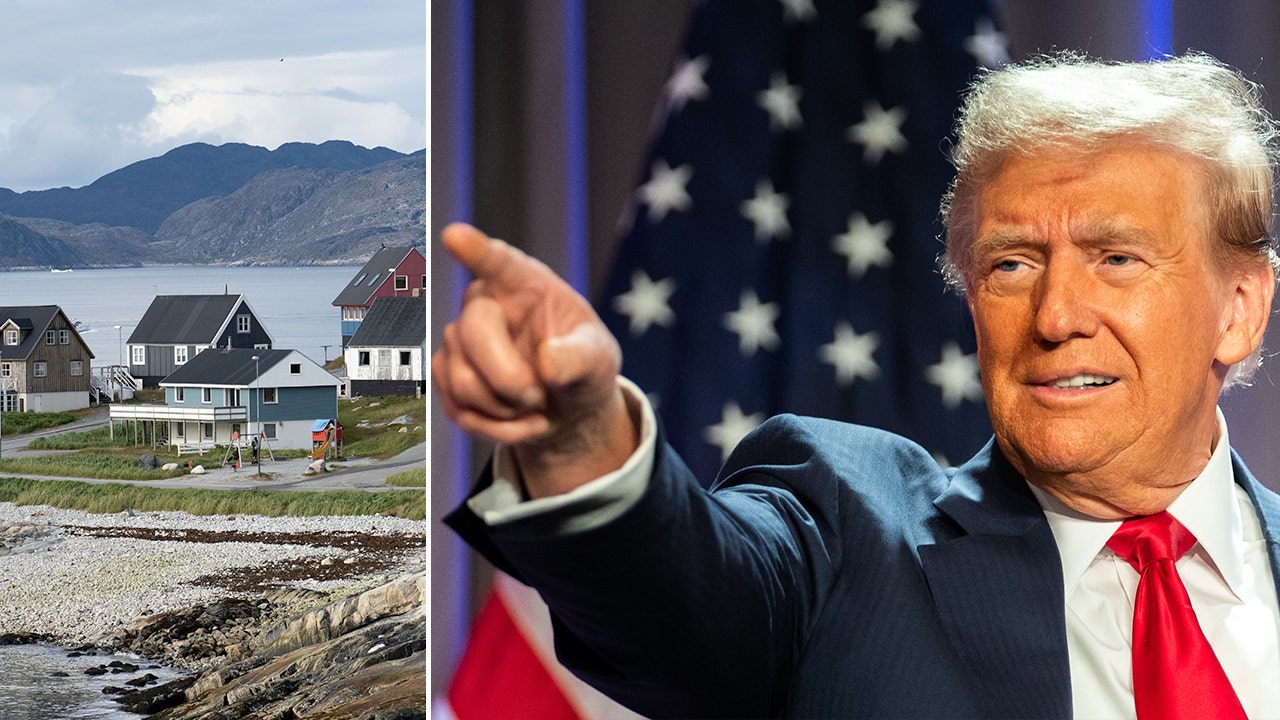
The Trump administration has repeatedly stated its intention to acquire Greenland, citing national security and economic interests. Recent polling indicates that
Denmark and the European Union have firmly rejected these ambitions. President von der Leyen has stated that “the sovereignty and integrity of the Kingdom of Denmark including Greenland is non-negotiable” [3]. In response, European allies are expected to increase military activity in Greenland to demonstrate that the island is adequately defended [3].
When geopolitical ambitions conflict with public opinion, they create
- Danish pension funds(managing $782 billion in assets, with 26% invested in the US as of March 2025) are already re-assessing their US exposure [4]
- AkademikerPension(Denmark) announced divestment of all US Treasuries in January 2026, citing “weak U.S. government finances” and higher risk [5]
- Alecta(Sweden) sold most of its US bond holdings, citing increasing risk associated with US Treasuries and policy uncertainty [5]
- Approximately 50% of Northern European clientsare considering tilting away from US assets [5]
This demonstrates how geopolitical tensions translate directly into investment decisions, raising the
The 75% public opposition to Greenland annexation creates several risk factors:
| Risk Factor | Impact on Investments |
|---|---|
Policy Instability |
Government may pursue unpopular policies, leading to political backlash and market volatility |
Diplomatic Strain |
US-Denmark relations deteriorate, affecting trade and investment agreements |
Legislative Uncertainty |
Congress is actively debating Greenland policy, creating regulatory unpredictability [6] |
Reputational Risk |
Companies associated with potentially coercive policies face consumer/investor backlash |
When political risk rises, investors demand higher returns to compensate for uncertainty. This manifests as:
- Higher yields on US debt held by risk-averse foreign investors
- Lower price-to-earnings ratios for US companies with international exposure
- Increased insurance costs (political risk insurance)
Northern European investors represent significant US asset holders. Their systematic reduction of US exposure creates selling pressure, which can:
- Weaken the US dollar (which fell ~10% against major currencies in 2025) [5]
- Increase yields on US Treasuries as demand decreases
- Create market volatility that elevates perceived risk
If the US pursues aggressive annexation policies:
- NATO cohesion could be undermined, affecting defense-related investments
- Trade agreements with Denmark/Greenland could be jeopardized
- US companies may face retaliatory measures in European markets
- Defense & Security: Increased military spending but also uncertainty about NATO’s future
- Energy: Arctic resource development becomes politicized
- Financial Services: Danish pension divestment reduces demand for US financial products
- Real Estate: Uncertainty about territorial changes affects cross-border property investments
- Diversification: Reducing US exposure in favor of less politically exposed markets
- Hedging: Using derivatives to protect against dollar volatility and political events
- Alternative Assets: Increasing allocations to gold and other hedges [5]
- Active Monitoring: Tracking public opinion trends and policy developments
The disconnect between US geopolitical ambitions regarding Greenland and strong public opposition (75% of Americans) creates a
- Direct divestment actionsby European pension funds reducing US asset holdings
- Elevated policy uncertaintydriving up required returns on US investments
- Deteriorating diplomatic relationscreating treaty and regulatory risks
- Dollar weaknessas international investors reassess US asset attractiveness
The data shows this is not merely theoretical—major Danish and Scandinavian investors have already begun reducing US exposure, with the risk premium on US assets continuing to rise as geopolitical tensions mount [5]. This represents a tangible cost of pursuing geopolitical objectives that lack public support.
[1] CNN - “75% of Americans oppose US attempting to take control of Greenland, CNN poll finds” (https://www.cnn.com/2026/01/15/politics/greenland-cnn-poll)
[2] Politico - “Most Americans oppose Trump’s push on Greenland, poll shows” (https://www.politico.com/news/2026/01/15/trump-greenland-poll-00731009)
[3] OSW Analysis - “US-Denmark-Greenland: current state of play and future scenarios” (https://www.osw.waw.pl/en/publikacje/analyses/2026-01-16/us-denmark-greenland-current-state-play-and-future-scenarios)
[4] Top1000Funds - “Danish investors shun the US but complete divestment ‘unlikely’” (https://www.top1000funds.com/2026/01/danish-investors-shun-the-us-but-complete-divestment-unlikely/)
[5] Reuters - “Big North European investors reassess US exposure as geopolitical risk mounts” (https://www.reuters.com/business/finance/big-north-european-investors-reassess-us-exposure-geopolitical-risk-mounts-2026-01-22/)
[6] Congress.gov - “Greenland, Denmark, and U.S. Relations” (https://www.congress.gov/crs-product/IN12643)
Insights are generated using AI models and historical data for informational purposes only. They do not constitute investment advice or recommendations. Past performance is not indicative of future results.
About us: Ginlix AI is the AI Investment Copilot powered by real data, bridging advanced AI with professional financial databases to provide verifiable, truth-based answers. Please use the chat box below to ask any financial question.