US Election Reform and Market Volatility Analysis 2026
Unlock More Features
Login to access AI-powered analysis, deep research reports and more advanced features
About us: Ginlix AI is the AI Investment Copilot powered by real data, bridging advanced AI with professional financial databases to provide verifiable, truth-based answers. Please use the chat box below to ask any financial question.
Based on my research, I can provide a comprehensive analysis of the potential market volatility arising from the current political uncertainty surrounding US election reforms.
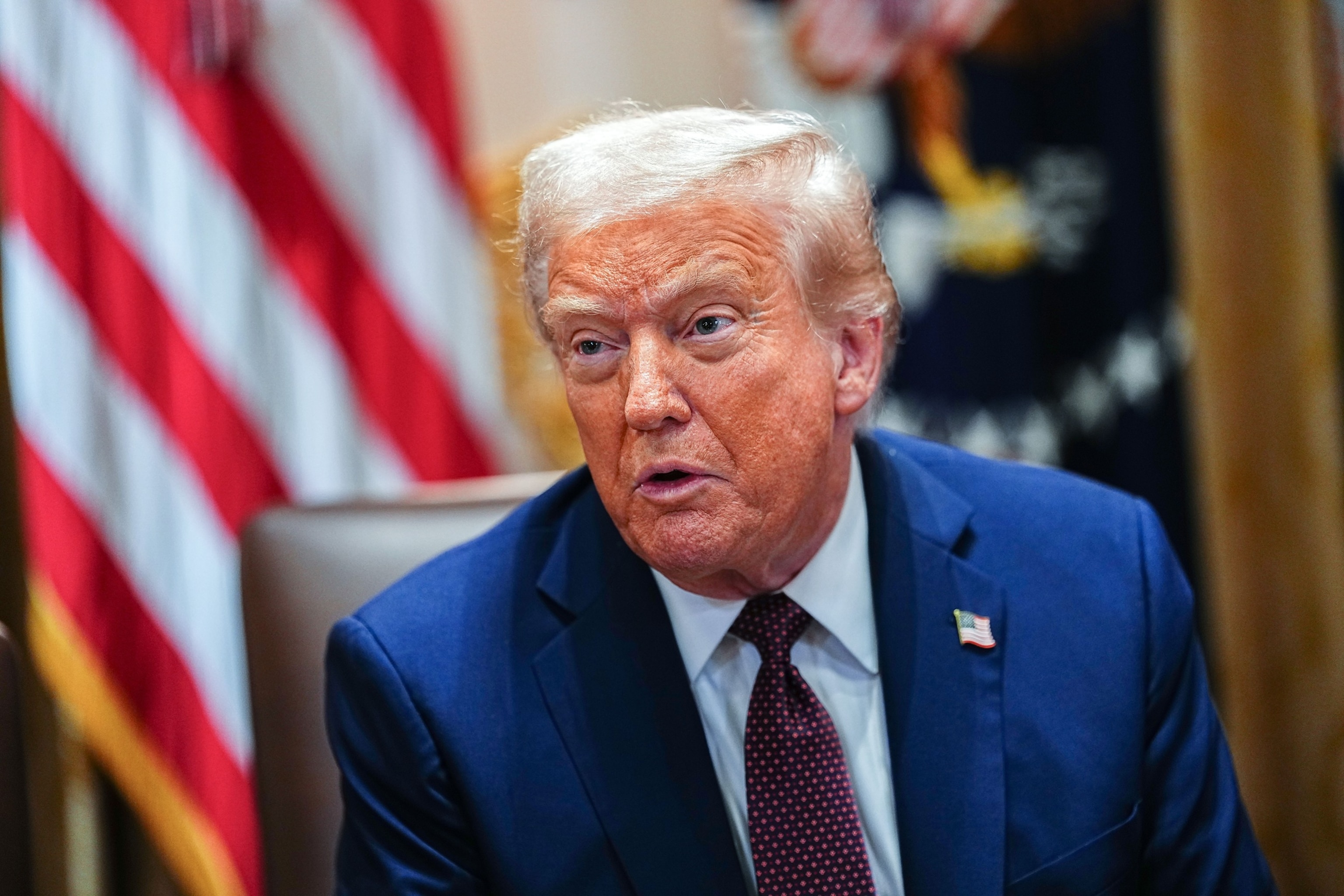
President Trump has stated he will implement voter ID verification requirements for the November 2026 midterm elections via executive order, regardless of congressional approval [1][2]. This proposal aligns with a House-passed bill requiring proof of citizenship to vote, which has passed the House twice but has not advanced in the Senate [1]. The President claims to have “searched the depths of legal arguments” for constitutional authority, though no specific legal basis has been publicly articulated.
Research demonstrates that US elections consistently generate measurable market effects. Studies covering 1992-2024 show
Key historical patterns include:
- Average S&P 500 returns in midterm election years: 4.6% (below historical averages) [6]
- Post-election rebounds: Average one-year returns following midterm elections have been 15.4% since 1950 [7]
- VIX behavior: The volatility index tends to increase approximately 44% in the weeks leading up to elections, with a subsequent 46% decrease afterward [8]
- The proposal to bypass Congress via executive order raises significant constitutional questions
- Legal challenges are virtually certain, creating regulatory uncertainty through November 2026
- No clear legal precedent exists for unilateral presidential action on voter authentication
- The Senate has not advanced the House-passed legislation, indicating partisan deadlock [1]
- This creates uncertainty about the actual implementation of any voting changes
- Questions remain about how voter ID requirements would be enforced at the state level
- Potential for conflicting state and federal directives
| Sector | Potential Impact | Reason |
|---|---|---|
Financials |
Increased volatility | Uncertainty around election administration contracts |
Technology |
Moderate impact | Potential changes to voting machine/component suppliers |
Industrials |
Sector rotation | Defense and security spending implications |
Consumer Discretionary |
Secondary effects | Broader economic policy uncertainty |
Political uncertainty typically affects markets through:
- Increased risk premiums: Investors demand higher returns for bearing political risk
- Flight to quality: Treasury bonds and defensive assets may strengthen
- Sector rotation: Away from politically sensitive sectors toward defensive positions
- Reduced corporate investment: Uncertainty may delay business capital expenditure decisions
According to the Coface political and social risk index,
- Moderate volatility increases through the election cycle
- VIX may rise 20-40% from current levels as the election approaches
- Markets likely to experience the traditional pre-election lag
- Significant legal battles could extend uncertainty beyond the election
- Executive order implementation could trigger market dislocations
- Potential for social unrest if the policy implementation becomes contentious
- Congressional compromise could reduce uncertainty
- Market typically rebounds strongly post-election regardless of outcome
For investors, the key considerations include:
- Diversification: Maintaining balanced portfolios to weather short-term volatility
- Hedging strategies: Consider protective puts or volatility instruments for short-term positions
- Historical precedent: Markets have historically recovered after election-related uncertainty
- Focus on fundamentals: Long-term investment decisions should prioritize company fundamentals over political noise
The heightened political uncertainty surrounding election reform proposals introduces meaningful market volatility risk for the 2026 midterm election cycle. Historical data consistently shows increased volatility in pre-election periods, and the current proposal’s unconventional nature—bypassing congressional approval—adds additional uncertainty. However, markets have historically exhibited post-election recovery patterns, suggesting any volatility-driven dislocations may present opportunities for positioned investors.
[1] Investing.com - “Trump says will require voter ID for midterms regardless of Congress” (https://www.investing.com/news/politics-news/trump-says-will-require-voter-id-for-midterms-regardless-of-congress-4506898)
[2] Reuters coverage of Trump voter ID announcement (February 13, 2026)
[3] ScienceDirect - “Market volatility across asset classes during U.S. presidential and midterm elections” (https://www.sciencedirect.com/science/article/pii/S1544612325010128)
[4] Edward Jones - VIX volatility analysis (https://www.edwardjones.com/sites/default/files/styles/chart_image/public/acquiadam/2024-07/06-04-2024-US-Chart4.png.webp)
[5] ForexTime - VIX comparison during 2020 US election (https://www.forextime.com/s3-static/inline-images/us-election-VIX.png)
[6] Yahoo Finance - “Will the Stock Market Crash Under President Donald Trump in 2026” (https://finance.yahoo.com/news/stock-market-crash-under-president-091500716.html)
[7] Firstlinks/Capital Group - “How US midterm elections affect the markets” (https://www.firstlinks.com.au/how-us-midterm-elections-affect-the-markets)
[8] ForexTime - VIX volatility analysis during 2020 election (https://www.forex
time.com/s3-static/inline-images/us-election-VIX.png)
[9] Coface - “The Three Key Political and Social Risks in 2026” (https://www.coface.com/news-economy-and-insights/3-political-and-social-risks-to-watch-out-for-in-2026)
Insights are generated using AI models and historical data for informational purposes only. They do not constitute investment advice or recommendations. Past performance is not indicative of future results.
About us: Ginlix AI is the AI Investment Copilot powered by real data, bridging advanced AI with professional financial databases to provide verifiable, truth-based answers. Please use the chat box below to ask any financial question.