AI Market Rotation: Hyperscaler Spending Collision with Margin Pressure
Unlock More Features
Login to access AI-powered analysis, deep research reports and more advanced features
About us: Ginlix AI is the AI Investment Copilot powered by real data, bridging advanced AI with professional financial databases to provide verifiable, truth-based answers. Please use the chat box below to ask any financial question.
Related Stocks
The Seeking Alpha article “This Week’s Market Wrap: AI Moving Fast And Breaking Things” captures a pivotal market repricing event where unprecedented AI infrastructure investment is colliding with margin reality and valuation concerns [1]. The week of February 3-13, 2026 witnessed the worst weekly performance for stocks in 2026, with the Nasdaq Composite declining 4.76% and suffering a 2.36% single-day drop on February 12—the largest decline for the tech-heavy index [2][4].
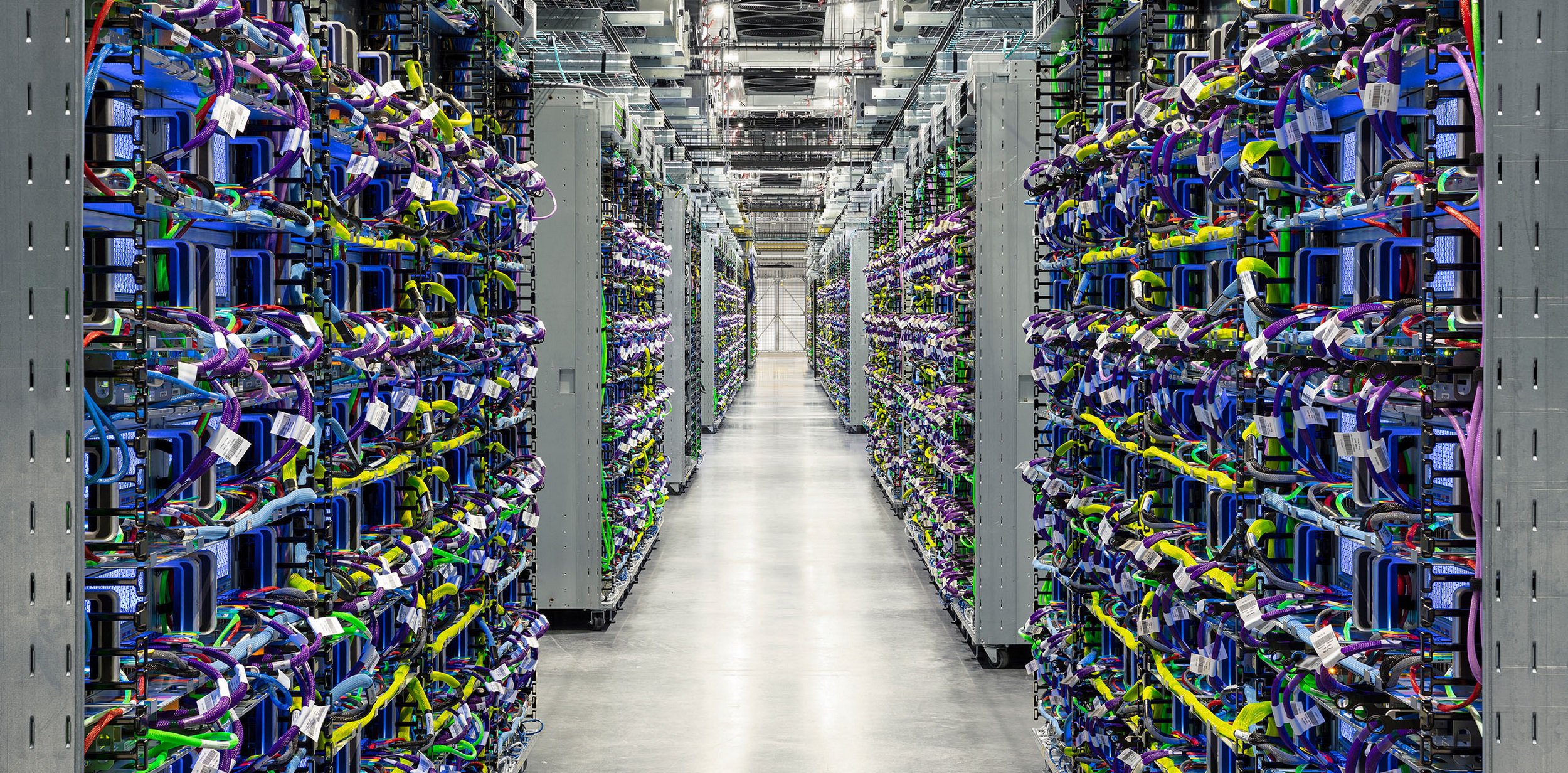
The market is processing an unprecedented wave of AI capital expenditure commitments: Microsoft, Alphabet, Amazon, and Meta have collectively committed $650-700 billion for AI infrastructure spending in 2026 [3][5]. While Wedbush analysts characterize hyperscalers as being “in the early innings” of an AI infrastructure boom, the sheer scale of spending is already affecting cash flow availability for shareholder returns in 2026-2027 [5][6]. This spending surge has triggered concerns about overspending, return on investment uncertainty, and near-term margin compression.
Sector rotation dynamics on February 13 clearly demonstrate a risk-off sentiment shift [0]. Technology sector declined 0.68% as the worst performer, while defensive sectors surged: Utilities (+3.55%), Energy (+1.64%), Basic Materials (+1.56%), Consumer Defensive (+1.43%), and Healthcare (+1.35%). This rotation from growth to defensive sectors indicates investors are rebalancing risk exposure in response to AI investment uncertainty.
The collision between AI capital expenditure and margin pressure is creating differentiated impacts across the technology ecosystem. Hyperscalers themselves face dual pressures: the need to continue massive infrastructure investment while simultaneously managing margin expectations from investors. The转向债务市场 (turning to debt markets) by hyperscalers to fund AI buildout introduces additional financial risk and interest rate sensitivity [6].
Enterprise software and hardware sectors are experiencing valuation resets as investors question the ROI of AI spending. Bloomberg reports software stocks are now trading at “bargain bin prices” after the AI-fueled drop [8]. Cisco’s 7% decline despite record earnings illustrates how even AI-connected companies face margin reality concerns—the G300 chip push into AI back-end fabrics creates potential margin compression as hyperscalers gain leverage [7].
The AI “scare trade” is widening beyond traditional technology sectors. Trucking stocks [9] and media companies [10] have now been affected, suggesting the disruption concerns may have broader economic implications than initially assessed. OpenAI’s competitive position faces “creeping doubts” that are weighing on the entire sector [6].
The hyperscaler margin compression represents material near-term earnings pressure as capital expenditure scales. The emerging debt funding trend for AI buildout increases financial risk profiles for major technology companies. Software sector valuation reset remains in progress, suggesting potential further downside. The breadth of AI disruption concerns is widening, now affecting non-technology sectors. Uncertainty around OpenAI’s competitive position could cascade through the entire AI ecosystem.
The software sector’s significant correction may present valuation opportunities for investors with longer time horizons. The $650-700 billion in committed capex suggests durable long-term demand for AI infrastructure. Market overreacted to near-term concerns; quality AI infrastructure names may offer attractive entry points if margins stabilize.
Upcoming CPI data (February 13) provides critical Fed policy direction signals [4]. Q1 2026 earnings season will offer essential clarity on AI monetization progress and margin trends. Hyperscaler capex guidance signals will be key to sector stabilization.
The analysis reveals a significant market repricing event driven by AI investment dynamics. Key quantitative findings include: Nasdaq’s 4.76% weekly decline representing the worst 2026 performance [2][3]; Technology sector’s 0.68% decline on February 13 versus Utilities’ 3.55% gain [0]; $650-700 billion in combined AI capex commitments for 2026 [5][6]; Cisco’s 7% decline despite record earnings due to margin concerns [7].
The fundamental question facing decision-makers is whether this represents a buying opportunity in quality AI infrastructure names or the beginning of a larger correction as the market questions AI ROI. The committed capital expenditure suggests long-term demand conviction, but near-term margin pressure and valuation resets may persist. Investors should monitor upcoming earnings seasons, inflation data, and hyperscaler capex guidance for signs of spending moderation or acceleration.
Insights are generated using AI models and historical data for informational purposes only. They do not constitute investment advice or recommendations. Past performance is not indicative of future results.
About us: Ginlix AI is the AI Investment Copilot powered by real data, bridging advanced AI with professional financial databases to provide verifiable, truth-based answers. Please use the chat box below to ask any financial question.