Impact of Brazil's 5G Spectrum Auction on Telecom Equipment Suppliers
Unlock More Features
Login to access AI-powered analysis, deep research reports and more advanced features
About us: Ginlix AI is the AI Investment Copilot powered by real data, bridging advanced AI with professional financial databases to provide verifiable, truth-based answers. Please use the chat box below to ask any financial question.
Based on my research, I can provide a comprehensive analysis of how Brazil’s 5G spectrum auction may impact the competitive landscape for global telecom equipment suppliers.
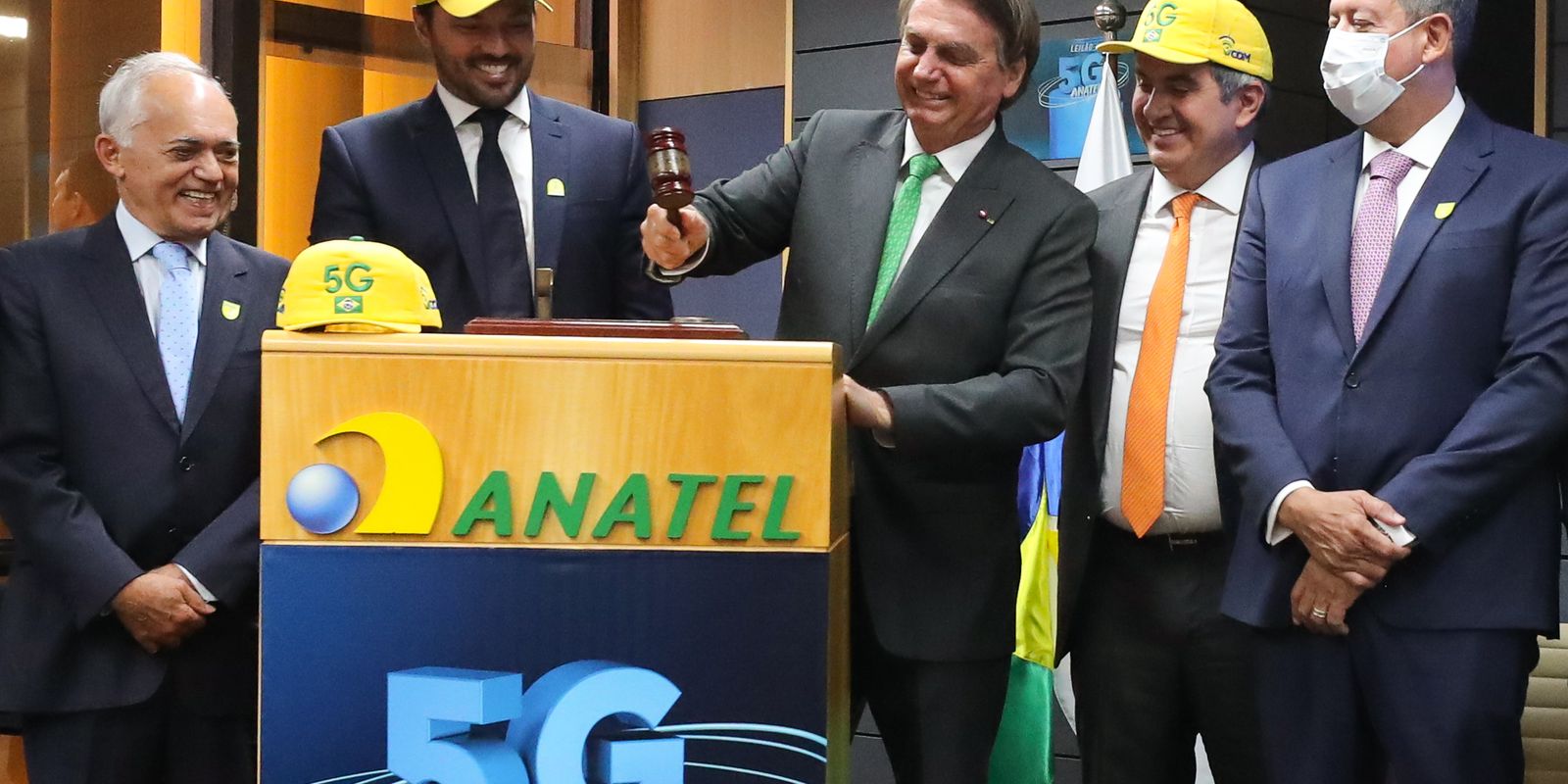
Brazil’s telecommunications market represents the largest in Latin America, with approximately 218 million smartphone connections projected for 2025 [1]. The Latin America 5G network infrastructure market is expected to grow from USD 2.21 billion in 2024 to an estimated USD 10.76 billion by 2033, representing a compound annual growth rate (CAGR) of 19.20% [2]. Brazil’s upcoming 2 billion BRL (approximately $380 million) 5G spectrum auction, announced by Anatel for April, represents a significant opportunity for equipment suppliers in a market that is poised for substantial expansion [3].
The global telecom equipment market is dominated by three major players: Huawei, Ericsson, and Nokia, who collectively hold over 70% of the worldwide market share [4]. In the Latin American 5G infrastructure segment specifically, these three companies have been the primary vendors for network deployment, with each pursuing distinct strategies to maintain or expand their presence.
Unlike some U.S. allies that have implemented explicit bans or restrictions on Huawei, Brazil has historically taken a more neutral stance regarding Chinese telecom equipment. This approach has allowed all three major vendors to participate in Brazil’s 5G deployment. The upcoming auction represents an opportunity for vendors to secure strategic positioning in a market that will require substantial infrastructure investment across multiple frequency bands.
The auction’s design, aimed at fostering a more competitive telecommunications landscape, suggests that Anatel is encouraging broader participation from multiple operators [3]. This competitive environment could benefit Ericsson and Nokia, which have actively marketed their equipment as secure alternatives to Chinese vendors, while also creating opportunities for Huawei to maintain its strong position in the Latin American market.
The Brazil 5G auction is likely to intensify competition among the three major vendors in several ways:
-
Pricing Pressure: The 2 billion BRL auction, combined with operators’ capital expenditure constraints, will likely drive aggressive pricing competition among Huawei, Ericsson, and Nokia to secure contracts.
-
Technology Differentiation: Vendors may differentiate through their 5G core network capabilities, with Nokia and Ericsson emphasizing their cloud-native architectures while Huawei leverages its comprehensive end-to-end portfolio.
-
Strategic Partnerships: Operators may seek multi-vendor strategies to reduce dependency on a single supplier, creating opportunities for all three vendors to participate in network deployments.
-
Geopolitical Considerations: While Brazil has not imposed explicit restrictions on Huawei, operators may face pressure from the U.S. to limit Chinese vendor participation in sensitive core network elements, potentially benefiting Ericsson and Nokia in certain network segments.
The Latin America 5G infrastructure market presents substantial growth opportunities for all three vendors. The region’s 5G adoption is accelerating, with mid-band frequencies expected to capture 45.20% of the global 5G infrastructure market share in 2025, while high-band mmWave is advancing at a 32.15% CAGR [8]. Brazil’s position as the largest telecom market in Latin America makes it a critical battleground for market share.
For Huawei, Brazil represents a potentially important market to offset restrictions in Western countries. For Ericsson and Nokia, Brazil offers growth opportunities in a market where they can position themselves as preferred vendors given the geopolitical environment. The outcome of the upcoming auction will likely set the trajectory for competitive dynamics in the Brazilian telecom equipment market for years to come.
[1] Mordor Intelligence - “Latin America IT Device Market” (https://www.mordorintelligence.com/industry-reports/latin-america-it-device-market)
[2] IMARC Group - “Latin America 5G Network Infrastructure Market” (https://www.imarcgroup.com/CKEditor/362873b7-06ae-4180-8810-db1cc9055e96latin-america-5g-network-infrastructure-market.webp)
[3] MixVale - “Brazil sets R$2 billion 5G spectrum auction for April 2025” (https://www.mixvale.com.br/2026/02/13/brazil-sets-r2-billion-5g-spectrum-auction-for-april-2025-boosting-remote-connectivity/)
[4] LinkedIn - “Mobile Network Telecom Equipment Market Outlook” (https://www.linkedin.com/pulse/mobile-network-telecom-equipment-market-outlook-size-application-vuy9f/)
[5] Huawei Central - “Network Equipment Annual Headcount” (https://www.huaweicentral.com/wp-content/2024/04/network-equipment.jpg)
[6] MixVale - “European Commission plans to ban Huawei and ZTE from EU mobile networks” (https://www.mixvale.com.br/2026/01/20/european-commission-plans-to-ban-huawei-and-zte-from-eu-mobile-networks-due-to-security-risks-en/)
[7] Wraycastle - “5 Ways Telecom Regulators Are Adapting for the Digital Era” (https://wraycastle.com/pt/blogs/knowledge-base/5-ways-telecom-regulators-are-adapting-for-the-digital-era)
[8] Mordor Intelligence - “5G Infrastructure Market” (https://www.mordorintelligence.com/industry-reports/5g-infrastructure-market)
Insights are generated using AI models and historical data for informational purposes only. They do not constitute investment advice or recommendations. Past performance is not indicative of future results.
About us: Ginlix AI is the AI Investment Copilot powered by real data, bridging advanced AI with professional financial databases to provide verifiable, truth-based answers. Please use the chat box below to ask any financial question.