Tesla's 100 GW Solar Manufacturing Bet: Strategic Rationale and Investment Implications
Unlock More Features
Login to access AI-powered analysis, deep research reports and more advanced features
About us: Ginlix AI is the AI Investment Copilot powered by real data, bridging advanced AI with professional financial databases to provide verifiable, truth-based answers. Please use the chat box below to ask any financial question.
Related Stocks
Tesla’s announced plan to build 100 GW of solar manufacturing capacity in the United States represents a transformative strategic pivot that could fundamentally reshape the company’s business model. This analysis examines the motivations behind this ambitious initiative and its potential investment implications for TSLA shareholders.
The primary driver behind Tesla’s solar expansion is the looming energy crisis facing the AI industry. As Morgan Stanley analyst Andrew Percoco noted, “TSLA’s decision to allocate capital to solar manufacturing is rooted in a strategic long-term outlook around evolving geopolitics and data center demand” [1][2]. The mathematics are compelling: AI chip production is growing exponentially, while electricity generation capacity grows at only approximately 4% annually. This widening gap creates a severe bottleneck that threatens to constrain AI growth.
Elon Musk has articulated a bold vision to solve this problem—deploying solar-powered data centers in space, where solar output is approximately five times greater than on Earth due to the absence of atmospheric interference, nighttime, and weather conditions. Additionally, space offers an infinite heat sink for cooling, potentially making orbital locations the lowest-cost AI compute sites [1].
Tesla’s push for domestic solar manufacturing reflects broader geopolitical calculations. By establishing 100 GW of annual solar production capacity in the United States, Tesla aims to reduce dependence on foreign solar components and mitigate supply chain risks. This initiative aligns with the company’s strategy of vertical integration—controlling critical aspects of the energy supply chain becomes as strategically important as controlling compute supply [1].
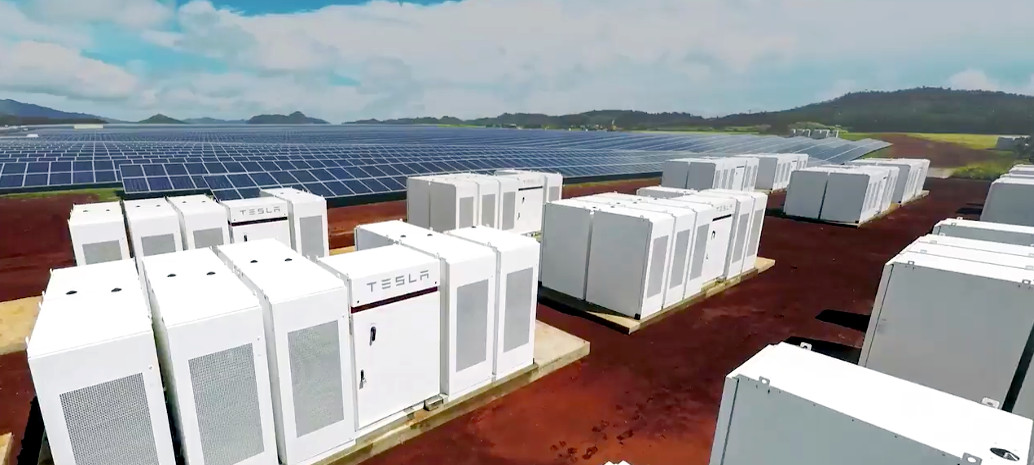
Tesla’s energy storage business demonstrated significant momentum in late 2025, with record 14.2 GWh of deployment in Q4 2025, proving that the integrated energy business can be profitable [1]. The 100 GW solar capacity would complement Tesla’s existing Megapack and Powerwall offerings, creating a comprehensive clean energy ecosystem. The majority of this capacity is reportedly earmarked for space-based data center solar, with a smaller portion allocated for terrestrial facilities [2].
If successful, Tesla could position itself as the central energy provider for the AI and robotics economy. This represents a fundamental business model shift—from a pure EV manufacturer to an integrated energy and AI infrastructure company. Control of the energy supply chain could give Tesla a competitive moat comparable to control of silicon or data center hardware [1].
Morgan Stanley’s analysis provides a framework for understanding the financial upside [2]:
| Metric | Estimate |
|---|---|
Equity Value Addition |
$25–50 billion |
Per-Share Impact |
$6–14 per share |
Annual Revenue Potential |
$25 billion (at full scale) |
EBIT Contribution |
$3–4 billion |
Given Tesla’s current market capitalization of approximately $1.39 trillion and stock price of $417.44 [0], these projections represent meaningful upside if executed successfully.
The ambitious plan carries substantial capital intensity [2]:
| Factor | Details |
|---|---|
Estimated CapEx |
$30–70 billion beyond current 2026 guidance |
Timeline |
3 years to achieve 100 GW annual capacity |
Current Capacity |
Buffalo, NY plant: 300 MW in 2026 (minimal vs. target) |
The capital requirements represent a significant burden that could strain Tesla’s balance sheet. Investors should monitor for financing announcements or asset sales to fund this expansion. There is also meaningful execution risk given the scale of manufacturing expansion required—100 GW annually would roughly double current entire U.S. solar output [1].
The initiative offers several potential strategic advantages:
- Vertical Integration Deepening: The solar manufacturing capacity would integrate with Tesla’s existing energy storage business, creating a unified clean energy platform
- Revenue Diversification: Reduces reliance on EV sales alone, potentially accounting for a significant portion of future value
- AI Infrastructure Leadership: Positions Tesla at the center of AI compute infrastructure development
Investors must weigh several material risks:
- Execution Uncertainty: Rapid scaling from 300 MW to 100 GW in three years presents enormous operational challenges
- Capital Strain: $30–70 billion in additional capEx could delay profitability or require equity dilution
- Trade Barriers: Tariffs and IP complexity add cost and potential delays
- Market Dynamics: Traditional solar market surplus could pressure margins unless space-based deployment succeeds
Tesla’s stock trades at $417.44 with a P/E ratio of 249.96, reflecting significant premium valuation driven by growth expectations [0]. The company has demonstrated strong energy storage execution with 14.2 GWh deployment in Q4 2025, validating the profitability potential of its energy segment [1]. However, the high P/E multiple leaves limited room for error in executing the solar expansion.
Tesla’s 100 GW solar manufacturing plan represents a high-stakes, high-reward strategic bet. The rationale—addressing AI energy bottlenecks while establishing leadership in next-generation energy infrastructure—is compelling from a long-term perspective. Morgan Stanley’s $25–50 billion equity value addition estimate underscores the potential transformative impact.
However, the $30–70 billion capital outlay required, combined with significant execution risks, means investors should approach with careful attention to:
- Management’s capital allocation decisions and financing plans
- Progress on Buffalo facility expansion (300 MW as initial proof of concept)
- Developments in space-based data center partnerships
- Potential dilution if equity financing is required
The initiative could fundamentally redefine Tesla from an EV company to a foundational AI energy infrastructure company—a thesis that aligns with Elon Musk’s optimistic view that energy and robotics could account for ~80% of Tesla’s future value.
[0] Real-time quote data from financial data provider
[1] AInvest - “Tesla’s 100 GW Solar Bet: Riding the AI Power S-Curve or Drowning in Capital” (https://www.ainvest.com/news/tesla-100-gw-solar-bet-riding-ai-power-curve-drowning-capital-2602/)
[2] Investing.com - “Why would Tesla want to build 100 GW of solar manufacturing capacity” (https://www.investing.com/news/stock-market-news/why-would-tesla-want-to-build-100-gw-of-solar-manufacturing-capacity-4497680)
Insights are generated using AI models and historical data for informational purposes only. They do not constitute investment advice or recommendations. Past performance is not indicative of future results.
About us: Ginlix AI is the AI Investment Copilot powered by real data, bridging advanced AI with professional financial databases to provide verifiable, truth-based answers. Please use the chat box below to ask any financial question.