The Great Rotation From Tech To REITs: Market Analysis
Unlock More Features
Login to access AI-powered analysis, deep research reports and more advanced features
About us: Ginlix AI is the AI Investment Copilot powered by real data, bridging advanced AI with professional financial databases to provide verifiable, truth-based answers. Please use the chat box below to ask any financial question.
Related Stocks
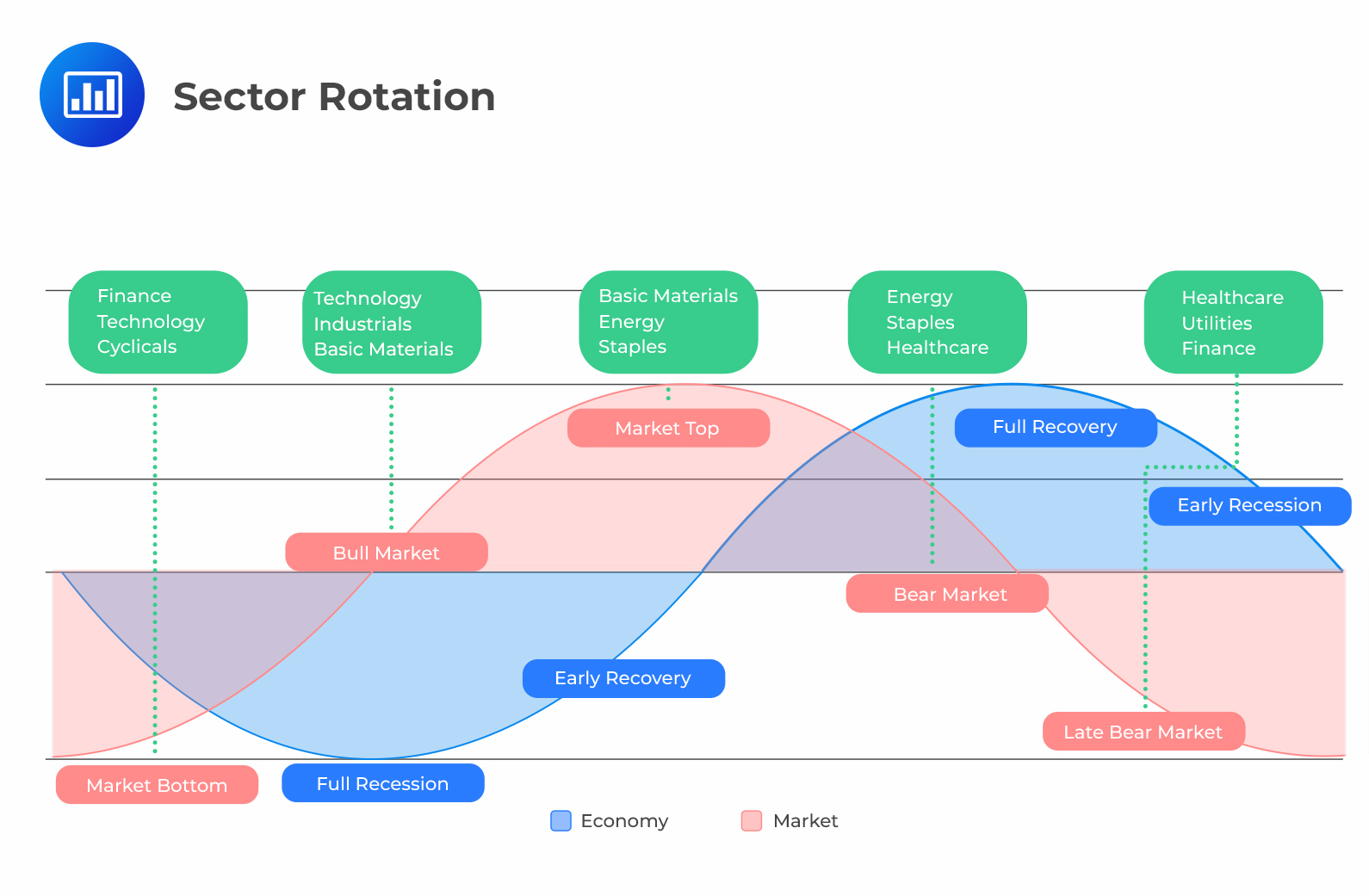
The Seeking Alpha article published on February 14, 2026, presents a compelling thesis that AI is systematically eroding business moats across digital and software businesses, triggering a significant capital rotation from technology sectors toward Real Estate Investment Trusts (REITs) [1]. This thesis finds substantial corroboration in current market data, which reveals a pronounced divergence between growth-oriented and value-oriented indices.
The sector rotation narrative aligns closely with year-to-date performance data showing the NASDAQ Composite declining -3.98% while the Russell 2000 has surged +6.22% [0]. This approximately 10 percentage point divergence represents a meaningful shift in market leadership, with small-cap value stocks outperforming large-cap growth names. The rotation extends beyond simple market cap distinctions, as utilities (+3.55%) and energy (+1.64%) led gains on February 13, 2026, while technology suffered the steepest decline at -0.68% [0].
The article identifies a broad spectrum of technology companies facing AI-driven competitive pressures, including INTU, MSFT, CRM, WDAY, PYPL, and COIN [1]. These companies share a common vulnerability: their business models rely on digital advantages and software-based moats that artificial intelligence increasingly threatens to commoditize. The author’s argument centers on the notion that while AI might temporarily improve margins, it simultaneously accelerates competitive pressures across the sector.
The REIT thesis presents several compelling attractions: tangible physical assets that cannot be replicated digitally, attractive dividend yields in a compressed yield environment, and reduced sensitivity to AI disruption [1]. The Vanguard Real Estate ETF (VNQ) has shown improved relative performance versus the S&P 500 in early 2026, trading in a range of $76.92-$99.20 over the past year [0].
However, important context deserves emphasis. Real Estate sector itself declined -0.41% on February 13, 2026, underperforming most sectors [0]. This suggests the rotation narrative may not represent a straight-line trend and could face meaningful volatility along the way.
The multi-source analysis reveals several insights not immediately apparent from any single perspective. First, the rotation theme represents a confluence of multiple factors: stretched tech valuations, legitimate AI disruption concerns, and shifting momentum patterns. CNBC confirms that investors are actively rotating toward value stocks with improving technical momentum in real estate [2]. Morningstar independently reports that Big Tech stocks are “falling out of favor” as traders seek opportunities beyond the “Magnificent Seven” megacap stocks [3].
Second, the timing of this rotation declaration warrants careful scrutiny. Historical market patterns demonstrate that sector leadership can shift multiple times within a single year. The author’s disclosure of long positions in multiple REITs (CPT, BX, BAM) introduces potential perspective considerations [1].
Third, the divergence between the Russell 2000’s strong performance and NASDAQ’s weakness represents a fundamental shift in market character. The ~10 percentage point YTD spread suggests a sustained rotation rather than a brief tactical rebalancing, though sustainability remains uncertain.
| Risk Factor | Assessment |
|---|---|
| REIT Interest Rate Sensitivity | HIGH - Rising rates typically pressure REIT valuations and dividend appeal |
| Commercial Real Estate Fundamentals | MODERATE - Office vacancy rates remain elevated in post-pandemic environment |
| Rotation Sustainability | UNCERTAIN - Market rotations often prove temporary and reversible |
| Tech Resilience | MODERATE - Big Tech companies have demonstrated significant ability to adapt to technological shifts |
The analysis reveals that declaring a “great rotation” as “finally here” carries inherent timing risk. REITs face their own structural challenges independent of the tech rotation thesis, including remote work trends affecting commercial real estate demand and ongoing interest rate sensitivity. The rotation could prove premature, as the Magnificent Seven still possess substantial competitive advantages, deep capital reserves, and proven adaptation capabilities.
The data suggests opportunities exist in value-oriented sectors and small-cap exposure. The Russell 2000’s +6.22% YTD performance indicates existing momentum in this segment [0]. Real estate technicals have improved with VNQ showing firmer relative performance versus the S&P 500 [2]. However, investors should approach with awareness of the single-analyst perspective and existing long positions in recommended securities.
The analysis synthesizes findings from multiple sources to provide comprehensive context for this sector rotation thesis. The original Seeking Alpha article by Jussi Askola, CFA (President of Leonberg Capital) argues that AI poses a long-term headwind for most tech stocks by eroding competitive moats [1]. Market data confirms significant divergence between growth and value indices in early 2026, with the NASDAQ declining -3.98% YTD while the Russell 2000 gained +6.22% [0].
The thesis finds support from multiple independent sources, including CNBC reporting on value rotation in real estate [2] and Morningstar documenting Big Tech falling out of favor [3]. However, key uncertainties remain: REITs declined -0.41% on the most recent trading day [0], interest rate sensitivity continues to pose risks, and historical sector rotation themes frequently reverse. Decision-makers should monitor whether this represents a sustained structural shift or a cyclical rebalancing that may prove temporary.
Insights are generated using AI models and historical data for informational purposes only. They do not constitute investment advice or recommendations. Past performance is not indicative of future results.
About us: Ginlix AI is the AI Investment Copilot powered by real data, bridging advanced AI with professional financial databases to provide verifiable, truth-based answers. Please use the chat box below to ask any financial question.