Federal Reserve Leadership Turmoil: Miran's Policy Shift Advice as Warsh Confirmation Stalls
Unlock More Features
Login to access AI-powered analysis, deep research reports and more advanced features
About us: Ginlix AI is the AI Investment Copilot powered by real data, bridging advanced AI with professional financial databases to provide verifiable, truth-based answers. Please use the chat box below to ask any financial question.
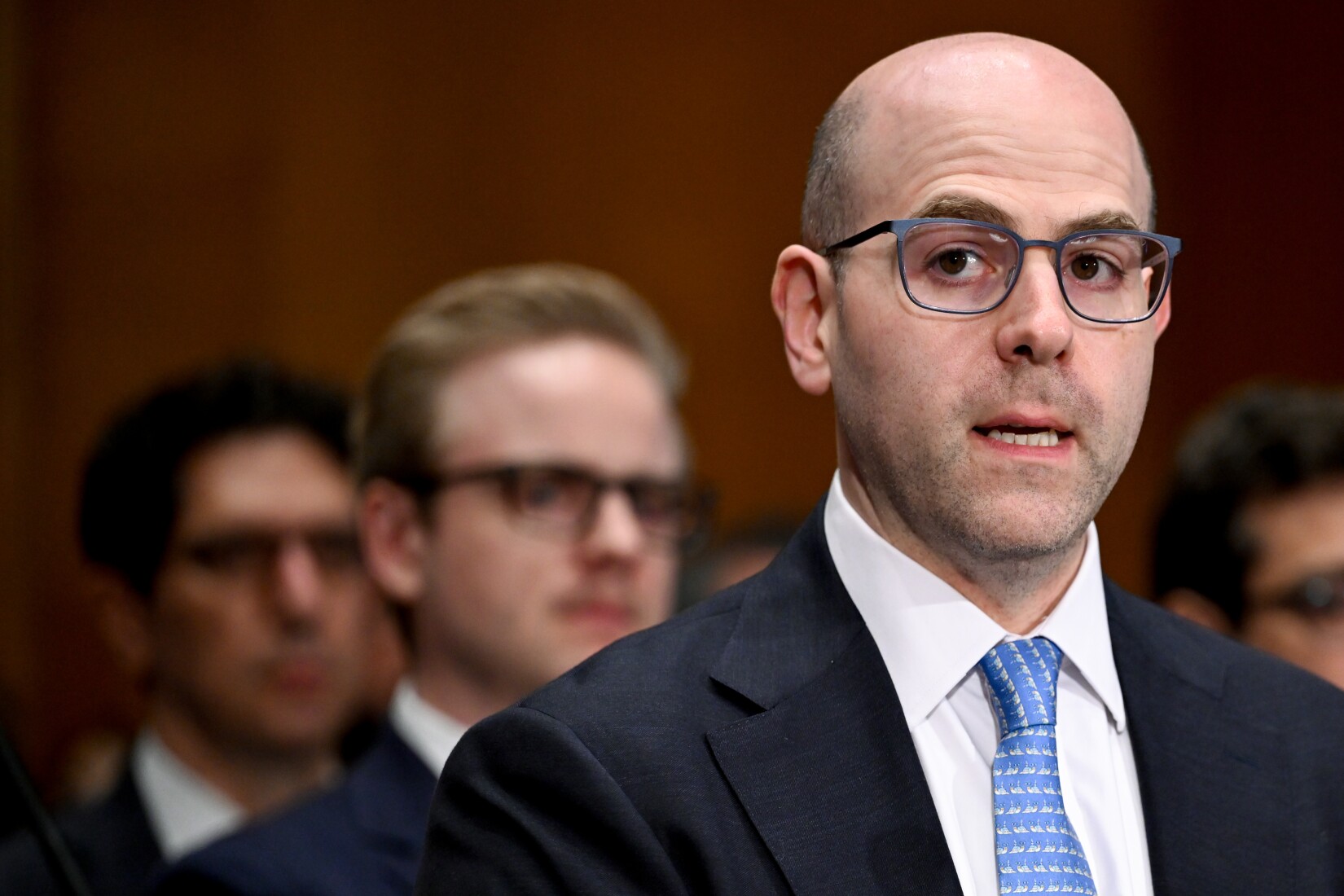
This analysis examines a significant development in Federal Reserve leadership dynamics that could reshape monetary policy direction. The event, reported by Fox Business on February 14, 2026 [1], involves Stephen Miran—a Trump-appointed Fed Governor—offering substantive policy advice to Kevin Warsh, the President’s nominee for Fed Chair, at a Dallas Fed event.
Miran’s advice represents a fundamental challenge to the Federal Reserve’s traditional data-dependent framework that has guided monetary policy decisions for decades. His recommendation that Warsh should be “forward-looking, not backward-looking” signals a potential philosophical transformation in how the central bank approaches interest rate decisions and economic assessment [1].
The core of Miran’s argument centers on the premise that the current economic environment does not warrant the cautious, data-reactive approach that has characterized Fed policy under previous leadership. Miran stated explicitly: “the time for data dependence is when you have enormous uncertainty. I don’t think we have enormous uncertainty” [1]. This perspective suggests confidence in economic conditions that would permit more proactive, projection-based policymaking rather than the reactive stance that has defined the post-2008 monetary environment.
This proposed shift carries substantial implications. Traditional data-dependent policymaking involves carefully monitoring inflation indicators, employment figures, and GDP growth before adjusting policy stance. A forward-looking approach would rely more heavily on economic projections and forecasts, potentially allowing for more decisive action but also introducing greater volatility risk if projections prove inaccurate.
The political obstacles surrounding Warsh’s nomination add complexity to this leadership transition. Senator Thom Tillis (R-NC) has pledged to hold up all Fed nominees until the Department of Justice concludes its investigation into Jerome Powell regarding the Fed building renovation [4][5]. This stance effectively creates a blockade against Fed leadership renewal, regardless of the nominee’s qualifications or policy positions.
The confirmation process faces additional procedural challenges. A discharge vote to advance Warsh’s nomination would require 60 Senate votes—a threshold that reflects the significant political capital required to move Fed nominations through a divided Senate [1]. The combination of procedural hurdles and political opposition creates substantial uncertainty about when—or whether—Warsh will assume the Fed Chair position.
The broader political environment surrounding the Federal Reserve reflects heightened tension between the executive branch and the central bank. Beyond the nomination stalemate, there exists a legal clash between the Trump administration and Governor Lisa Cook, along with the ongoing DOJ investigation into Powell [1]. These concurrent challenges suggest a period of institutional stress for the Federal Reserve.
President Trump has publicly endorsed Warsh, characterizing his 2017 passover for Fed Chair as a “big mistake” and expressing optimism that Warsh could drive economic growth exceeding 15% [4]. However, the gap between presidential endorsement and Senate confirmation underscores the political realities governing central bank leadership selection.
Beyond his policy advice to Warsh, Miran has attracted attention for his public defense of Trump administration tariff policies. He has argued that tariff impacts have been muted, with foreign firms bearing the cost rather than American consumers [2][3]. This position aligns with the administration’s trade policy but conflicts with mainstream economic analysis suggesting tariff costs typically flow through to domestic prices and ultimately consumers.
The convergence of Miran’s policy advocacy and Warsh’s nomination challenges reveals several structural dynamics:
-
Policy Uncertainty: Markets typically value policy predictability. A shift toward more discretionary, forward-looking policymaking could increase market volatility as participants attempt to anticipate Fed actions without the traditional data-dependent signals.
-
Leadership Vacuum: Extended delays in confirming Warsh could leave the Fed without permanent leadership during critical economic periods, potentially creating governance gaps in decision-making.
-
Central Bank Credibility: The intersection of political controversies and policy philosophy changes could undermine the Fed’s perceived independence, potentially affecting long-term investor confidence in U.S. monetary policy.
-
Implementation Challenges: Even if Warsh assumes the chair position, implementing a fundamentally different policy approach would require substantial cultural and operational changes within the FOMC.
-
Policy Innovation: A forward-looking approach could enable more timely responses to emerging economic conditions rather than reacting to historical data that may no longer reflect current circumstances.
-
Reduced Lag: Traditional data-dependent policymaking often involves recognition lags. A projection-based approach could theoretically reduce the delay between economic changes and policy responses.
-
Economic Growth Potential: If successfully implemented, the new approach could support the ambitious growth targets articulated by the administration, though this would depend on numerous external factors.
This event represents a confluence of political and policy developments that could fundamentally alter Federal Reserve operations. Stephen Miran’s advocacy for a shift away from data-dependent monetary policy, combined with Kevin Warsh’s stalled nomination, creates substantial uncertainty about the future direction of U.S. monetary policy.
The critical variables to monitor include: the resolution of the DOJ investigation into Powell (which governs Senator Tillis’s blockade), Warsh’s ability to secure sufficient Senate support for confirmation, and the practical implementation of any policy philosophy changes if leadership transition occurs.
Market participants should observe bond market reactions, particularly Treasury yield curves, as these will reflect expectations about future Fed policy path. Additionally, statements from other FOMC members regarding their views on data dependence versus forward-looking approaches will provide insight into the potential for unified or divided policy direction.
医药零售行业合规监管趋严对A股龙头企业估值与盈利能力影响分析
Insights are generated using AI models and historical data for informational purposes only. They do not constitute investment advice or recommendations. Past performance is not indicative of future results.
About us: Ginlix AI is the AI Investment Copilot powered by real data, bridging advanced AI with professional financial databases to provide verifiable, truth-based answers. Please use the chat box below to ask any financial question.