U.S.–Iran Geopolitical Tensions & Global Oil Supply Dynamics: Energy Sector Analysis
Unlock More Features
Login to access AI-powered analysis, deep research reports and more advanced features
About us: Ginlix AI is the AI Investment Copilot powered by real data, bridging advanced AI with professional financial databases to provide verifiable, truth-based answers. Please use the chat box below to ask any financial question.
Related Stocks
The current Middle East geopolitical situation has created significant volatility in global oil markets, with WTI crude oil experiencing extreme price swings of approximately
The crude oil market has demonstrated exceptional volatility as geopolitical tensions in the Middle East intensify:
| Metric | Value |
|---|---|
| Price Range (March 2026) | $74.97 - $119.48 |
| Total Price Swing | 59.4% |
| Current Price (March 16) | $93.79/barrel |
| Daily Volatility (Std Dev) | $9.73 |
| Peak Move (March 8) | +17.94% single-day gain |
The market has experienced multiple double-digit percentage moves, with the most dramatic surge occurring on March 8, 2026, when prices jumped
Energy sector performance remains modest amid broader market uncertainty, with the Energy sector posting a
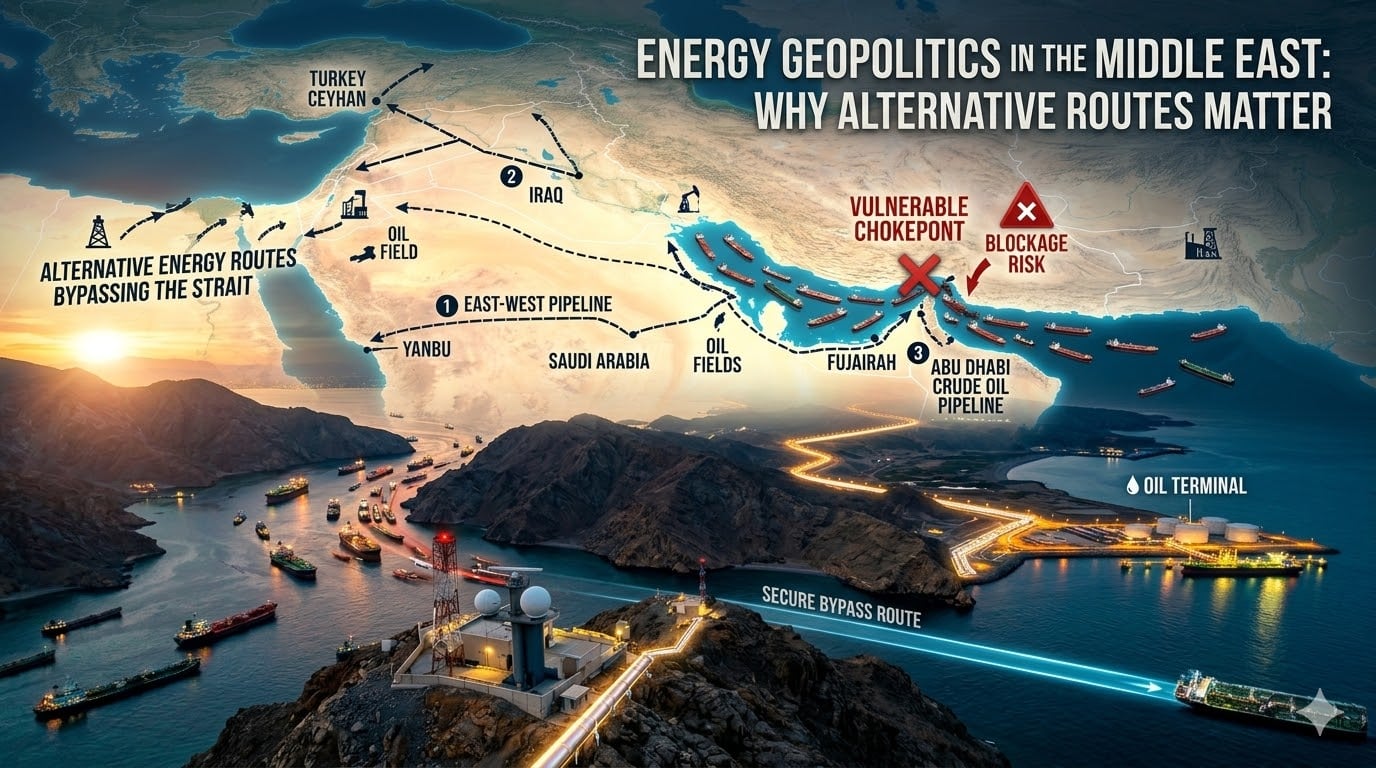
The Strait of Hormuz represents the critical chokepoint for global oil supply, with approximately
- Direct supply disruption: Potential conflicts affecting tanker traffic through the Strait
- Secondary sanctions: Implications for Iranian oil exports currently under restricted regimes
- Regional spillover: Risk of broader Middle East instability affecting other producers
The oil market has responded to these concerns through [1][2]:
- Emergency reserve releases: The U.S. and allied nations have released strategic petroleum reserves, though this has had limited moderating effect
- Price premium expansion: Front-month crude contracts trading at significant premiums to later-dated contracts, indicating near-term supply fears
- Volatility index elevation: Options markets showing elevated implied volatility across energy commodities
The energy sector valuation framework reflects several competing factors:
| Factor | Impact |
|---|---|
| Elevated spot prices | Short-term earnings boost for producers |
| Geopolitical uncertainty | Risk premium on valuations |
| Volatility | Higher cost of capital |
| Supply chain concerns | Potential production disruptions |
| Demand destruction risk | Economic slowdown from high prices |
Energy equities have shown mixed performance, with the NYSE Energy Sector Index rising
- Earnings sensitivity: Current oil prices ($90+/barrel) support strong cash flows for producers with breakeven costs below $50
- Capital allocation: Elevated cash flows may support increased shareholder returns or capital investment
- Risk premium: Geopolitical exposure commands higher required returns for energy equities
- Oil price range: $80-100/barrel
- Supply impact: Limited disruptions, strategic reserves available
- Sector impact: Modest valuation compression, continued volatility
- Oil price range: $100-150/barrel
- Supply impact: Significant disruptions possible
- Sector impact: Initial rally followed by demand destruction concerns
- Oil price range: $60-80/barrel
- Supply impact: Normalization of flows
- Sector impact: Profit-taking and valuation normalization
- Tactical allocation: Current volatility creates trading opportunities but requires disciplined risk management
- Diversification: Consider exposure across subsectors (integrated majors, E&P, services)
- Volatility management: Use options strategies to protect against adverse price moves
- Geopolitical tail risk: Unforeseen escalation could cause rapid price spikes
- Demand destruction: Sustained $100+ oil may trigger global economic slowdown
- Policy response: Additional strategic reserve releases or demand management measures
- Alternative energy acceleration: High prices accelerate renewable energy economics
The technical picture shows [0]:
- Trend: Strong upward momentum from March lows
- Support: $85-90/barrel zone established as new support
- Resistance: $100/barrel psychological barrier
- Volatility: Elevated but declining from peak levels
The current Middle East geopolitical situation—characterized by active conflict rather than nuclear negotiations—has created substantial oil price volatility with significant implications for energy sector valuations. While current prices around $94/barrel remain elevated, the market has retreated from panic highs near $120, suggesting some normalization [0].
For investors, the key considerations are:
- Geopolitical risk premiumremains embedded in current prices
- Energy sector valuationsreflect both upside potential from high prices and downside risk from conflict escalation
- Volatility creates opportunitiesfor both tactical trading and strategic positioning
The energy sector’s modest +0.28% performance amid elevated oil prices suggests investors are cautiously weighing supply risks against demand destruction concerns [0]. The resolution of current geopolitical tensions—through either de-escalation or prolonged conflict—will be the primary determinant of medium-term oil prices and sector valuations.
[0] Market Data - NYSE Sector Performance, Oil Price Data (March 2026)
[1] Seeking Alpha - “Strait Of Hormuz: Buy The Fear Before This Waterway Clears” (https://seekingalpha.com/article/4882196-strait-of-hormuz-buy-the-fear-before-this-waterway-clears)
[2] Seeking Alpha - “Commodities: Brent Remains Above $100/Bbl As Iran Conflict Develops” (https://seekingalpha.com/article/4882623-commodities-brent-remains-above-100bbl-iran-conflict-develops)
[3] Yahoo Finance - “Sector Update: Energy” (https://finance.yahoo.com/news/sector-energy-193933442.html)
[4] Yahoo Finance - “USO vs. XLE: Which energy ETF do you play amid oil volatility?” (https://finance.yahoo.com/video/uso-vs-xle-energy-etf-160000197.html)
Insights are generated using AI models and historical data for informational purposes only. They do not constitute investment advice or recommendations. Past performance is not indicative of future results.
About us: Ginlix AI is the AI Investment Copilot powered by real data, bridging advanced AI with professional financial databases to provide verifiable, truth-based answers. Please use the chat box below to ask any financial question.