European Markets Edge Higher as Munich Security Conference Fuels Defense Spending Optimism
Unlock More Features
Login to access AI-powered analysis, deep research reports and more advanced features
About us: Ginlix AI is the AI Investment Copilot powered by real data, bridging advanced AI with professional financial databases to provide verifiable, truth-based answers. Please use the chat box below to ask any financial question.
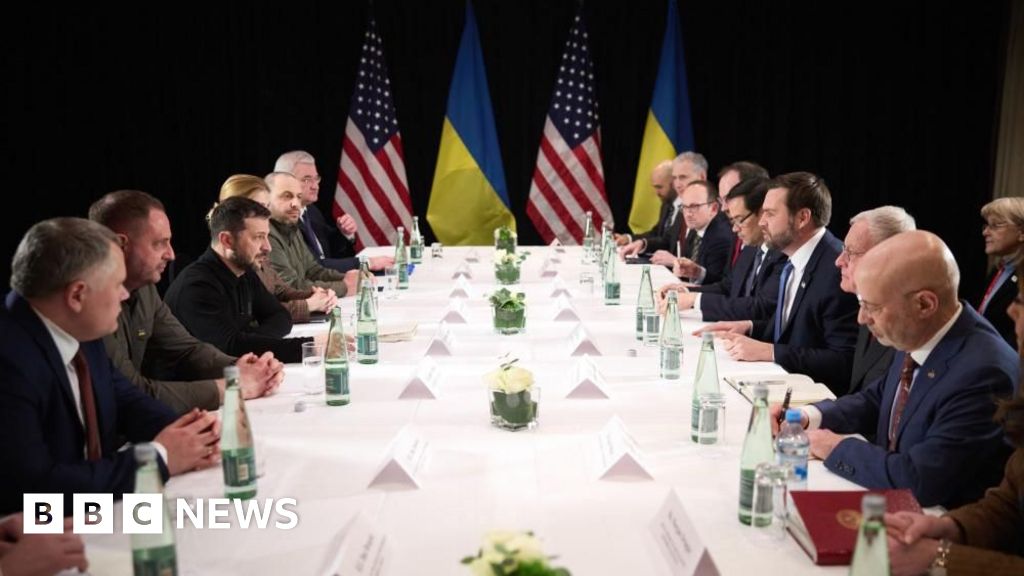
European markets commenced the week of February 16, 2026, in positive territory, recovering from Friday’s losses as the Munich Security Conference (MSC) became the primary sentiment driver [1]. The Stoxx 600 index closed up 0.1% at 598.47, reflecting cautious optimism rather than strong conviction, as trading volumes remained relatively contained.
The geopolitical discourse at the Munich Security Conference centered on two critical themes:
From a regional perspective, the German DAX demonstrated the strongest performance among major indices, rising 0.5% to 23,564.01, followed by the UK’s FTSE 100 at +0.55% (10,317.69) [1]. This performance pattern suggests that markets with greater exposure to defense manufacturing and security-related industries responded most positively to the conference developments.
The sector rotation dynamics observed in the data reveal a nuanced market environment: defense and security themes attracted buying interest, while commodity-sensitive mining names experienced weakness amid uncertain demand outlooks [1]. The financial sector received a个别 boost from NatWest Group’s £750 million share buyback announcement, which propelled the stock 4.7% higher [1].
The convergence of geopolitical developments and corporate actions creates several interconnected market themes:
-
Policy Implementation Uncertainty: While the Munich Security Conference discussions boosted sentiment, actual defense spending commitments may face significant political obstacles, budget constraints, and implementation delays. Markets have priced in optimistic assumptions that may not materialize in the near term.
-
Defense Sector Valuation: The defense sector’s recent outperformance has likely pushed valuation multiples to elevated levels. Should actual spending commitments fall short of market expectations, the sector could experience meaningful correction.
-
Geopolitical Volatility: Defense spending themes are inherently tied to geopolitical dynamics, which can shift rapidly and unexpectedly. Political transitions across Europe could alter spending priorities and timelines.
-
Mining Sector Pressure: Continued weakness in commodity names could weigh on market breadth, particularly given the FTSE 100’s significant exposure to mining giants.
-
Defense Industrial Chain: Companies positioned across the European defense industrial base may benefit from sustained spending increases, particularly those with exposure to next-generation capability development.
-
Banking Sector Capital Returns: Additional European banks may follow NatWest’s lead in announcing share buyback programs, providing opportunities in the financial sector.
-
Security Technology Integration: The intersection of defense spending and technology modernization could create opportunities in cybersecurity, autonomous systems, and advanced materials.
The February 16, 2026 market session reflected investor assessment of geopolitical developments rather than fundamental economic drivers. European markets demonstrated modest strength relative to U.S. indices, with the Munich Security Conference discussions providing a sentiment boost focused on defense spending prospects [1].
The data indicates [0] that European markets held relatively steady through mid-February 2026, with the FTSE 100 showing +0.42% on February 13 and the DAX at +0.37%, while the CAC 40 experienced a slight decline of -0.05%. This context suggests that the Monday session built upon existing stability rather than representing a significant directional shift.
Market participants should monitor several upcoming developments: concrete defense spending commitments from major European economies, quarterly earnings reports from major European corporations including Airbus, Nestlé, and Renault, and any further developments from the Munich Security Conference discussions. The interplay between geopolitical developments, central bank communications, and corporate earnings will likely determine market direction in the coming weeks.
Insights are generated using AI models and historical data for informational purposes only. They do not constitute investment advice or recommendations. Past performance is not indicative of future results.
About us: Ginlix AI is the AI Investment Copilot powered by real data, bridging advanced AI with professional financial databases to provide verifiable, truth-based answers. Please use the chat box below to ask any financial question.