Cocoa Market Crisis: Ivory Coast Warehouse Glut Signals Price Collapse
Unlock More Features
Login to access AI-powered analysis, deep research reports and more advanced features
About us: Ginlix AI is the AI Investment Copilot powered by real data, bridging advanced AI with professional financial databases to provide verifiable, truth-based answers. Please use the chat box below to ask any financial question.
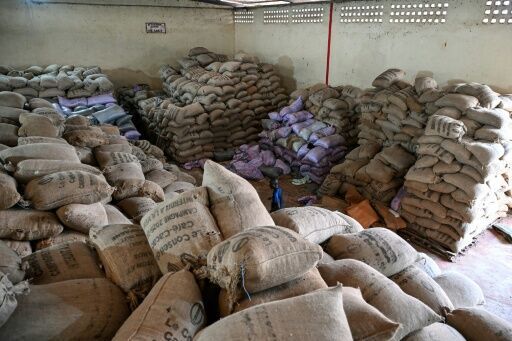
The cocoa market crisis in Ivory Coast represents a dramatic structural breakdown between the West African fixed-price system and global futures markets. The world’s largest cocoa producer is experiencing a severe supply-demand imbalance, with unsold cocoa beans stacking nearly to ceilings in warehouses across the country’s western regions, particularly in Duekoue town where cooperative leader Sekou Dagnogo’s facility is filled with unsold inventory [1].
The core problem stems from a fundamental price disconnect. The Ivorian government set a farmgate price of 2,800 CFA francs per kilogram (approximately $5.09/kg) for the main harvest, but global cocoa prices have collapsed to their lowest level in more than two years, falling below $4,000 per ton—a decline of over 60% from the $12,906 per metric ton peak in December 2024 [1][3][4]. Exporters are offering as little as 1,500-1,800 CFA francs per kilogram, prices that are prohibited by the Coffee and Cocoa Council (CCC) regulator but which farmers feel compelled to accept due to the lack of alternatives.
The CCC has responded with aggressive intervention measures, including a 100,000 metric ton purchase program accelerated in early February 2026 due to concerns over declining quality of stored inventory [1]. The mid-crop farmgate price was slashed to 1,200 CFA/kg—a 57% reduction from the main crop price—representing one of the most dramatic policy adjustments in recent memory [7][8].
The demand-side weakness is equally significant. European cocoa grindings fell 8.3% year-on-year in Q4 2025 to 304,470 MT—the lowest Q4 grinding in 12 years [6]. Major chocolate manufacturers have reduced procurement volumes, with Barry Callebaut reporting global cocoa sales volumes down 22% in the three months to November 2025 [3]. This has created a self-reinforcing cycle where buyers deliberately reduce purchase volumes to push prices down, exacerbating the crisis for farmers.
The structural tension between West Africa’s regulated pricing model and global futures markets creates persistent vulnerability. West Africa produces approximately two-thirds of the world’s cocoa under a fixed-price system fundamentally different from cocoa futures trading [5]. When global demand weakens, this pricing disconnect leaves farmers bearing the burden of market adjustments without the protective mechanisms available to futures market participants.
The regional competitive dynamics between Ivory Coast and Ghana have shifted significantly. Following Ghana’s price cut from GH¢3,228.75 to GH¢2,587 per 64kg bag in mid-February 2026, Ivorian farmers now receive approximately Ghc1,225 per bag while Ghanaian farmers receive Ghc2,587 per bag—a substantial disparity that may affect farmer incentives, cross-border smuggling patterns, and competitive positioning [9].
Production adjustments are already materializing. Ivory Coast projects cocoa production in 2025/26 will fall 10.8% year-on-year to 1.65 million metric tons from 1.85 million metric tons in 2024/25 [6]. This supply reduction may eventually help rebalance the market, but the immediate outlook remains bearish with StoneX forecasting a global cocoa surplus of 287,000 MT for 2025/26 and a continued surplus of 267,000 MT for 2026/27 [2].
The chocolate manufacturing sector is adapting to lower input costs by reformulating products with “more inclusions, marginally less cocoa” to maintain price points [3], suggesting that anticipated margin improvements from lower cocoa prices may be partially offset by product composition changes rather than passing savings to consumers.
- Farmer Income Crisis: Cocoa farmers face severe income compression, with cooperative leaders reporting they “owe farmers a lot of money” and are “forced to accept prices that don’t suit us” [1]
- Quality Deterioration: Prolonged storage in humid West African conditions risks complete loss for farmers holding unsold inventory
- Cross-Border Smuggling: The significant price disparity between Ivory Coast and Ghana may incentivize illegal cross-border trade
- Supply Chain Instability: Excessive price pressure may destabilize supply chains and undermine long-term farmerBase sustainability
- Sustainability Initiative Collapse: Price crashes undermine certification programs and sustainability initiatives that rely on viable farmer economics
- Input Cost Reduction: Chocolate manufacturers benefit from significantly lower cocoa input costs compared to 2024 peaks
- Market Rebalancing Potential: If prices remain low, production cuts may eventually set the stage for supply shortages and price recovery
- Structural Reform Momentum: The crisis may accelerate necessary changes in how West African cocoa is priced relative to global markets
The cocoa market in Ivory Coast is experiencing a critical inflection point characterized by a massive inventory buildup, dramatic price cuts, and uncertain market outlook. The Coffee and Cocoa Council’s intervention—purchasing 100,000 MT of unsold cocoa and slashing farmgate prices by 57%—represents an acknowledgment that the previous pricing model was unsustainable in the current global market environment [1][7][8].
Global cocoa prices have collapsed from record highs in 2024 to levels not seen since 2023, driven by weakened European demand (Q4 2025 grindings down 8.3% year-on-year) and improved supply outlooks [3][6]. Industry forecasters expect continued surplus conditions through at least 2026/27, suggesting prolonged bearish pressure on prices [2].
The crisis highlights the structural vulnerability of West Africa’s fixed-price system when confronted with global demand shifts. Chocolate manufacturers are benefiting from lower input costs but are simultaneously reformulating products to maintain price points, while farmers bear the immediate burden of market adjustment through income compression and inventory accumulation.
Ivory Coast has sold over 400,000 MT of 2025/26 cocoa export contracts within 10 days after exporters resumed purchases, indicating the market is beginning to clear [7]. However, production is projected to decline 10.8% year-on-year, and the ultimate resolution of this crisis will likely involve significant restructuring of the pricing relationship between West African cocoa producers and global markets [6].
Insights are generated using AI models and historical data for informational purposes only. They do not constitute investment advice or recommendations. Past performance is not indicative of future results.
About us: Ginlix AI is the AI Investment Copilot powered by real data, bridging advanced AI with professional financial databases to provide verifiable, truth-based answers. Please use the chat box below to ask any financial question.