US-Iran Conflict Escalates: Market Impact Analysis - Third Week of War
Unlock More Features
Login to access AI-powered analysis, deep research reports and more advanced features
About us: Ginlix AI is the AI Investment Copilot powered by real data, bridging advanced AI with professional financial databases to provide verifiable, truth-based answers. Please use the chat box below to ask any financial question.
Related Stocks
This analysis is based on the Seeking Alpha article [4] published on March 16, 2026, which frames the ongoing war with Iran as the dominant market driver and poses the critical question: “How big will the shock be?”
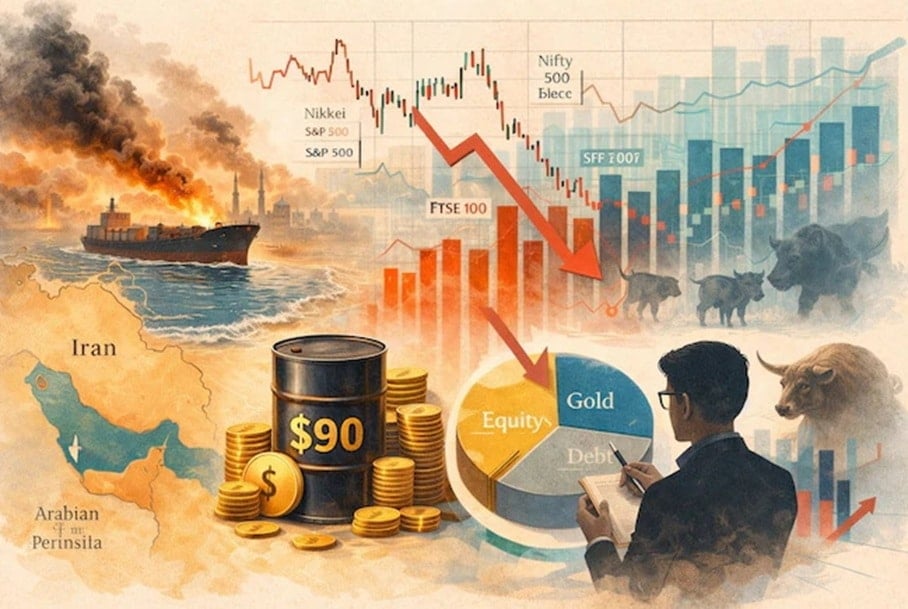
The conflict has now progressed into its third week with no diplomatic resolution in sight. Iran has launched what analysts describe as a “heavy wave of missile strikes” [2][3], indicating the conflict is intensifying rather than de-escalating. The Strait of Hormuz—a critical global oil chokepoint—remains a focal point of tension, threatening disruption to approximately 20% of global oil supply [1][2]. Regional instability has also spread to Lebanon, the West Bank, and included a drone attack on Dubai airport [2].
The market data reveals significant stress on multiple fronts [0]:
| Index | Daily Change | Weekly Change |
|---|---|---|
| S&P 500 | +0.37% | -2.4% |
| NASDAQ | +0.15% | -3.7% |
| Dow Jones | +0.51% | -2.9% |
| Russell 2000 | +0.14% | -4.1% |
The technical picture shows markets approaching their 200-day moving averages—a critical support threshold. A breach below these levels could trigger accelerated selling pressure. The Seeking Alpha analysis notes that “market internals are much weaker than indexes suggest,” indicating potential hidden weakness beneath the modest daily gains.
One of the most notable market characteristics is the extreme -0.80 correlation between SPY (S&P 500 ETF) and USO (oil futures) [4]. This inverse relationship means that any positive news on the war front could trigger a sharp equity rally while sending oil lower, and vice versa. The correlation presents both risk and opportunity for traders positioned for either outcome.
The geopolitical crisis unfolds against a fragile economic backdrop. Q4 GDP has been revised down to just 0.7% [4], signaling significant economic slowdown, while core PCE inflation remains elevated. This combination creates stagflation risk—weak growth coupled with persistent inflation—which historically challenges both equity and fixed-income markets.
The analysis confirms that the Iran conflict has superseded traditional market drivers. Earnings, Federal Reserve policy, and economic data—all typically central to market direction—have been displaced by geopolitical developments. This represents a fundamental shift in market regime that participants must acknowledge.
The 200-day moving average test represents a critical juncture. Historical analysis shows that breaches below major moving averages during high-volatility periods often accelerate selling as algorithmic and technical traders trigger programmed responses. The current situation is compounded by weakened market internals, suggesting the headline indices may be overstating underlying strength.
The -0.80 equity-oil correlation presents a unique risk profile. Should diplomatic progress emerge unexpectedly, the rapid unwinding of positions could create sharp, sudden movements in both directions. Traders should note that correlation stability cannot be assumed during wartime conditions.
The significant underperformance of the Russell 2000 (down 4.1% weekly versus S&P 500’s 2.4%) suggests market participants are gravitating toward larger, more established companies—typically a defensive posture during uncertainty periods.
- Escalation Risk: Current trajectory shows intensifying conflict rather than resolution, with Iran continuing missile strikes [2][3]
- Technical Breakdown Risk: Markets at key support levels; 200-day MA breach could trigger accelerated selling
- Oil Supply Disruption: Strait of Hormuz tensions threaten global supply chain [1][2]
- Economic Fragility: 0.7% GDP growth with elevated inflation creates stagflation environment
- Correlation Instability: Rapid correlation shifts on any peace development could create violent price swings
- Regional spillover affecting additional markets
- Protest activity (noted in London) could influence political calculations
- Federal Reserve policy uncertainty amid geopolitical crisis
- Tactical Long Entries: If support holds with improving internals, there may be opportunity for long positions [4]
- War Resolution Play: Any diplomatic breakthrough would likely trigger sharp equity rally given extreme inverse correlation
- Defensive Positioning: Utilities and consumer staples may offer relative stability
The ongoing US-Iran war represents a significant geopolitical shock currently manifesting through elevated oil prices, heightened market volatility, and technical stress at major support levels. Market participants should monitor the following:
- 200-day moving average integrityon major indices
- Oil-equity correlationstability and potential shifts
- War progress indicatorsincluding diplomatic developments
- Upcoming economic dataparticularly inflation prints given GDP weakness
- Energy sector exposuregiven oil’s central role in market narrative
The analysis framework suggests the key uncertainty is no longer whether this constitutes a market shock, but rather the magnitude and duration of that shock. Current market pricing reflects elevated uncertainty with significant weekly declines across all major indices despite modest daily gains [0][4].
[“geopolitical_risk”, “us_iran_conflict”, “market_volatility”, “oil_prices”, “middle_east_tensions”, “technical_analysis”, “strait_of_hormuz”, “stagflation_risk”, “equity_markets”]
[“SPY”, “USO”, “IWM”, “QQQ”, “DIA”]
negative
[{“index”: 0, “source”: “Ginlix InfoFlow Analytical Database”, “url”: “internal”, “date”: “2026-03-16”, “title”: “Market Indices and Real-Time Quote Data”}, {“index”: 1, “source”: “Democracy Now!”, “url”: “https://www.democracynow.org/2026/3/16/naghmeh_sohrabi_amir_ahmadi_arian”, “date”: “2026-03-16”, “title”: “US-Iran war enters 3rd week with no end in sight”}, {“index”: 2, “source”: “CBS News”, “url”: “https://www.cbsnews.com/video/iran-launches-heavy-wave-of-missile-strikes-as-war-enters-third-week/”, “date”: “2026-03-16”, “title”: “Iran launches heavy wave of missile strikes as war enters third week”}, {“index”: 3, “source”: “Al Jazeera”, “url”: “https://www.aljazeera.com/video/newsfeed/2026/3/16/large-protest-held-in-london-against-us-israeli-war-on-iran”, “date”: “2026-03-16”, “title”: “Large protest held in London against US-Israeli war on Iran”}, {“index”: 4, “source”: “Seeking Alpha”, “url”: “https://seekingalpha.com/article/4882891-time-is-running-out”, “date”: “2026-03-16”, “title”: “Time Is Running Out by Geoff Bysshe (MarketGauge)”}, {“index”: 5, “source”: “United States Oil Fund (USO)”, “url”: “https://www.ets.com/USO”, “date”: “2026-03-16”, “title”: “Real-time quote data”}, {“index”: 6, “source”: “YouTube/Forbes”, “url”: “https://www.youtube.com/watch?v=ESLJub8tiIw”, “date”: “2026-03-16”, “title”: “BREAKING: Trump Takes Question After Question From Reporters On War With Iran, Strait Of Hormuz”}]
Insights are generated using AI models and historical data for informational purposes only. They do not constitute investment advice or recommendations. Past performance is not indicative of future results.
About us: Ginlix AI is the AI Investment Copilot powered by real data, bridging advanced AI with professional financial databases to provide verifiable, truth-based answers. Please use the chat box below to ask any financial question.