Expert Criticism of Fed Policy Amid Iran War Oil Shock
Unlock More Features
Login to access AI-powered analysis, deep research reports and more advanced features
About us: Ginlix AI is the AI Investment Copilot powered by real data, bridging advanced AI with professional financial databases to provide verifiable, truth-based answers. Please use the chat box below to ask any financial question.
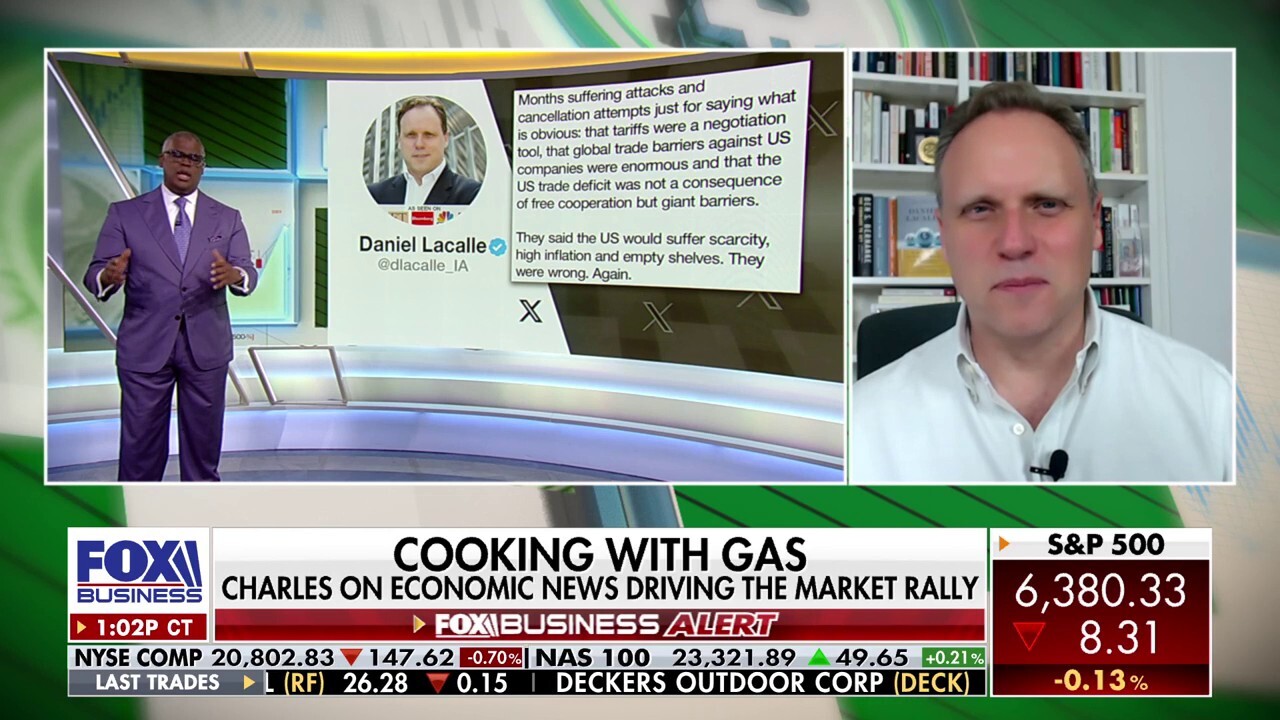
This analysis synthesizes expert commentary on Federal Reserve monetary policy amid intensifying geopolitical tensions. The event centers on Daniel Lacalle’s criticism of the Fed’s current stance, broadcast on Fox Business “Making Money” on March 16, 2026, just two days before the crucial FOMC meeting concluding March 18, 2026 [1][2].
| Risk Factor | Assessment |
|---|---|
Policy Error |
Expert concern that geopolitical caution may delay necessary rate cuts, potentially harming economic growth |
Oil-Driven Inflation |
50%+ oil price increase creating renewed inflation pressure that may prove sticky |
Fed Credibility |
If rates remain unchanged while inflation rises, the Fed may face criticism for inconsistent policy |
Market Volatility |
Continued uncertainty likely to generate significant market swings |
- For Markets: Resolution of geopolitical tensions could create opportunity for clearer Fed direction
- For Policy: The Fed may need to adopt a more nuanced approach distinguishing between supply-side and demand-side inflation
- For Economists: Current conditions may validate alternative policy frameworks
This event represents significant expert criticism of Federal Reserve policy stance ahead of a critical meeting. Daniel Lacalle’s characterization of delaying rate cuts due to war as “absolutely no sense” encapsulates a growing debate about appropriate monetary policy during geopolitical crises [2].
The key data points that frame this analysis include: the March 18, 2026 FOMC decision expected to maintain rates unchanged; oil prices up 50%+ since January due to Iran conflict; PCE inflation at its highest level since March 2024; and significant market volatility throughout the week of March 12-16, 2026 [0][1].
The analysis reveals a complex interplay between geopolitical events, monetary policy decisions, and market reactions. While the Fed prioritizes stability amid uncertainty, critics argue this approach may be counterproductive to actual economic conditions facing consumers and businesses. The coming weeks will be critical in determining how these competing considerations are balanced.
- March 18 FOMC decision and Summary of Economic Projections
- Powell press conference messaging on geopolitical risks
- Oil price trajectory and inflation data
- Market response to Fed communications
Insights are generated using AI models and historical data for informational purposes only. They do not constitute investment advice or recommendations. Past performance is not indicative of future results.
About us: Ginlix AI is the AI Investment Copilot powered by real data, bridging advanced AI with professional financial databases to provide verifiable, truth-based answers. Please use the chat box below to ask any financial question.