Strait of Hormuz Crisis: Allies Refuse Military Support as Oil Supply Disruption Escalates
Unlock More Features
Login to access AI-powered analysis, deep research reports and more advanced features
About us: Ginlix AI is the AI Investment Copilot powered by real data, bridging advanced AI with professional financial databases to provide verifiable, truth-based answers. Please use the chat box below to ask any financial question.
Related Stocks
This analysis integrates the geopolitical crisis in the Strait of Hormuz with its immediate market implications, drawing from multiple analytical perspectives and external sources.
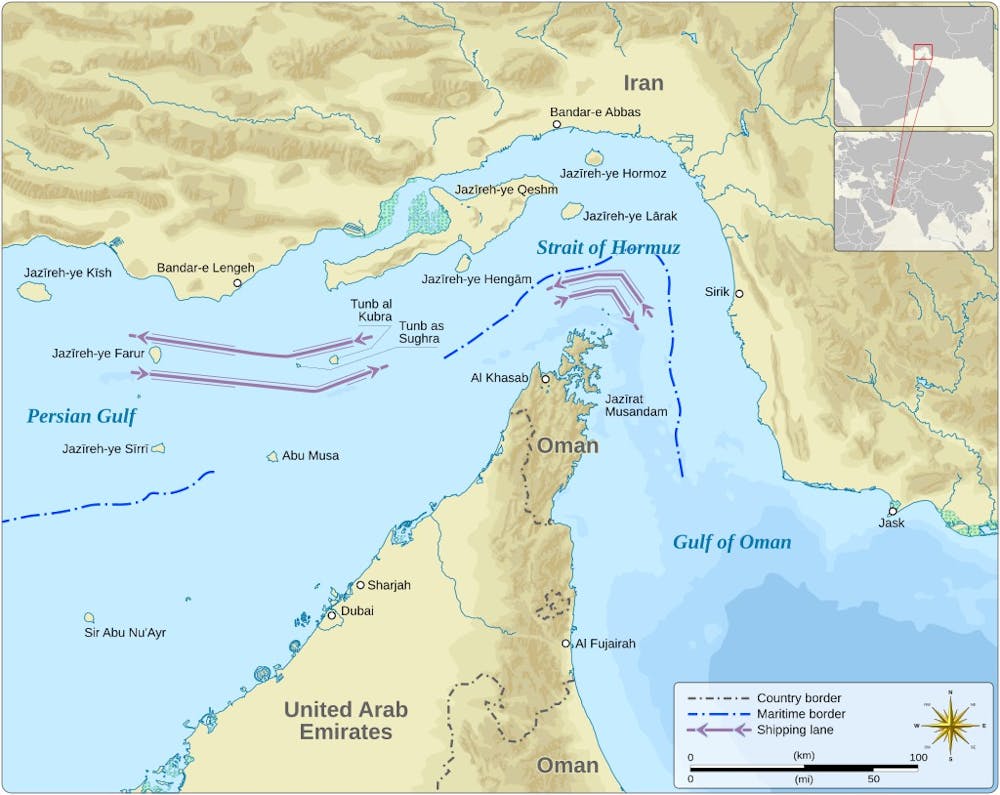
The Strait of Hormuz crisis represents a significant escalation in Middle East tensions. Iran closed the critical waterway in response to U.S. and Israeli airstrikes, with the USS strikes extending to bombing Iran’s Kharg Island [3]. This marks the largest supply disruption in global oil market history according to the IAEA [1].
President Trump publicly called on U.S. allies to contribute warships to help reopen the waterway, but France, Germany, the United Kingdom, Italy, Spain, Australia, and Japan have all publicly declined [1]. The allies have characterized the conflict as “not our war,” citing concerns about escalation. Notably, the timing coincides with the U.S. imposing steep tariffs on many of these same allies, adding an economic dimension to the diplomatic tension [1].
The President has responded with explicit warnings, suggesting that countries refusing help may find Washington “a far less generous partner” and that failure to assist could be “very bad for the future of NATO” [1][2]. While Trump claimed that countries are “sending ships,” he declined to name them, and it remains unclear whether any private assurances were made to the U.S. behind the scenes [2].
Despite the escalating crisis, equity markets demonstrated resilience on March 16, 2026. The S&P 500 closed at 6,699.37, up 0.37%; the Dow Jones Industrial Average rose 0.51% to 46,946.42; and the NASDAQ gained 0.15% to close at 22,374.18 [0]. This modest upward movement suggests markets may be pricing in the expectation that the disruption will be contained or resolved relatively quickly, or that strategic petroleum reserves will be deployed.
The energy sector is experiencing significant volatility, with oil prices surging over 30% to exceed $100 per barrel [1]. This represents a substantial shock to global energy markets and has implications for inflation, consumer costs, and central bank policy decisions worldwide.
The causal chain connecting geopolitical events to market movements operates through several pathways:
- Supply shock → Price surge: The 20 million bpd disruption directly removes supply from the market, creating upward pressure on prices
- Price surge → Inflation expectations: Higher oil prices feed into production costs and consumer prices, potentially reigniting inflation
- Geopolitical risk → Risk premium: Uncertainty about the duration and resolution of the crisis adds a risk premium to assets
- NATO tension → Policy uncertainty: Alliance friction creates uncertainty about future U.S. foreign and trade policy
The crisis reveals important intersections between geopolitics, energy markets, and alliance politics. The refusal of key allies to support U.S. military action highlights a potential inflection point in transatlantic relations, particularly given the backdrop of ongoing tariff disputes. This divergence between security interests and economic policy could reshape the post-war alliance architecture.
The energy market dynamics show how dependent the global economy remains on uninterrupted flows through chokepoints. The 20% of world oil supply disrupted through Hormuz represents not merely a market event but a systemic vulnerability that affects inflation, trade balances, and monetary policy worldwide.
The market’s relatively muted response (modest gains despite the crisis) may indicate several possibilities: investor confidence in U.S. strategic petroleum reserves being deployed; expectations of diplomatic resolution; or simply the resilience built up from years of geopolitical events being absorbed into market pricing.
However, the warning from Trump about NATO’s “very bad future” suggests this episode may have lasting implications for alliance relationships that extend beyond the immediate crisis. The explicit linkage between military cooperation and economic generosity signals a potential transactional approach to alliances that could reshape international relations.
-
Energy supply continuation risk: The prolonged closure of Hormuz could trigger further oil price spikes, potentially significantly exceeding $100/barrel and driving global inflation higher [1]. This would have cascading effects on consumer purchasing power, business costs, and central bank policy.
-
NATO alliance fracture risk: Trump’s explicit warnings about NATO’s future if allies don’t assist could permanently damage transatlantic relations [1][2]. This represents a strategic rather than merely diplomatic concern, potentially affecting security cooperation across multiple domains.
-
Escalation potential: U.S. allies’ refusal may push the administration toward more unilateral military action in the Gulf, increasing regional instability and the risk of wider conflict [1]. This could affect global supply chains beyond energy.
-
Economic policy implications: With the U.S. imposing tariffs on many allies simultaneously, the diplomatic tension has economic dimensions that could affect trade relationships broadly [1].
-
Energy sector momentum: Oil companies, shipping firms, and related energy equities may experience significant volatility and potential gains as the crisis unfolds, though this comes with elevated risk.
-
Strategic reserve release: Discussions of releasing 400 million barrels from U.S. reserves indicate the severity of the supply shock and could present trading opportunities around announcement timing [1].
-
Flight-to-safety assets: Gold and Treasury yields may continue to serve as risk gauges, with potential appreciation as uncertainty persists.
-
Alternative supply routes: Countries and companies seeking to reduce Hormuz dependency may accelerate investments in alternative infrastructure, creating long-term opportunities.
The Strait of Hormuz crisis represents a major geopolitical flashpoint with immediate and potentially lasting market implications:
- Supply disruption: Approximately 20 million barrels per day (20% of global supply) is affected—the largest in history [1]
- Price impact: Oil prices have surged over 30%, exceeding $100 per barrel [1]
- Alliance dynamics: France, Germany, UK, Italy, Spain, Australia, and Japan have refused to send warships [1]
- Strategic warnings: Trump has linked ally cooperation to future partnership terms [1][2]
- Market response: Equities showed modest gains (Dow +0.51%, S&P 500 +0.37%) on March 16 [0]
- Reserve considerations: Discussion of releasing 400 million barrels from strategic reserves indicates severity [1]
Key metrics to monitor include oil price levels around the $100/barrel mark, energy sector equity performance, strategic petroleum reserve announcements, NATO and allied government statements, and flight-to-safety flows into gold and Treasuries.
Insights are generated using AI models and historical data for informational purposes only. They do not constitute investment advice or recommendations. Past performance is not indicative of future results.
About us: Ginlix AI is the AI Investment Copilot powered by real data, bridging advanced AI with professional financial databases to provide verifiable, truth-based answers. Please use the chat box below to ask any financial question.