Jerome Powell Federal Reserve Status: Potential Extended Tenure Amid Political and Legal Conflict
Unlock More Features
Login to access AI-powered analysis, deep research reports and more advanced features
About us: Ginlix AI is the AI Investment Copilot powered by real data, bridging advanced AI with professional financial databases to provide verifiable, truth-based answers. Please use the chat box below to ask any financial question.
This analysis is based on the Fox Business interview with Senator Kevin Cramer published on March 17, 2026 [1], which discussed the potential for Jerome Powell to remain at the Federal Reserve beyond his chair term expiration in May 2026.
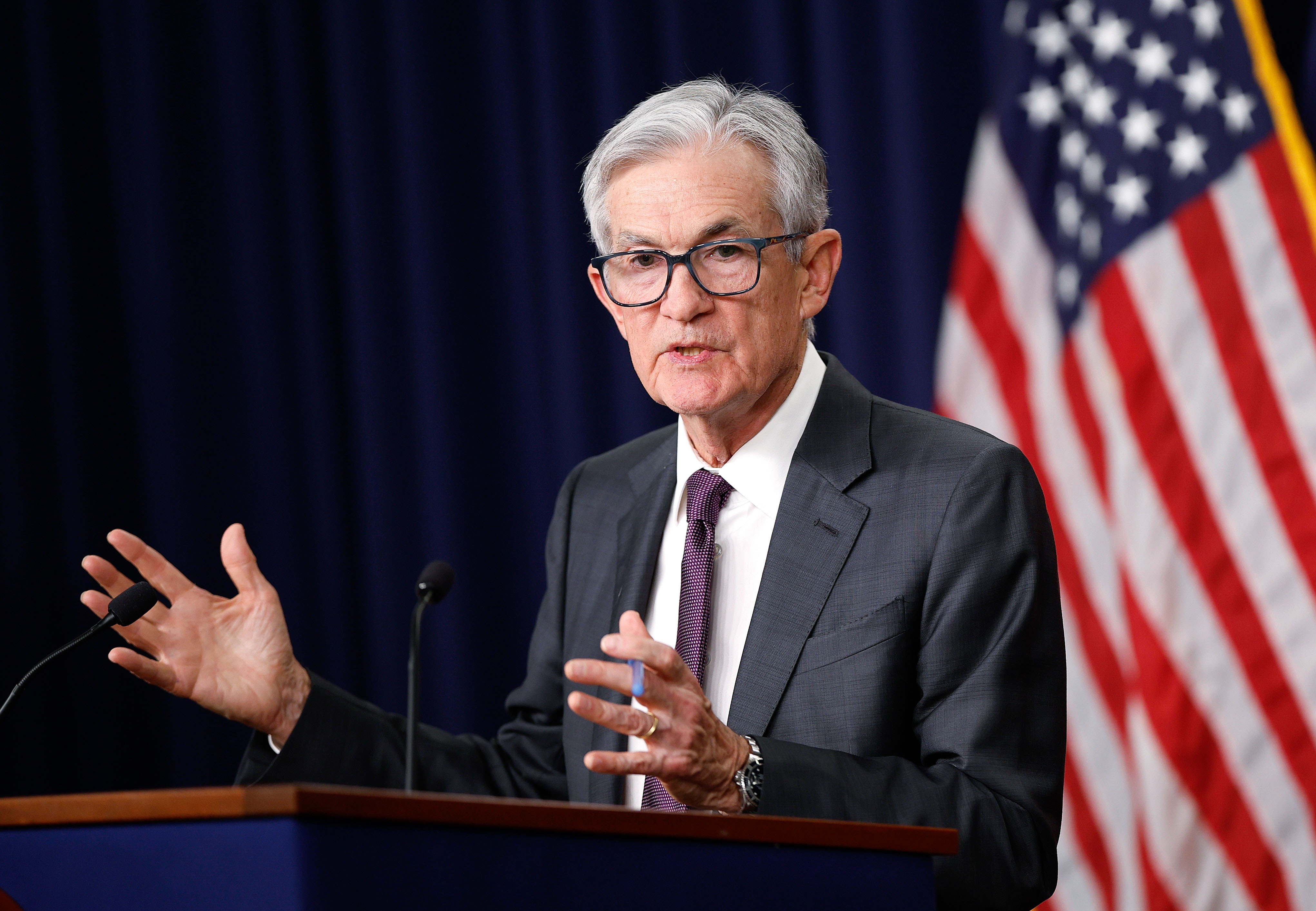
Jerome Powell’s term as Federal Reserve Chair expires in approximately two months (May 2026), creating significant uncertainty about the leadership of the central bank. However, his position as a Governor on the Federal Reserve Board extends until January 2028, providing a legal pathway for him to remain at the institution in a different capacity [2][3].
The situation is complicated by multiple ongoing conflicts:
-
DOJ Investigation: The Justice Department launched an investigation into the Fed’s handling of its renovation projects. Federal Judge James Boasberg blocked the DOJ subpoenas, ruling them “pretextual” and designed to pressure the Federal Reserve [1][3].
-
Political Pressure: The Trump administration has publicly called for Powell’s removal and nominated Kevin Warsh as his replacement [1].
-
Confirmation Stalemate: Senator Thom Tillis has blocked Kevin Warsh’s Senate confirmation, citing the need for resolution of the DOJ investigation before proceeding [1].
-
Powell’s Position: According to Reuters, Powell’s attorneys have indicated he would likely remain on the Board of Governors if the investigation continued [2].
The CLARITY Act mentioned in Senator Cramer’s interview (though not widely reported in mainstream sources) may address issues of Fed transparency or governance. This legislation, if introduced, would potentially provide additional framework for central bank operations.
The legal precedent for Powell’s continued service is complex. While some chairs have remained temporarily after term expiration (Powell in 2022, Greenspan in 1996), remaining as a governor after serving as chair would be “precedent-breaking” according to some analysts [3].
The Powell situation represents a convergence of multiple institutional stresses:
- Institutional Independence: The DOJ investigation and political pressure raise fundamental questions about Federal Reserve independence, a cornerstone of U.S. monetary policy credibility [1][3].
- Legal-Constitutional Conflict: The court ruling finding DOJ subpoenas “pretextual” establishes an important precedent regarding executive branch authority over the central bank [3].
- Confirmation Process Dysfunction: The blocking of Warsh’s confirmation creates a governance vacuum at a critical time for monetary policy.
The potential for Powell to remain on the Board—even without the chairmanship—has several implications:
- Policy Continuity: If Powell remains, there may be more continuity in monetary policy approach, though the chair typically sets the tone.
- Market Uncertainty: Extended leadership uncertainty could increase market volatility in the near term.
- Precedent for Future Conflicts: How this situation resolves will establish precedents for future tensions between the executive branch and the Federal Reserve.
- Fed Independence Risk: The DOJ investigation and political pressure represent significant challenges to central bank independence [1][3].
- Market Volatility: Leadership uncertainty could increase market uncertainty, particularly in bond markets.
- Legal Battles: Potential for continued legal conflicts between DOJ and Fed.
- Confirmation Uncertainty: Kevin Warsh’s confirmation may be delayed indefinitely pending investigation resolution [1].
- Institutional Credibility: Prolonged conflict could undermine confidence in Fed governance.
- Resolution Pathway: If the DOJ investigation concludes without major findings, the path to confirming new leadership becomes clearer.
- Judge’s Ruling Precedent: The ruling blocking subpoenas strengthens Fed institutional autonomy [1][3].
- Legal Stay: Powell’s governor term provides a legally solid basis for continued service until January 2028 [2][3].
Based on the analysis of available information [0]:
- Chair Term Expiration: May 2026 (approximately 2 months from mid-March 2026)
- Governor Term: Extends through January 2028
- DOJ Investigation Status: Subpoenas blocked by federal judge as “pretextual”
- Trump Administration Position: Called for Powell’s removal; nominated Kevin Warsh
- Confirmation Status: Warsh’s confirmation blocked by Senator Tillis pending investigation resolution
- Powell’s Likelihood: Attorneys indicated he would likely remain on the Board if investigation continued
Insights are generated using AI models and historical data for informational purposes only. They do not constitute investment advice or recommendations. Past performance is not indicative of future results.
About us: Ginlix AI is the AI Investment Copilot powered by real data, bridging advanced AI with professional financial databases to provide verifiable, truth-based answers. Please use the chat box below to ask any financial question.