U.S. Treasury Yields Fall, Dollar Stable Ahead of Fed's Likely Hold Decision
Unlock More Features
Login to access AI-powered analysis, deep research reports and more advanced features
About us: Ginlix AI is the AI Investment Copilot powered by real data, bridging advanced AI with professional financial databases to provide verifiable, truth-based answers. Please use the chat box below to ask any financial question.
Related Stocks
This analysis is based on the Wall Street Journal report [1] published on March 18, 2026, covering pre-Fed meeting market positioning. The Federal Reserve’s first rate decision since the U.S.-Israeli war with Iran began has created a complex backdrop for monetary policy, as spiking oil prices conflict with signs of economic weakness.
The Treasury yield decline reflects cautious positioning ahead of the Fed’s decision, with the 10-year yield falling approximately 2 basis points to around 4.175%-4.182% [2][3]. The 30-year Treasury yield dropped over 2 basis points to 4.824%, while the 2-year yield decreased by more than 1 basis point to 3.659% [3]. The dollar Index (DXY) traded essentially flat at approximately 99.54-99.55, indicating currency stability despite geopolitical uncertainties [2][3].
The timing of this Fed meeting carries significant weight in several dimensions:
-
Geopolitical Context: This is the first rate decision since the U.S.-Israeli war with Iran began, with oil prices having surged approximately 50% in a single month to around $96 per barrel for WTI crude [4]. This energy price shock complicates the Fed’s policy calculus significantly.
-
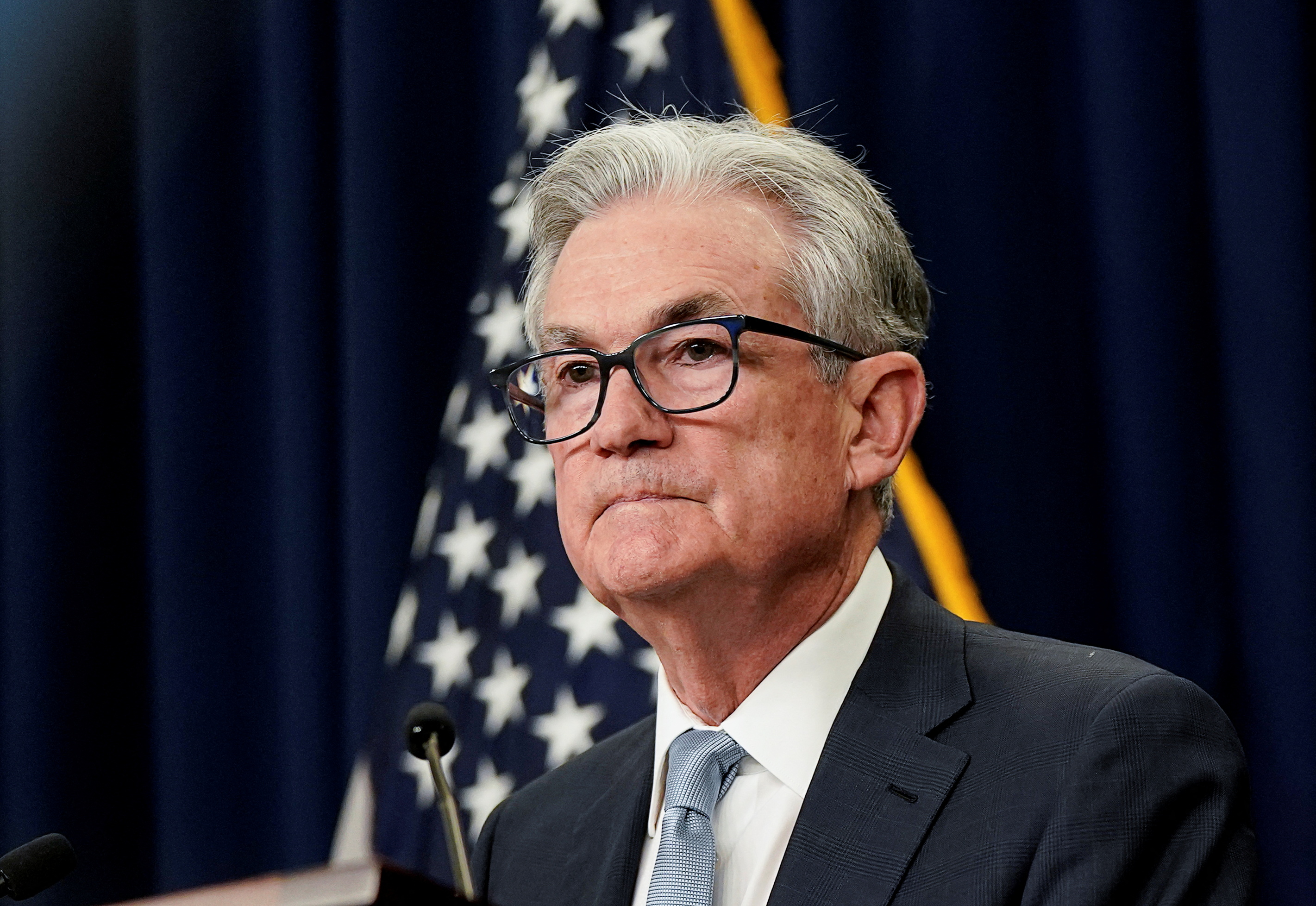
Leadership Transition: Fed Chair Jerome Powell’s term ends May 15, 2026, making this his penultimate meeting. The DOJ investigation into Powell creates additional uncertainty, with Senator Thom Tillis blocking Kevin Warsh’s confirmation as replacement until the probe is resolved [4].
-
Central Bank Synchronization: All four major central banks (Fed, ECB, BOJ, BOE) are meeting the same week, with all expected to hold rates [4]. This global pause in monetary easing reflects shared concerns about inflation persistence.
-
Blackout Period: The Fed is in its blackout period (March 7-19, 2026), limiting public comments from Fed officials and intensifying market focus on the upcoming decision and Powell’s press conference [4].
Recent economic data presents a mixed picture that complicates the Fed’s policy decision:
The Q4 2025 GDP growth came in at just 0.7% annualized, indicating sluggish economic activity [4]. More concerning, February 2026 saw a loss of 92,000 jobs, while the unemployment rate rose from 4.3% to 4.4% [4]. This labor market deterioration contrasts sharply with the Fed’s dual mandate of maximum employment and price stability.
The inflation picture has been complicated by energy prices. Gas prices have risen 81 cents to $3.79 per gallon [4], creating second-round effects that could influence broader inflation expectations. The Fed’s three consecutive quarter-point rate cuts to end 2025 were followed by a hold in January 2026, suggesting the central bank may be entering a prolonged pause phase [4].
The yield curve shows modest flattening, with short-term yields (2-year at 3.659%) remaining relatively stable while long-term yields decline slightly [3]. This pattern suggests markets are pricing in a prolonged pause rather than immediate easing, reflecting uncertainty about the economic trajectory.
The dollar’s stability despite elevated geopolitical risk indicates currency markets have already priced in the expected rate hold. A potential policy divergence could emerge if the Fed holds while other central banks resume rate cuts later in 2026, which could strengthen the dollar [4].
U.S. equity futures pointed to a third consecutive day of gains, with S&P 500 futures up 0.04%, Dow futures up 0.06%, and Nasdaq futures up 0.06% [4]. European markets were expected to open higher, with Germany’s DAX up 0.5%, France’s CAC 40 up 0.5%, and Italy’s FTSE MIB up 0.8% [3].
Sector rotation analysis [0] reveals:
- Top Performers: Industrials (+1.63%), Energy (+1.11%), Consumer Cyclical (+0.88%)
- Underperformers: Consumer Defensive (-1.06%), Real Estate (-0.82%), Basic Materials (-0.71%)
The energy sector’s strength directly correlates with elevated oil prices, while defensives and rate-sensitive sectors (real estate) underperform as investors assess the Fed’s rate path [0].
The VIX volatility index remains elevated at 22.80, indicating persistent market uncertainty despite the modest equity futures gains [4].
The analysis reveals several interconnected dynamics:
-
Energy-Inflation-Policy Nexus: The 50% surge in oil prices creates a direct challenge to the Fed’s inflation targeting mandate, potentially forcing a hawkish hold even as economic data suggests weakness. This represents a classic supply-side inflation shock that complicates traditional monetary policy response.
-
Leadership Uncertainty Premium: The combination of Powell’s impending departure and the DOJ investigation introduces governance uncertainty that could affect market confidence in Fed policy continuity. Recent federal court rulings blocking DOJ subpoenas to the Fed’s Board add another layer of complexity [4].
-
Global Policy Synchronization: The simultaneous rate hold across major central banks suggests a coordinated assessment that inflation remains a greater risk than economic slowdown, at least in the near term.
-
Labor Market Divergence: The 92,000 job loss in February represents a significant deterioration that conflicts with the Fed’s employment mandate, creating a difficult balancing act between competing objectives.
The market’s 99% probability pricing of a hold decision [4] suggests limited immediate reaction to the decision itself. The critical information will come from:
- Powell’s press conference toneregarding oil prices and inflation trajectory
- Summary of Economic Projectionsshowing updated 2026 rate and inflation forecasts
- Dot plot changesindicating the committee’s collective view on the policy path
If the Fed signals concern about oil-price-driven inflation, rate cut expectations for later in 2026 could be pushed back, potentially strengthening the dollar and pressuring risk assets. Conversely, emphasis on labor market weakness could maintain easing expectations.
-
Oil Price Volatility: Further spikes above $100/barrel could force the Fed’s hand on rates despite economic weakness, potentially triggering risk asset selloffs [4]
-
Labor Market Acceleration: Additional job losses could signal economic recession risk, pressuring equities despite rate stability
-
Geopolitical Escalation: The Iran conflict remains fluid, with potential for further energy price shocks
-
Inflation Persistence: Higher oil prices may raise the Fed’s near-term inflation forecast, compressing the window for rate cuts
-
Policy Divergence Risk: If the Fed holds while ECB/BOE resume cutting, dollar strength could emerge, impacting international revenues for U.S. companies
-
Leadership Transition Uncertainty: Powell’s departure and potential policy shifts under new leadership create medium-term uncertainty
-
Energy Sector Momentum: Given elevated oil prices, energy equities may continue outperforming near-term [0]
-
Yield Curve Positioning: The modest flattening suggests opportunity for curve-steepening trades if economic data deteriorates further
-
Quality Defensive Rotation: The underperformance of real estate and consumer defensives suggests rotation opportunity if rate cut expectations increase
This Federal Reserve meeting represents a critical juncture where multiple factors converge: the first rate decision since oil prices spiked 50% amid Middle East conflict, signs of labor market deterioration, and significant leadership transition uncertainty. The market has fully priced in a hold decision (99% probability), with attention shifting to forward guidance on how the Fed will navigate the tradeoff between economic weakness and inflation risks from energy prices.
The Treasury yield decline and dollar stability suggest markets expect a balanced, cautious approach from the Fed. Key deliverables to watch include Powell’s press conference messaging on energy prices, any revisions to the dot plot projections, and the overall tone regarding the economic outlook. The elevated VIX at 22.80 indicates continued hedging activity, suggesting markets remain prepared for volatility around the decision and subsequent policy communications.
Insights are generated using AI models and historical data for informational purposes only. They do not constitute investment advice or recommendations. Past performance is not indicative of future results.
About us: Ginlix AI is the AI Investment Copilot powered by real data, bridging advanced AI with professional financial databases to provide verifiable, truth-based answers. Please use the chat box below to ask any financial question.