Fed Holds Rates Steady Amid Iran War Escalation and Political Pressure
Unlock More Features
Login to access AI-powered analysis, deep research reports and more advanced features
About us: Ginlix AI is the AI Investment Copilot powered by real data, bridging advanced AI with professional financial databases to provide verifiable, truth-based answers. Please use the chat box below to ask any financial question.
Related Stocks
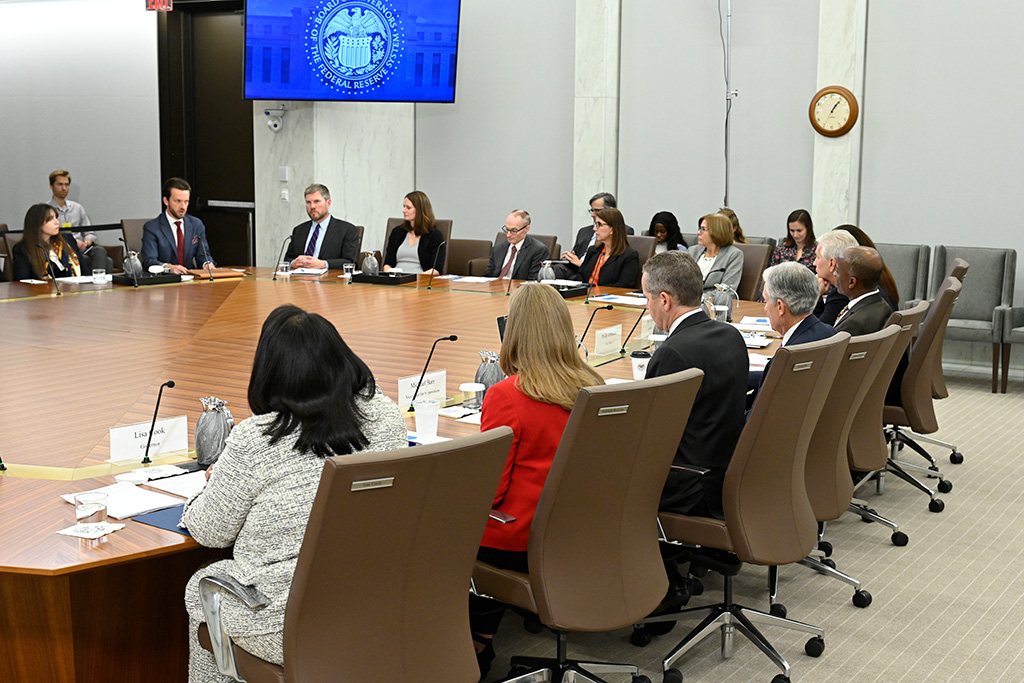
The Federal Reserve’s decision to hold interest rates steady on March 18, 2026, reflects a complex convergence of geopolitical crisis and domestic political tensions. The U.S.-Iran conflict, which escalated with strikes launched by the U.S. and Israel on February 28, 2026, has created the largest oil supply disruption in history, with the Strait of Hormuz—through which approximately 20% of global oil passes—effectively closed [2][3]. This supply shock has driven Brent crude to $108.28/barrel and WTI to $97.58/barrel, with national gas prices averaging $3.84/gallon, the highest since September 2023 [2].
The Fed’s decision to maintain rates despite political pressure from the White House demonstrates institutional resistance to what Judge James Boasberg described as an attempt to “pressure Chair into voting for lower interest rates or resigning” [4]. The judge’s ruling blocking DOJ subpoenas to the Fed found “essentially zero evidence” to support a criminal investigation of Powell, characterizing the government’s actions as a clear attempt to undermine monetary policy independence [4].
The Producer Price Index (PPI) data released for February reveals mounting inflationary pressures that complicate the rate-cut calculus. Wholesale inflation rose 0.7% month-over-month, significantly exceeding the 0.3% expected, pushing the annual rate to 3.4%—the highest since February 2025 [2]. Food prices increased 2.4% and energy rose 2.3%, while core PPI stood at 3.9% annually [2]. These figures suggest that the oil supply shock is already transmitting through the wholesale economy, with potential pass-through to consumer prices looming.
The labor market adds another layer of complexity, with February data showing 92,000 jobs shed—the first contraction in recent memory—raising recessionary concerns that conflict with the inflation-fighting mandate [2]. This creates a potential stagflationary scenario for the Fed, where monetary policy must balance dual objectives that are moving in opposite directions.
The Trump administration’s public pressure on the Fed represents an extraordinary challenge to central bank independence. President Trump wrote on Truth Social: “When is ‘Too Late’ Powell lowering INTEREST RATES?” while simultaneously nominating Kevin Warsh to replace Powell [1][2]. However, Senator Thom Tillis is blocking Warsh’s confirmation, creating uncertainty about the Fed’s leadership trajectory [2].
The DOJ’s investigative actions against Powell, which included subpoenas that a federal judge characterized as political pressure, mark a significant departure from traditional norms surrounding central bank independence [4]. DOJ attorney Jeanine Pirro has indicated plans to appeal Judge Boasberg’s ruling, ensuring this institutional confrontation will continue [4].
Central banks worldwide are recalibrating their policy stance in response to the energy crisis. The European Central Bank is now pricing in potential rate hikes rather than cuts, while Australia raised rates by 0.25% on March 17 [3]. This divergence between U.S. policy holding and global tightening could strengthen the dollar, affecting international portfolios and emerging market conditions [3].
- Energy Price Risk: Oil above $100/barrel with sustained Strait of Hormuz disruption could prolong elevated inflation beyond market expectations [3]
- Inflation Persistence: PPI at 3.4% with rising food and energy components indicates the inflation battle may extend into late 2026 or 2027 [2]
- Fed Independence Concern: DOJ’s subpoena campaign and judicial findings of political pressure raise questions about future monetary policy credibility [4]
- Equity Vulnerability: Week-over-week declines with elevated volume indicate potential continued selling pressure [0]
- Global Divergence: ECB tightening while Fed holds could strengthen the dollar, affecting international portfolio returns [3]
- Diversification Value: Portfolio exposure to defensive sectors and international diversification may help manage heightened volatility
- Inflation-Protected Assets: TIPS and commodity-linked instruments may provide hedge value given persistent inflation signals
- Cash Alternative: Elevated rate levels provide competitive yields for cash positions while market conditions clarify
This analysis synthesizes multiple analytical dimensions to present a comprehensive view of the Fed’s March 18, 2026 rate decision. The Federal Reserve held rates at 3.5%-3.75% amid the Iran war’s significant disruption to global oil supplies, with Brent crude at $108.28/barrel and wholesale inflation at 3.4% annually [2]. President Trump’s public pressure on Chair Powell via Truth Social, combined with the DOJ’s subpoena campaign that a federal judge characterized as political interference, represents an unprecedented challenge to central bank independence [1][4]. Market data shows broad-based declines with the Dow falling 0.73%, S&P 500 down 0.41%, Nasdaq declining 0.47%, and Russell 2000 dropping 0.67%, with all major indices down 1-1.8% over the past week [0]. Global central banks are scaling back rate cut expectations, with the ECB now pricing potential hikes and Australia having raised rates by 0.25% on March 17 [3].
Insights are generated using AI models and historical data for informational purposes only. They do not constitute investment advice or recommendations. Past performance is not indicative of future results.
About us: Ginlix AI is the AI Investment Copilot powered by real data, bridging advanced AI with professional financial databases to provide verifiable, truth-based answers. Please use the chat box below to ask any financial question.