Fed Holds Rates Steady Amid Middle East Uncertainty; Powell Cites "Uncertain" Implications
Unlock More Features
Login to access AI-powered analysis, deep research reports and more advanced features
About us: Ginlix AI is the AI Investment Copilot powered by real data, bridging advanced AI with professional financial databases to provide verifiable, truth-based answers. Please use the chat box below to ask any financial question.
Related Stocks
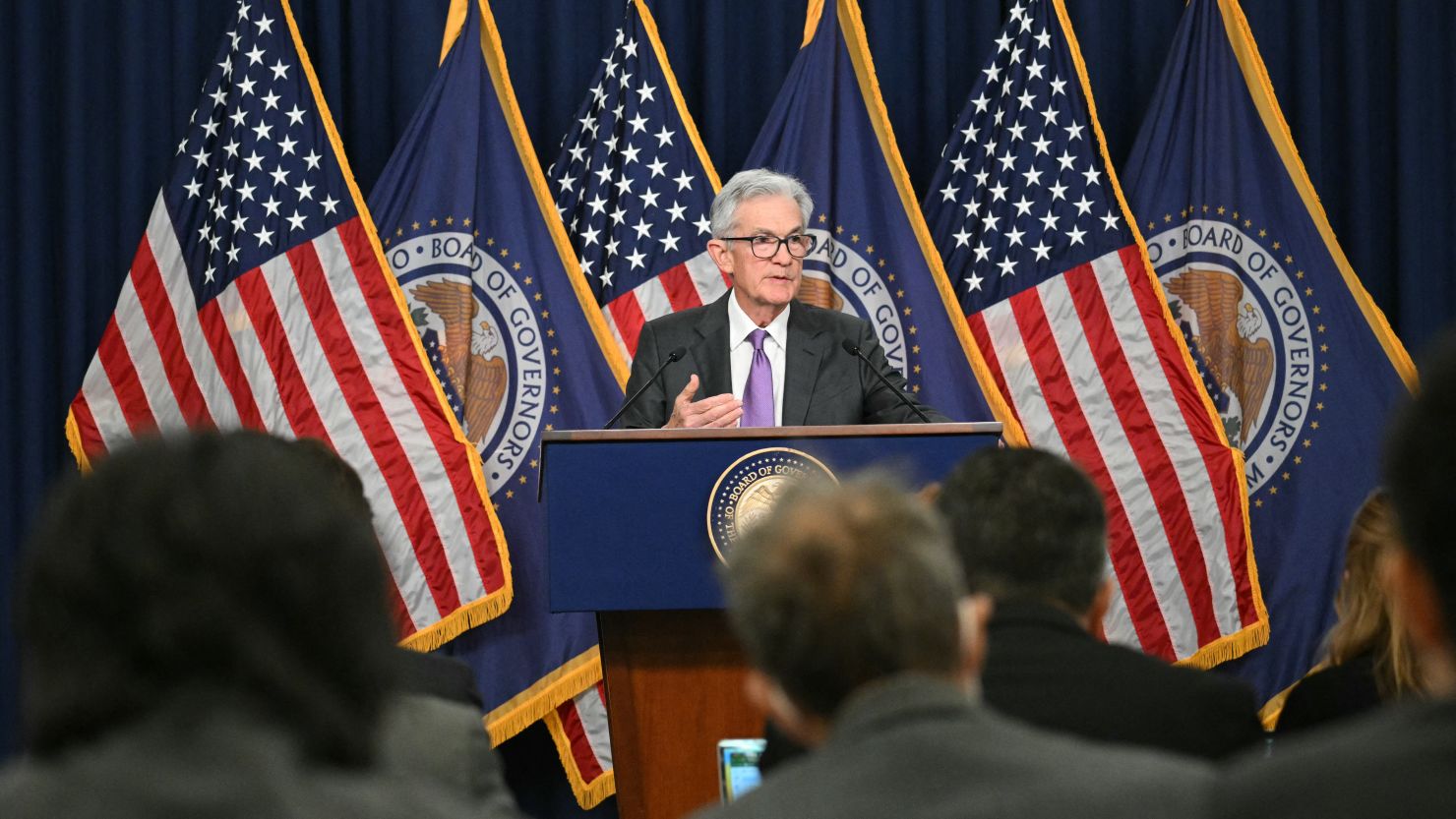
The Federal Reserve’s March 18, 2026 FOMC decision represents a critical juncture in U.S. monetary policy, as policymakers navigate the complex intersection of geopolitical crisis and domestic economic weakening. Chairman Jerome Powell’s explicit acknowledgment that “the implications of developments in the Middle East for the US economy are uncertain” signals a significant shift in how the Fed communicates policy uncertainty to markets [1][2].
The ongoing conflict with Iran and Tehran’s blockade threat against the Strait of Hormuz represents a material supply shock risk for the global economy. The Strait handles approximately 20% of global oil supply, and any disruption would immediately translate into higher energy prices at a time when inflation remains elevated at 3.1%—well above the Fed’s 2% target [1][3][4]. The current oil price of $97.05 per barrel (+0.87%) does not yet fully reflect potential supply disruptions, creating significant uncertainty for inflation forecasting [0].
The FOMC finds itself in a difficult position, torn between two conflicting mandate pressures. On the inflation front, the 3.1% year-over-year PCE reading predates the recent oil price surge, meaning true inflation readings have likely not yet captured the full impact of elevated energy costs [1][3]. Second-round effects from energy price spikes could reignite inflationary pressures that appeared to be moderating.
Simultaneously, the labor market is showing clear signs of weakness. The economy shed 92,000 jobs in February, and unemployment has risen to 4.2-4.4% [2][3]. This deterioration creates pressure for rate cuts to support economic growth, yet the Fed cannot act confidently without understanding how the Middle East situation will unfold.
The market’s negative reaction—with all major indices declining and the VIX spiking to 24.10—indicates that investors recognize the heightened uncertainty [0]. The 7.73% surge in the volatility index suggests elevated fear about potential outcomes, whether from escalation of the Middle East conflict or from Fed policy missteps.
The Fed’s decision to hold rates steady while explicitly citing Middle East uncertainty marks a notable departure from typical forward guidance. Powell’s language suggests the Fed is effectively deferring major policy decisions until the geopolitical situation clarifies. This represents a form of “wait-and-see” monetary policy that acknowledges the limits of economic forecasting during periods of geopolitical crisis.
The disconnect between elevated inflation (3.1%) and weakening labor conditions (92,000 jobs lost in February) creates a classic policy trap. Historically, the Fed has prioritized fighting inflation, but the dual mandate requires consideration of maximum employment. The current situation lacks clear historical precedent—the last time the Fed faced a major oil supply shock while simultaneously managing a weakening labor market was during the 1970s, but the institutional framework and policy tools were substantially different.
The political dimension adds another layer of complexity. President Trump’s administration continues pressuring the Fed for rate cuts, while Powell’s term ends in May 2026 and his replacement confirmation has been delayed [2][4]. This creates potential questions about Fed independence and the consistency of monetary policy communication.
- Energy Supply Shock: The Strait of Hormuz blockade threat represents a potential 20% disruption to global oil supply, which could rapidly push oil prices significantly higher than current $97.05 level [4]
- Inflation Reacceleration: Current 3.1% inflation does not account for recent oil price increases; second-round effects could prove persistent
- Policy Constraint: The Fed faces a lose-lose scenario—raising rates to fight war-induced inflation could further damage the labor market, while cutting rates could exacerbate inflation
- Market Volatility: VIX at 24.10 indicates elevated uncertainty; expect continued turbulence as Middle East developments unfold
- Energy sector companies may benefit from elevated oil prices and geopolitical risk premiums
- Defensive sectors (utilities, consumer staples) may outperform if uncertainty persists
- Gold and other safe-haven assets may provide portfolio protection
- Volatility trading strategies could capitalize on elevated VIX levels
This analysis synthesizes findings from multiple analytical perspectives on the Fed’s March 2026 rate decision:
- Interest Rate Decision: Held steady at 3.50-3.75% for second consecutive meeting [2][3]
- Key Fed Statement: Acknowledged significant uncertainty from Middle East developments [1][2]
- Inflation Context: 3.1% year-over-year, above 2% target, not yet reflecting recent oil spike [1][3]
- Labor Market: 92,000 jobs shed in February, unemployment at 4.4% [2][3]
- Oil Market: WTI at $97.05/barrel (+0.87%), elevated due to Middle East tensions [0][4]
- Market Response: Major indices down 0.86-1.36%, VIX up 7.73% to 24.10 [0]
The critical data point is the Fed’s explicit acknowledgment of Middle East uncertainty, which represents a notable shift from standard forward guidance language. Markets should monitor upcoming inflation data (next PCE report), March jobs figures, and any developments regarding the Strait of Hormuz situation, as these will be critical inputs for the Fed’s next policy decision.
Insights are generated using AI models and historical data for informational purposes only. They do not constitute investment advice or recommendations. Past performance is not indicative of future results.
About us: Ginlix AI is the AI Investment Copilot powered by real data, bridging advanced AI with professional financial databases to provide verifiable, truth-based answers. Please use the chat box below to ask any financial question.