Fed Holds Rates Steady at 3.5%-3.75% as Powell Notes Elevated Inflation
Unlock More Features
Login to access AI-powered analysis, deep research reports and more advanced features
About us: Ginlix AI is the AI Investment Copilot powered by real data, bridging advanced AI with professional financial databases to provide verifiable, truth-based answers. Please use the chat box below to ask any financial question.
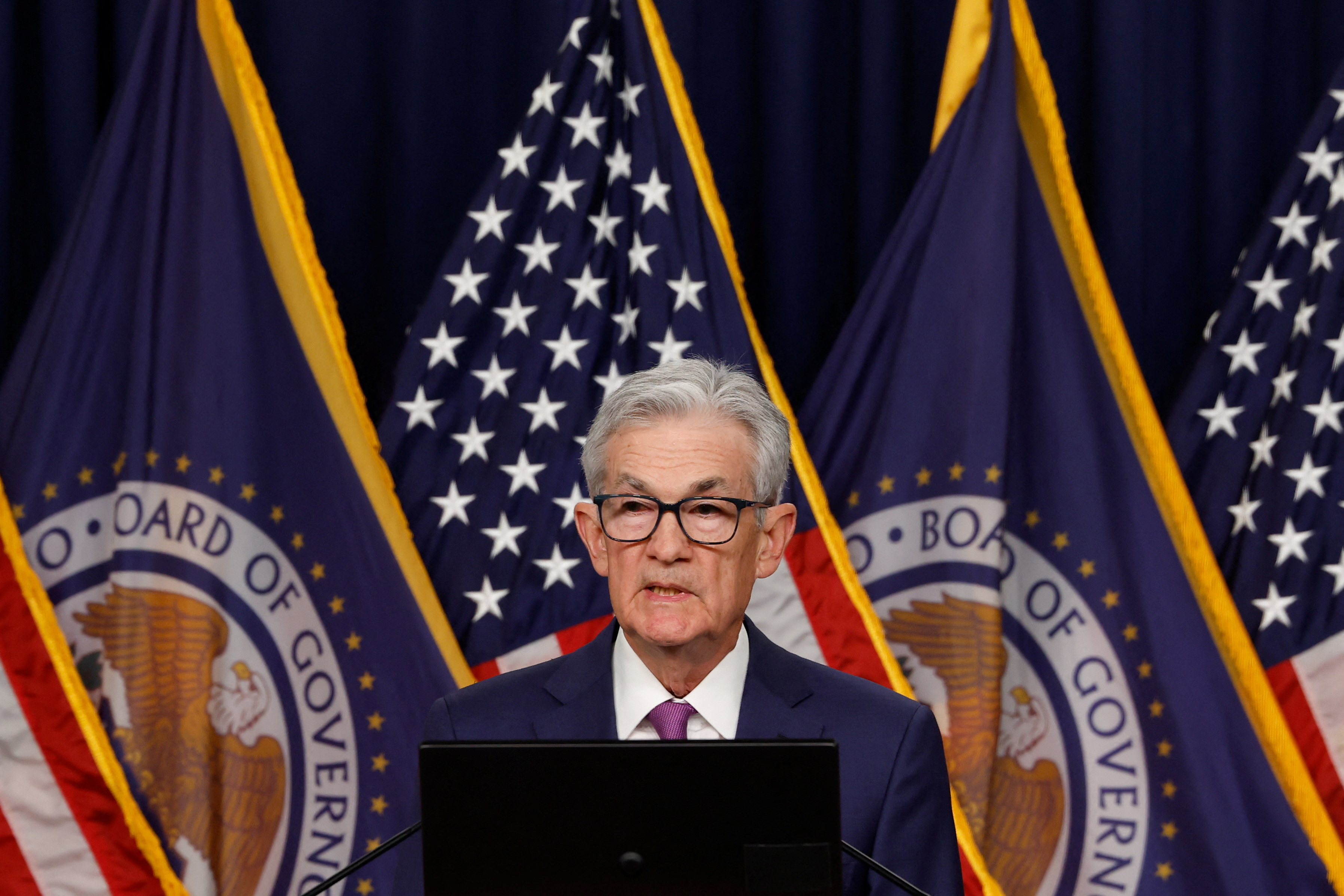
The Federal Reserve’s decision to hold interest rates steady at 3.5%-3.75% represents a cautious stance amid conflicting economic signals [1][2]. The 11-1 vote, with Governor Stephen Miran dissenting, underscores growing divisions within the FOMC about the economic outlook. Chair Powell’s characterization of inflation as “somewhat elevated” relative to the 2% target signals that while progress has been made, the inflation fight is not yet complete [1][2].
The decision comes against a backdrop of significant geopolitical uncertainty. The Iran conflict has driven Brent crude oil prices to $108.28 per barrel and gasoline to $3.84 per gallon, with seven states now averaging over $4 per gallon [3]. These energy price shocks create new upward pressure on inflation that has not yet been fully reflected in official readings. The Fed acknowledged this uncertainty, noting it remains “too soon to know” the full economic impact of the Middle East conflict [2][3].
Market reaction was muted but telling: the Dow fell 173 points and the S&P 500 declined 0.3%, while Treasury yields ticked higher and the US dollar strengthened [3]. These movements suggest investors are adjusting expectations for an extended period of restrictive monetary policy.
- Energy prices could continue rising if the Iran conflict escalates, undermining inflation progress
- Labor market weakness could deepen, forcing the Fed to prioritize employment over inflation fighting
- Political interference in Fed operations could undermine institutional credibility
- The one dissenter (Governor Miran) signals growing internal disagreement about policy direction
- If inflation continues declining toward 2%, the Fed may have room to ease policy in late 2026
- Energy price stabilization could remove a major source of inflation pressure
- Clear communication from the Fed provides predictability for financial planning
This FOMC decision reflects the Federal Reserve’s delicate balancing act between cooling inflation and supporting a potentially weakening labor market. The Fed maintained its target range for the federal funds rate at 3.5%-3.75% and continues to project one rate cut in 2026 followed by another in 2027 [2][3]. Chair Powell’s acknowledgment that inflation remains “somewhat elevated” relative to the 2% goal underscores that the battle against inflation is not yet won [1].
The Iran conflict’s impact on energy markets represents a significant wildcard in the economic outlook. With oil at $108.28/barrel and gasoline at $3.84/gallon, these price increases could feed through to broader inflation measures in the coming months [3]. The Fed’s next meeting in April 2026 will provide an important update on whether these energy-driven pressures require a reassessment of the policy stance.
Insights are generated using AI models and historical data for informational purposes only. They do not constitute investment advice or recommendations. Past performance is not indicative of future results.
About us: Ginlix AI is the AI Investment Copilot powered by real data, bridging advanced AI with professional financial databases to provide verifiable, truth-based answers. Please use the chat box below to ask any financial question.