Fed's Powell: Too Soon to Assess Iran Conflict Economic Impact as Oil Surpasses $100
Unlock More Features
Login to access AI-powered analysis, deep research reports and more advanced features
About us: Ginlix AI is the AI Investment Copilot powered by real data, bridging advanced AI with professional financial databases to provide verifiable, truth-based answers. Please use the chat box below to ask any financial question.
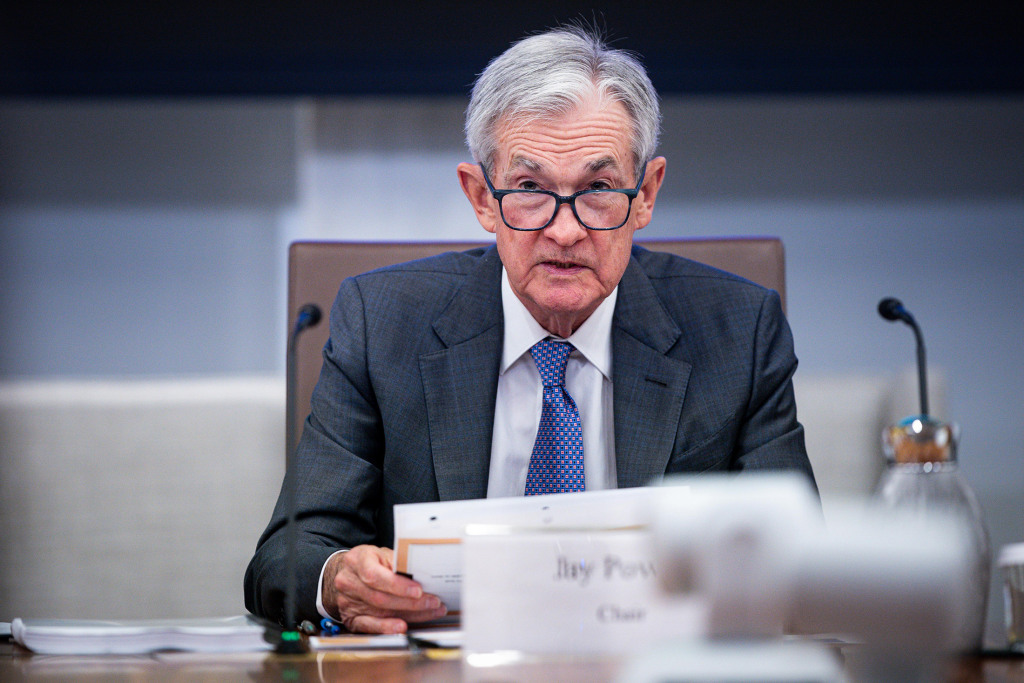
Federal Reserve Chair Jerome Powell acknowledged on March 18, 2026, that it remains “too soon to know” the full economic impact of the escalating Iran conflict, as oil prices surged above $100 per barrel for the first time since 2022 [1]. This marks the Fed’s first explicit acknowledgment of uncertainty surrounding the geopolitical crisis, reflecting the unprecedented nature of the situation and its potential macroeconomic ramifications.
The FOMC’s decision to maintain the federal funds rate at 3.5%-3.75% was not unanimous, with Governor Stephen Miran dissenting in favor of a 25 basis point rate cut [1]. This rare dissent signals significant internal debate within the Federal Reserve about the appropriate policy response to mounting economic headwinds. The divided vote suggests that while the majority of policymakers remain focused on inflation risks, a meaningful faction recognizes the growing threats to economic growth.
Market reaction on March 18 was notably negative, with major indices experiencing substantial declines: the S&P 500 fell 1.08%, the NASDAQ dropped 1.20%, and the Dow Jones Industrial Average declined 1.47% [0]. This marked the third consecutive week of losses across major indices, indicating elevated investor anxiety about the confluence of geopolitical instability and monetary policy uncertainty.
-
Inflation Acceleration: Energy price increases will likely translate to higher consumer costs across transportation, heating, and manufacturing sectors, potentially reversing recent progress on inflation moderation.
-
Market Volatility: The three-week decline in major indices suggests脆弱投资者情绪 and potential for continued volatility as geopolitical developments unfold [0].
-
Policy Paralysis Risk: The 11-1 FOMC vote demonstrates significant internal disagreement, potentially limiting the Fed’s ability to respond decisively to evolving conditions.
-
Global Economic Slowdown: Oil-importing nations face heightened recession risk, which could reduce demand for U.S. exports and amplify domestic economic challenges [2][3].
-
Energy Sector Performance: Elevated oil prices may benefit domestic energy producers and related infrastructure companies in the near term.
-
Policy Flexibility: The dissent within the FOMC suggests room for policy adjustment as conditions clarify, potentially allowing for more targeted responses.
-
Investment in Energy Independence: Sustained high oil prices may accelerate interest in renewable energy alternatives and domestic production capabilities.
This analysis is based on Federal Reserve Chair Jerome Powell’s statement published on March 18, 2026 [1], indicating that the economic impact of the Iran conflict remains too uncertain to assess definitively. Key data points include the Fed’s decision to maintain rates at 3.5%-3.75% with an 11-1 vote, oil prices exceeding $100 per barrel for the first time since 2022, and market indices showing significant declines on March 18 [0].
The convergence of geopolitical uncertainty, inflationary pressure, and market vulnerability presents a complex landscape for economic assessment. While the immediate impact on consumer prices appears likely, the duration and ultimate economic consequences of the Iran conflict remain difficult to quantify. Market participants should monitor oil price trajectories, upcoming Fed communications, and geopolitical developments closely as the situation evolves.
Insights are generated using AI models and historical data for informational purposes only. They do not constitute investment advice or recommendations. Past performance is not indicative of future results.
About us: Ginlix AI is the AI Investment Copilot powered by real data, bridging advanced AI with professional financial databases to provide verifiable, truth-based answers. Please use the chat box below to ask any financial question.