Fed Holds Rates at 3.5%-3.75% Amid Iran War Uncertainty; Expert Commentary Analyzes Policy Stance
Unlock More Features
Login to access AI-powered analysis, deep research reports and more advanced features
About us: Ginlix AI is the AI Investment Copilot powered by real data, bridging advanced AI with professional financial databases to provide verifiable, truth-based answers. Please use the chat box below to ask any financial question.
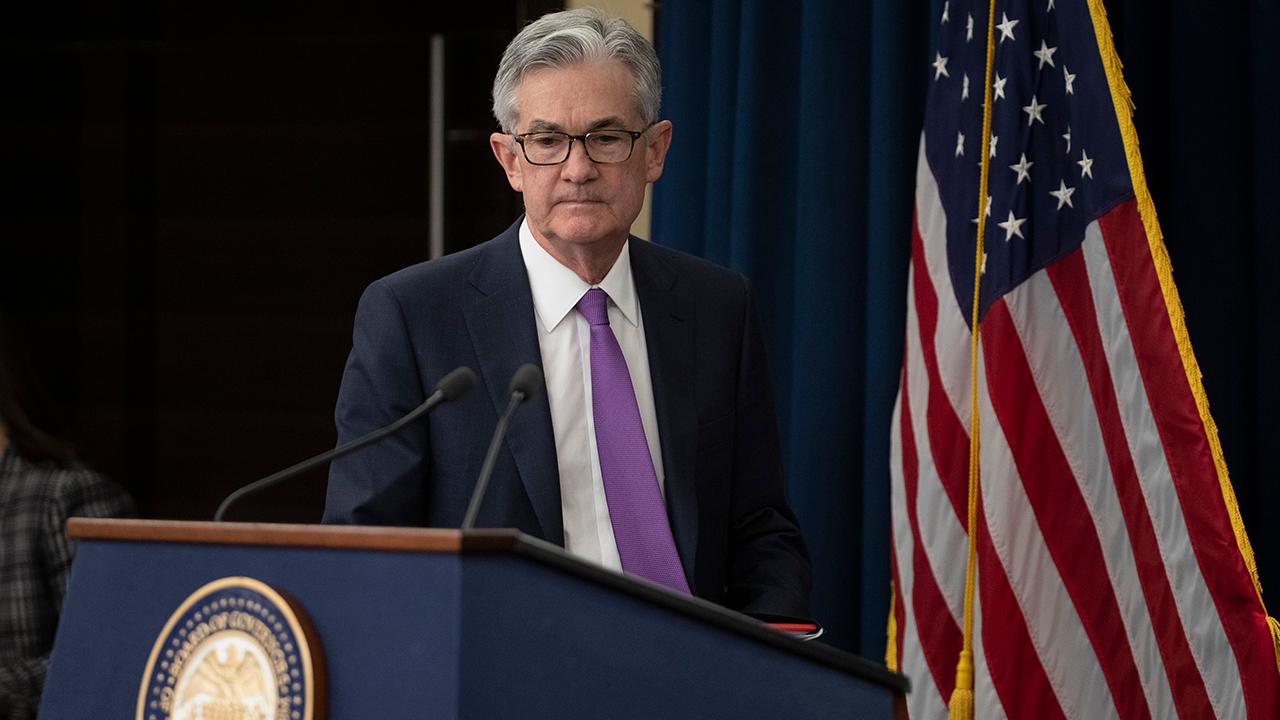
This analysis is based on the Fox Business “The Claman Countdown” segment [0] published on March 18, 2026, which featured economic analysts Peter Schiff and Nathan Sheets providing commentary on the Federal Reserve’s decision to maintain interest rates at 3.5%-3.75%.
The Federal Reserve voted 11-1 to hold interest rates unchanged at the March 18, 2026 meeting [1][2]. This decision came amid heightened economic uncertainty stemming from the Iran war, which Powell described as having impacts that are “too soon to know” [1][3]. The Fed’s dot plot projections indicate one rate cut expected in 2026 and another in 2027 [1][2], suggesting a cautious approach to monetary policy easing.
The Fed’s updated economic projections paint a complex picture [1]:
- GDP Growth:2.4% projected for 2026, 2.3% for 2027
- PCE Inflation:2.7% for 2026 (remaining above the 2% target)
- Unemployment:4.4% projected
The elevated inflation outlook, combined with geopolitical uncertainty, creates a challenging environment for monetary policy calibration. Powell noted that inflation expectations have risen due to oil price pressures [1][3], highlighting the delicate balance the Fed must navigate.
The Fox Business segment featured two contrasting analytical viewpoints:
The analysis must consider the ongoing political pressure on the Fed from the Trump administration, which continues to advocate for lower interest rates [1][4]. Powell has stated he has no intention of leaving his position until a Department of Justice probe is resolved [1], underscoring the independence challenges facing the central bank.
The March 2026 Fed decision reveals a fundamental tension in monetary policy: balancing elevated inflation (2.7% PCE) against geopolitical uncertainty and growth concerns. The Fed’s decision to hold rates while projecting eventual cuts suggests a data-dependent approach that prioritizes stability over rapid response.
The headline criticism of Powell represents one analytical viewpoint within a broader spectrum of expert opinion. Schiff’s consistently bearish views on Fed policy—often emphasizing inflation risks and dollar weakness—should be evaluated alongside alternative perspectives from institutional economists and other market analysts.
The Fed’s acknowledgment that it is “too soon to know” the economic impacts of the Iran war introduces significant uncertainty into policy forecasting [1][3]. Oil price implications and potential supply chain disruptions could rapidly alter the inflation outlook, forcing the Fed to adapt its stance.
The ongoing political pressure from the Trump administration to lower rates, combined with Powell’s commitment to serve through the DOJ probe [1][4], highlights the complex political dynamics surrounding monetary policy independence. This context may influence market perceptions of Fed credibility.
- Inflation Persistence:The 2.7% PCE projection remains 35% above the Fed’s 2% target [1], suggesting continued vigilance is warranted
- Geopolitical Uncertainty:Iran war implications remain unclear, creating potential for rapid economic shifts [1][3]
- Policy Credibility Risk:Divergent expert opinions on Fed competence (as reflected in the segment headline) could affect market confidence
- Political Interference Risk:Continued pressure on the Fed from the executive branch poses independence concerns [1][4]
- Gradual Policy Normalization:The dot plot’s projected cuts in 2026-2027 suggest a methodical approach to easing, potentially supporting longer-term market stability
- Data-Driven Flexibility:The Fed’s acknowledged uncertainty about Iran war impacts demonstrates willingness to adapt policy based on evolving conditions
The Fed’s next meetings and subsequent economic data releases will be critical in determining whether the current “wait-and-see” approach remains appropriate. Investors should monitor:
- Oil price trajectory and inflation indicators
- Any shifts in the dot plot projections
- Geopolitical developments related to the Iran conflict
The Federal Reserve’s March 18, 2026 decision to hold interest rates at 3.5%-3.75% [1][2] reflects a cautious approach amid elevated inflation (2.7% PCE) and significant geopolitical uncertainty from the Iran war [1][3]. The 11-1 vote margin suggests broad consensus on the need for patience, though one dissenting member favored immediate action.
Economic projections indicate solid GDP growth expectations (2.4% in 2026) alongside persistent inflation challenges [1]. The dot plot’s projection of one cut in 2026 and another in 2027 [1][2] provides market guidance while maintaining flexibility for data-dependent adjustments.
Expert commentary, particularly Peter Schiff’s criticism of Powell’s understanding of the economy [0], represents one perspective within a diverse analytical landscape. Market participants should consider multiple viewpoints when evaluating Fed policy adequacy and its implications for investment decisions.
The political context—ongoing pressure from the Trump administration and Powell’s commitment to serving through the DOJ investigation [1][4]—adds a layer of complexity to assessments of central bank independence and credibility.
Investors should approach this information as contextual data for decision-making, recognizing that expert opinions vary and that the Fed’s data-dependent stance means policy direction may shift as new information emerges.
Insights are generated using AI models and historical data for informational purposes only. They do not constitute investment advice or recommendations. Past performance is not indicative of future results.
About us: Ginlix AI is the AI Investment Copilot powered by real data, bridging advanced AI with professional financial databases to provide verifiable, truth-based answers. Please use the chat box below to ask any financial question.