Oil's Big Jump; Markets' Small Reaction: Risk of Mispricing
Unlock More Features
Login to access AI-powered analysis, deep research reports and more advanced features
About us: Ginlix AI is the AI Investment Copilot powered by real data, bridging advanced AI with professional financial databases to provide verifiable, truth-based answers. Please use the chat box below to ask any financial question.
The March 19, 2026 oil price surge represents a significant escalation in the Middle East conflict, with energy infrastructure now becoming a direct military target. Brent crude extended gains to over $112/barrel, approaching the initial war peak of $120 [1][2][3]. This marks a critical shift in the conflict’s nature—moving from peripheral engagement to direct attacks on global energy supply infrastructure.
The market’s relatively muted reaction to this substantial energy shock reveals a concerning disconnect between geopolitical risk reality and market pricing. While oil jumped over 4%, the S&P 500 declined only approximately 1% on March 18, closing at 6,624.71 [0]. This asymmetry suggests potential underpricing of geopolitical risk that could prove costly if the conflict continues to escalate.
The Federal Reserve’s decision to hold rates at 3.5%-3.75% while maintaining a forecast of only ONE rate cut for 2026 creates significant tension with market expectations [4][5]. Portfolio managers are pricing in 2-3 cuts, representing a material divergence that constitutes “mispricing risk” according to recent analysis [4]. This gap between Fed guidance and market expectations introduces heightened volatility risk for rate-sensitive assets.
-
Inflation-Growth Tradeoff Intensification:A persistent oil shock could force the Fed to maintain restrictive policy longer, compressing market expectations for easing. Portfolio managers with duration exposure must account for this risk [4].
-
Structural Supply Disruption:If the conflict continues, fuel-oil price pressure could trigger renewed global food inflation, affecting broader commodity markets beyond energy [5].
-
Equity Market Underpricing:The muted equity reaction suggests potential underpricing of geopolitical risk, which could lead to sudden corrections if escalation continues or additional energy facilities are targeted.
-
Fed Communication Risk:Upcoming Fed communications carry significant potential for market disruption if officials signal greater concern about inflation risks from the energy shock.
-
Volatility Trading:The divergence between energy price movements and equity pricing creates potential opportunities in volatility instruments and energy-related derivatives.
-
Duration Reassessment:The Fed-market divergence suggests mispriced duration risk that could be exploited through tactical fixed-income positioning.
-
Energy Sector Positioning:Despite short-term volatility, energy sector companies may offer relative value if the market eventually prices in sustained higher energy prices.
The analysis reveals several critical data points warranting attention:
- Oil Price Level:Brent crude at $112.17/barrel (+4% on the day), approaching war peak of $120 [1][2][3]
- Fed Policy Stance:Rates held at 3.5%-3.75%, single cut forecast for 2026 [4][5]
- Market Expectations:Pricing 2-3 cuts, creating divergence from Fed guidance [4]
- Equity Performance:S&P 500 at 6,624.71, down ~1% on March 18 [0]
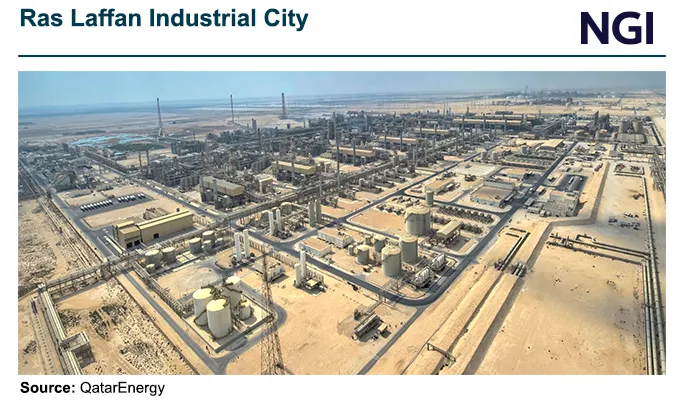
- Infrastructure Targeted:Qatar’s Ras Laffan (world’s largest LNG hub), Iran’s South Pars gas field [2]
The conflict has entered a new phase where energy infrastructure is now a direct target, creating structural inflation risks that transcend typical geopolitical risk assessments. Market participants should monitor daily oil price movements, review portfolio exposure to rate-sensitive sectors, assess duration risk, and track upcoming Fed communications for policy shift signals. The relatively small market reaction to substantial energy price increases represents a key risk factor that may not fully account for the evolving geopolitical situation.
Insights are generated using AI models and historical data for informational purposes only. They do not constitute investment advice or recommendations. Past performance is not indicative of future results.
About us: Ginlix AI is the AI Investment Copilot powered by real data, bridging advanced AI with professional financial databases to provide verifiable, truth-based answers. Please use the chat box below to ask any financial question.