Indian Markets Suffer Worst Decline Since June 2024 Amid Middle East Conflict and HDFC Bank Governance Crisis
Unlock More Features
Login to access AI-powered analysis, deep research reports and more advanced features
About us: Ginlix AI is the AI Investment Copilot powered by real data, bridging advanced AI with professional financial databases to provide verifiable, truth-based answers. Please use the chat box below to ask any financial question.
Related Stocks
This analysis is based on the Wall Street Journal report [1] published on March 19, 2026, which documented Indian stocks experiencing their worst single-day decline since June 2024. The timing of this market collapse is significant—it occurs nearly three weeks after the US-Iran conflict began on February 28, 2026, suggesting that accumulated geopolitical tensions have now reached a critical threshold triggering mass investor exit [3][4].
The dual nature of the shock—external geopolitical risk combined with internal corporate governance concerns—created a compounding effect that overwhelmed market defenses. The market data [0] confirms the severity: Nifty 50 fell more than 3% in a single session, marking the sharpest decline in approximately 20 months.
The selloff demonstrated unusual breadth, with market data [0] indicating that the decline was not concentrated in specific sectors but rather represented a broad-based risk-off rotation. The India VIX, often called the market’s “fear gauge,” remained elevated throughout the trading week, reflecting sustained anxiety among options traders about future volatility [3].
The Indian rupee’s decline to a record low of 92.484 against the US dollar represents a critical threshold [3]. Historical analysis suggests that currency weakness at this magnitude typically accelerates foreign institutional investor (FII) outflows, creating a negative feedback loop that compounds equity market pressure. The rupee’s decline is directly linked to oil import costs—India satisfies approximately 85% of its crude oil needs through imports, meaning every dollar increase in oil prices widens the current account deficit and weakens the currency [3][4].
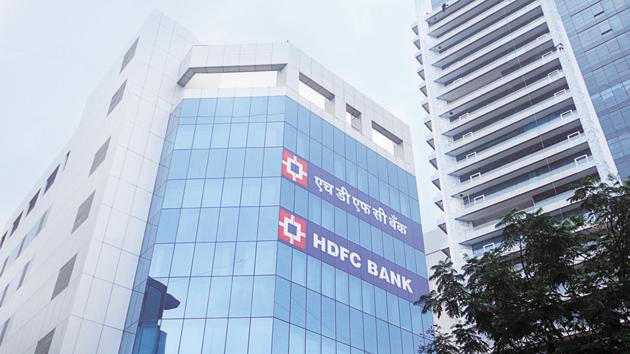
The HDFC Bank governance crisis represents a significant internal shock that compounded external pressures. According to CNBC [2] and MoneyControl [5], Part-time Chairman Atanu Chakraborty resigned citing “certain happenings and practices within HDFC Bank over the last two years were not in congruence with his personal values and ethics.” As India’s largest private bank with a market capitalization of approximately $200 billion, HDFC Bank’s weight in both the Nifty 50 and Bank Nifty indices means its decline has outsized index impact. The resignation triggered a 5% single-day crash in HDFC Bank shares [2][5], which in turn pulled the entire Bank Nifty down over 3% [5].
The US-Iran conflict, which began on February 28, 2026, has intensified to a point where the Strait of Hormuz—a narrow waterway handling approximately 20% of global oil shipments—faces potential disruption [3][4]. Oil price charts [0] show Brent crude surging past $105 per barrel, a level that historically correlates with meaningful deceleration in emerging market equity performance. The technical indicators [0] reveal HDFC Bank shares trading at ₹798.20, significantly below both the 50-day moving average (₹905.67) and 200-day moving average (₹965.90), confirming a sustained downtrend.
The analysis reveals a clear causal chain:
- Geopolitical escalation→ Oil price surge → Widened current account deficit expectations → Rupee weakness
- Oil price surge→ Inflation concerns → Potential RBI policy constraints → Earnings pressure on energy-importing companies
- FII outflows→ Reduced demand for Indian equities → Currency pressure → Market decline
- HDFC Bank governance crisis→ Banking sector confidence erosion → Sector-wide derating → Index-level impact
- Combined effect→ Risk-off sentiment amplification → Broad market selloff
This multi-causal structure explains why the decline was more severe than what any single factor would have produced in isolation.
India’s market vulnerability in March 2026 stems from a rare combination of external and internal shocks occurring simultaneously. External geopolitical risk (Middle East conflict) directly impacts India’s fiscal position through oil import costs, while the internal governance shock at HDFC Bank undermines confidence in India’s largest financial institution. This dual exposure creates a challenging recovery path, as both shocks require different policy responses and timeframes to resolve.
The persistent FII selling observed throughout this period [3] reflects a broader reassessment of emerging market exposure by global investors. The combination of currency weakness, geopolitical risk, and corporate governance concerns creates a “triple whammy” that typically prompts institutional investors to reduce allocations. Understanding the triggers for potential FII flow reversal will be critical for gauging recovery timeline.
The Reserve Bank of India’s prompt statement that HDFC Bank has “sound financials” and “no material concerns on record” [2][5] represents a critical attempt at market stabilization. This proactive communication suggests the central bank recognizes the systemic importance of HDFC Bank and is working to prevent the governance concern from metastasizing into a broader banking sector crisis.
The Rs 19 lakh crore (approximately $2.3 trillion) loss during this week [3][4] represents roughly 6-7% of India’s total market capitalization. More significantly, since the US-Iran conflict began on February 28, total market losses have reached Rs 25 lakh crore [4], indicating that the March 19 decline is part of a sustained downtrend rather than a one-day anomaly.
From a technical standpoint [0], the sustained breach below key moving averages suggests momentum has shifted bearish. HDFC Bank’s current price of ₹798.20 represents an 8.52% decline from the period open, with elevated volatility (daily standard deviation of 1.07%) indicating continued price instability [0].
This analysis synthesizes findings from multiple sources to provide decision-makers with a comprehensive understanding of the March 19, 2026 market collapse:
- Nifty 50: Fell >3% on March 19 (worst since June 2024)
- BSE Sensex: Dropped ~2,000 points (~2.5%) at open
- Bank Nifty: Down 3%, led by HDFC Bank decline
- HDFC Bank: Fell 5% to ₹798.20 (well below 50-day MA of ₹905.67 and 200-day MA of ₹965.90)
- Cumulative wealth destruction: Rs 19 lakh crore in worst week in four years [3][4]
- Total since conflict began: Rs 25 lakh crore [4]
- Indian rupee: Record low of 92.484 against US dollar [3]
- Brent crude oil: Above $105 per barrel [3][4]
- HDFC Bank market cap: ~$200 billion [2]
- HDFC Bank Part-time Chairman Atanu Chakraborty resigned March 18, effective immediately, citing “values and ethics” differences [6]
- Keki Mistry appointed as interim part-time chairman [2][5]
- RBI stated HDFC Bank has “sound financials” and “no material concerns on record” [2][5]
- US-Iran conflict began February 28, 2026 [3][4]
- Strait of Hormuz faces potential disruption (handles ~20% of global oil shipments) [3][4]
- Global risk-off sentiment affecting emerging markets broadly [7][8]
The information available suggests this market decline reflects a combination of structural vulnerabilities (high oil import dependence, FII exposure) and specific shocks (Middle East conflict, HDFC Bank governance). Recovery will depend on developments in both external geopolitical conditions and internal corporate governance clarity.
Insights are generated using AI models and historical data for informational purposes only. They do not constitute investment advice or recommendations. Past performance is not indicative of future results.
About us: Ginlix AI is the AI Investment Copilot powered by real data, bridging advanced AI with professional financial databases to provide verifiable, truth-based answers. Please use the chat box below to ask any financial question.