Iran Strikes Qatar's Ras Laffan LNG Hub: Global Energy Market Crisis Escalates
Unlock More Features
Login to access AI-powered analysis, deep research reports and more advanced features
About us: Ginlix AI is the AI Investment Copilot powered by real data, bridging advanced AI with professional financial databases to provide verifiable, truth-based answers. Please use the chat box below to ask any financial question.
Related Stocks
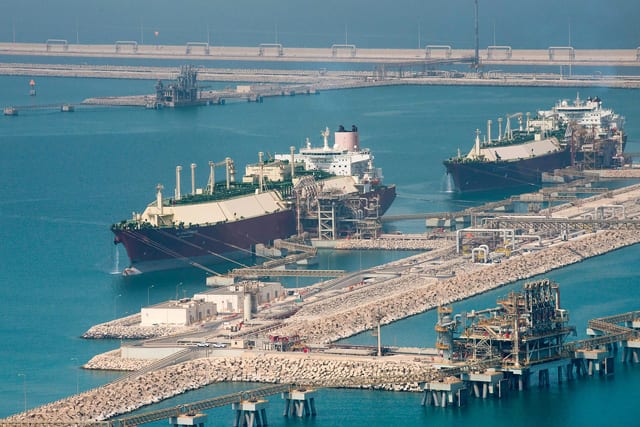
This analysis is based on comprehensive reporting from multiple financial news sources [1][2][4][5] regarding the March 19, 2026 Iranian missile strikes on Qatar’s Ras Laffan LNG facility—the world’s largest liquefied natural gas export hub. The attack represents a significant escalation in Middle East energy infrastructure warfare, with profound implications for global energy markets.
The immediate market reaction to the attack has been severe and multifaceted. Brent crude oil prices jumped to approximately
Natural gas prices experienced even more pronounced percentage increases, surging
The quantitative analysis from internal market data [0] confirms significant market volatility on March 19, 2026, with major U.S. indices exhibiting mixed trading patterns: S&P 500 declined 0.02%, NASDAQ gained 0.51%, while Dow Jones dropped 0.58%. These relatively muted equity market responses suggest investors are still processing the implications of the energy supply shock.
The damage to Qatar’s Ras Laffan facility represents a fundamental alteration to global gas market fundamentals. According to analysis from Wood Mackenzie, the attack “fundamentally alters the global gas market outlook” [5]. The facility’s destruction could remove approximately
This supply disruption occurs at a particularly vulnerable moment for global energy markets. The Middle East conflict, which began on February 28, 2026, has progressively targeted energy infrastructure, creating compounding supply concerns. Qatar’s Ras Laffan facility processes and exports approximately 77 million tonnes of LNG annually, making it the cornerstone of global LNG supply.
The attack represents a significant escalation in the Israel-Iran conflict, marking the first time Israel has targeted Iranian natural gas production infrastructure since hostilities began [1]. Iran’s retaliation against Qatar—the location of the U.S. Central Command’s forward headquarters—adds another dimension to the regional conflict.
Trump administration responses have been particularly hawkish. President Trump threatened to “blow up” Iran’s South Pars gas field if Iran continued attacks on Qatar’s energy infrastructure [6]. This threat signals potential for further military escalation, with the administration simultaneously attempting to distance the U.S. from Israeli strikes on Iranian facilities [8].
Regional monarchies are now on high alert. Saudi Arabia and UAE have elevated their threat postures, with reports of ballistic missiles being intercepted over Riyadh [7]. The Gulf states have issued warnings about threats to global energy security, suggesting concerns about potential widening of the conflict to include additional energy facilities.
Internal analysis [0] reveals an important market anomaly: WTI crude is trading at its widest discount to Brent in 11 years. This unusual pricing differential reflects market expectations about U.S. strategic petroleum reserve releases and potential domestic policy interventions to mitigate price pressures. The discount suggests traders anticipate increased U.S. oil supply availability relative to globally priced Brent crude.
Rystad Energy has warned that additional attacks on Gulf energy facilities could push oil prices up by another
The energy crisis creates cascading effects across multiple sectors. Industries sensitive to natural gas prices—including chemicals, manufacturing, and utilities—face immediate margin pressure from input cost increases. Shipping through the Strait of Hormuz, through which approximately 20% of global oil supply passes, remains a critical chokepoint with elevated risk exposure.
The global inflation outlook faces renewed upward pressure from energy price increases. Central banks worldwide may find their inflation-targeting efforts complicated by this supply-side energy shock, particularly in regions heavily dependent on LNG imports.
The analysis reveals several elevated risk factors:
The available evidence indicates a significant and potentially prolonged disruption to global energy supplies. The targeting of civilian energy infrastructure represents an escalation that fundamentally alters risk calculations for energy market participants. While the immediate market reaction has been sharp, the longer-term implications depend heavily on diplomatic developments and potential de-escalation efforts.
The quantitative market data [0] shows equity markets have thus far exhibited relative composure, but energy sector volatility and related inflationary pressures could trigger broader market responses in subsequent trading sessions. The disconnect between severe energy supply disruptions and muted equity market reactions warrants continued monitoring.
The analytical consensus from multiple sources suggests this event represents a structural change to global energy markets rather than a temporary shock, with implications that will persist well beyond the immediate crisis period.
Insights are generated using AI models and historical data for informational purposes only. They do not constitute investment advice or recommendations. Past performance is not indicative of future results.
About us: Ginlix AI is the AI Investment Copilot powered by real data, bridging advanced AI with professional financial databases to provide verifiable, truth-based answers. Please use the chat box below to ask any financial question.