Energy Supply Shock Reshaping Central Bank Policy: Iran Conflict Impact Analysis
Unlock More Features
Login to access AI-powered analysis, deep research reports and more advanced features
About us: Ginlix AI is the AI Investment Copilot powered by real data, bridging advanced AI with professional financial databases to provide verifiable, truth-based answers. Please use the chat box below to ask any financial question.
Related Stocks
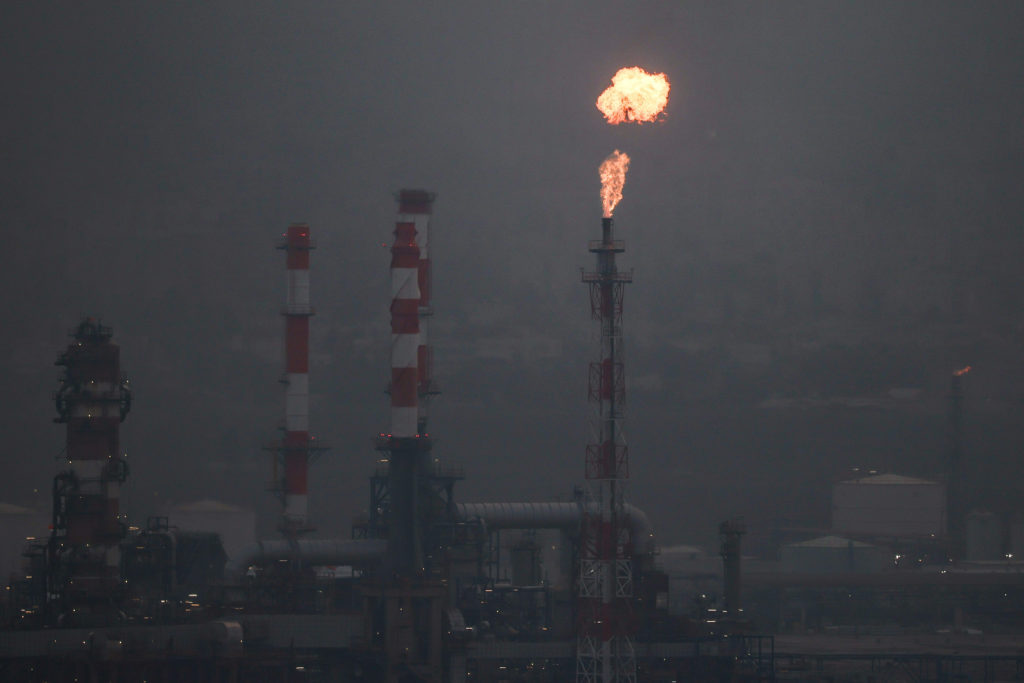
The Iran conflict has fundamentally altered the global monetary policy landscape, creating an energy supply shock that represents a significant regime change for central bank decision-making. Paul Gruenwald from S&P Global Ratings articulated this shift, noting that attacks on energy infrastructure in the Persian Gulf have disrupted supplies and pushed oil and natural gas prices substantially higher, fundamentally changing the calculus for rate decisions [1].
The coordinated response from major central banks on March 19, 2026, demonstrates the severity of the situation. The Federal Reserve, European Central Bank, Bank of England, and Bank of Japan all held interest rates steady, abandoning previous guidance that had pointed toward rate cuts [2][3]. This represents a significant pivot in policy stance across multiple jurisdictions simultaneously, suggesting a shared assessment of elevated inflation risks.
The market implications have been profound. Energy price spikes have created what analysts describe as a “permanent inflation floor” that could effectively end the era of cheap money [6]. Previously, economists had expected the ECB to begin cutting rates in 2026; now markets are pricing in two rate hikes by December 2026. The Bank of England had been predicted to cut rates before the conflict erupted, but higher oil prices have “all but ruled out such a move” [5].
Recent market data reflects this uncertainty, with elevated volatility across major indices [0]. The S&P 500 experienced a 1.08% decline on March 18 before recovering 0.35% on March 19, while the NASDAQ showed similar patterns with a 1.20% drop followed by a 1.00% gain. The more pronounced weakness in the Dow Jones, down 1.47% on March 18, indicates sector-specific concerns related to energy costs and inflation expectations.
The current situation represents a classic supply-side inflation shock, which presents distinct challenges for monetary policy compared to demand-driven inflation. Central banks face a difficult dilemma: tightening policy to combat inflation risks strangling economic growth, while failing to act could allow inflation expectations to become entrenched. The “wait-and-see” stance adopted by major central banks reflects uncertainty about the “duration and severity of the price shock” [5].
The Persian Gulf’s critical role in global energy supply means that even modest disruptions can have outsized market impacts. Major economies are now exposed to oil price spikes and energy supply disruptions, with second-round inflation effects on consumer prices representing a significant concern [6]. The conflict has created structural changes in energy market dynamics that may persist beyond the immediate geopolitical crisis.
Central bank coordination appears intentional, with multiple institutions aligning their stance simultaneously. This suggests either shared intelligence about the conflict’s expected trajectory or a collective recognition that independent policy divergence would be destabilizing in the current environment. The shift from anticipated rate cuts to projected rate hikes within weeks demonstrates how rapidly the policy landscape can change when supply shocks emerge.
- Inflation Persistence: The energy supply shock creates a structurally higher inflation floor that could prove resistant to traditional monetary policy tools
- Policy Uncertainty: Central banks face challenges calibrating response to supply-side shocks where interest rate changes have limited transmission
- Growth Impact: Sustained higher energy costs could slow global economic growth while simultaneously pressuring inflation
- Market Volatility: Heightened uncertainty around conflict duration and energy supply reliability will likely maintain elevated market volatility
- Inflation-Hedged Assets: Real assets and commodities may offer portfolio protection in an environment of elevated inflation expectations
- Energy Infrastructure: Companies involved in energy production and transportation may benefit from price dynamics, though geopolitical risks remain significant
- Defensive Positioning: Sectors with pricing power may outperform as companies pass through elevated input costs
- Policy Divergence Plays: As central banks navigate the shock differently, currency and bond market opportunities may emerge
The window for positioning is time-sensitive as central banks are actively assessing the “duration and severity of the price shock” [5]. Upcoming inflation data releases and central bank communications will provide critical signals about the policy path forward. The situation remains fluid, with escalation potential requiring ongoing monitoring.
Based on the analysis, the Iran conflict has created a significant energy supply shock that is reshaping central bank policy globally. Key findings include:
- Central Bank Coordination: The Fed, ECB, BOJ, and BOE all held rates steady on March 19, 2026, abandoning previous rate cut guidance [2][3]
- Market Repricing: Markets now expect two ECB rate hikes by December 2026, a dramatic shift from prior rate cut expectations [4]
- Energy Price Impact: Oil and natural gas prices jumped significantly following attacks on Persian Gulf energy infrastructure [2]
- Policy Paradigm Shift: Analysts describe the situation as creating a “permanent inflation floor” that could end the era of cheap money [6]
- Growth-Inflation Tradeoff: Central banks face difficult choices between combating inflation and supporting growth amid supply-side price pressures
- Volatility Elevated: Market data shows significant short-term volatility with the S&P 500 down 1.08% on March 18 before recovering [0]
The situation warrants close monitoring of energy markets, upcoming inflation data releases, and central bank communications for guidance on the policy trajectory. The structural nature of the supply shock suggests these developments represent more than temporary market noise, with implications for portfolio positioning across asset classes.
Insights are generated using AI models and historical data for informational purposes only. They do not constitute investment advice or recommendations. Past performance is not indicative of future results.
About us: Ginlix AI is the AI Investment Copilot powered by real data, bridging advanced AI with professional financial databases to provide verifiable, truth-based answers. Please use the chat box below to ask any financial question.