Cuba Power Grid Modernization: Potential Beneficiaries and Market Opportunity Analysis
Unlock More Features
Login to access AI-powered analysis, deep research reports and more advanced features
About us: Ginlix AI is the AI Investment Copilot powered by real data, bridging advanced AI with professional financial databases to provide verifiable, truth-based answers. Please use the chat box below to ask any financial question.
Related Stocks
Cuba is currently experiencing a severe and deepening energy crisis that culminated in a catastrophic nationwide blackout on March 16-17, 2026, leaving approximately 10-11 million people without power [1][2]. This event occurred mere hours after Cuba announced a significant policy shift, revealing plans to open the country to foreign investment for the first time, including allowing Cuban Americans and other expatriates to own businesses on the island [3][4].
The root causes of Cuba’s energy collapse are multifaceted and systemic:
- Fuel Shortages: Cuba has received only two small oil vessels this year, operating at approximately 40% of its fuel requirements due to the U.S. blockade [1]
- Aging Infrastructure: The national electric grid has not been properly maintained and infrastructure is described as “way past its normal useful life” [5]
- U.S. Blockade: The Trump administration has escalated sanctions, cutting off oil sales and preventing tankers from entering Cuban waters [1]
- Generation Deficits: Recurring deficits of 1,500-2,000 megawatts during peak hours have become常态化 [6]
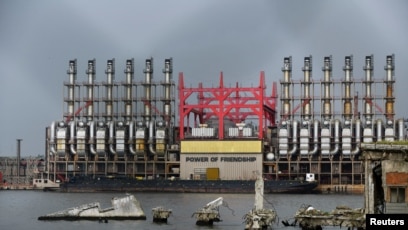
The Antonio Guiteras Thermal Power Plant—the nation’s largest generation facility—experienced a malfunction that triggered widespread system collapse, highlighting the fragility of Cuba’s electricity infrastructure [7].
The four companies identified as potential beneficiaries bring complementary capabilities to Cuba’s grid modernization needs:
Cuba’s potential power grid modernization represents a significant opportunity across multiple value chain segments:
- Power generation equipment including gas/steam turbines and generators
- Grid infrastructure including transformers, switchgear, and HVDC systems
- Control systems for grid automation, DERMS/ADMS integration
- Digital platforms for asset management and predictive maintenance
The reconstruction would primarily serve residential power distribution, commercial and industrial facilities, healthcare infrastructure (hospitals have been forced to postpone tens of thousands of surgeries due to power shortages) [5], and tourism infrastructure critical to Cuba’s economic reform plans.
The Cuba opportunity enters a favorable global market context. Increasing investments in smart grid infrastructure and renewable energy integration are accelerating demand for advanced digital utility solutions [13][15]. The microgrid market is projected to reach $64.7 billion by 2030 at 13% CAGR [14], while Morgan Stanley identifies continued growth in AI infrastructure demand benefiting companies including GE Vernova [16].
The convergence of several factors creates a unique opportunity structure:
-
Policy Catalysis: The March 2026 blackout occurring simultaneously with Cuba’s foreign investment announcement demonstrates how energy crises can catalyze dramatic policy shifts, opening previously inaccessible markets.
-
Technology Adaptation Requirements: Given Cuba’s fuel constraints (operating at only 40% of fuel requirements), solutions incorporating solar, natural gas, and battery storage will be essential. This plays to companies with microgrid and renewable integration capabilities—particularly Schneider Electric and GE Vernova.
-
Geopolitical Complexity: The situation involves a complex interplay between U.S. sanctions policy, Cuban economic reform, and Western corporate interests. Companies navigating this opportunity must maintain compliance while potentially facing rapid policy shifts.
-
Regional Implications: Cuba’s potential opening could signal broader Latin American infrastructure opportunities, particularly as the region faces increasing energy demand and renewable integration requirements.
The Cuba situation represents a case study in how energy crises can create market openings. However, several structural factors temper expectations:
- Capital Requirements: Complete grid modernization would require tens of billions of dollars—far exceeding Cuba’s current financial capacity
- Implementation Timeline: Even with foreign investment, phased deployment over 3-5 years would be realistic
- Political Risk: President Trump has stated he believes he will have “the honor of taking Cuba” [4], creating significant political uncertainty
- Market Expansion: Access to a previously closed market of 11 million consumers represents significant long-term opportunity
- Technology Deployment: Opportunity to implement latest-generation grid solutions in a concentrated geography
- Service Revenue: Long-term maintenance and upgrade contracts could provide sustained revenue streams
- Strategic Positioning: Competitive advantage in Caribbean infrastructure could translate to broader regional opportunities
- Political Uncertainty: Unclear U.S.-Cuba relations and potential sanctions implications create compliance complexity
- Payment Risk: Cuba’s economic crisis may limit government capacity to pay for infrastructure projects
- Regulatory Framework: New foreign investment rules remain untested and subject to change
- Geopolitical Tensions: The Trump administration has expressed intent to remove current Cuban leadership [4]
- Infrastructure Gaps: Extremely degraded baseline requiring massive investment with uncertain return profile
The immediate outlook remains challenging with infrastructure crisis continuing and generation deficits of 1,500-2,000 MW persisting [6]. The scope and speed of foreign investment opening remains unclear [17]. Any material opportunity for Western companies would likely require 1-2 years minimum for pilot projects, with full modernization extending to 3-5 years.
Based on the analysis, the following key information points are relevant for understanding Cuba’s power grid modernization potential:
- Cuba experienced a nationwide blackout on March 16-17, 2026, affecting 10-11 million people [1][2]
- The country announced plans to open to foreign investment simultaneously with the blackout [3][4]
- Cuba operates at approximately 40% of its fuel requirements due to U.S. sanctions [1]
- Generation deficits of 1,500-2,000 MW persist during peak hours [6]
- Four Western companies are identified as potential beneficiaries: Eaton (ETN), Schneider Electric (SBGSY), Siemens Energy (ENR.DE), and GE Vernova (GEV) [0]
- GE Vernova has demonstrated exceptional recent performance with 161.28% stock appreciation and 357% earnings beat [11]
- Global microgrid market is projected to reach $64.7 billion by 2030 [14]
- Significant geopolitical and financial risks temper near-term expectations for material impact
This analysis presents factual information and market context for decision-making support. It is not investment advice, trading recommendations, or financial guidance.
Insights are generated using AI models and historical data for informational purposes only. They do not constitute investment advice or recommendations. Past performance is not indicative of future results.
About us: Ginlix AI is the AI Investment Copilot powered by real data, bridging advanced AI with professional financial databases to provide verifiable, truth-based answers. Please use the chat box below to ask any financial question.