Wall Street Pleads for Resolution as Trump-Powell Feud Threatens Market Stability Amid Iran Conflict
Unlock More Features
Login to access AI-powered analysis, deep research reports and more advanced features
About us: Ginlix AI is the AI Investment Copilot powered by real data, bridging advanced AI with professional financial databases to provide verifiable, truth-based answers. Please use the chat box below to ask any financial question.
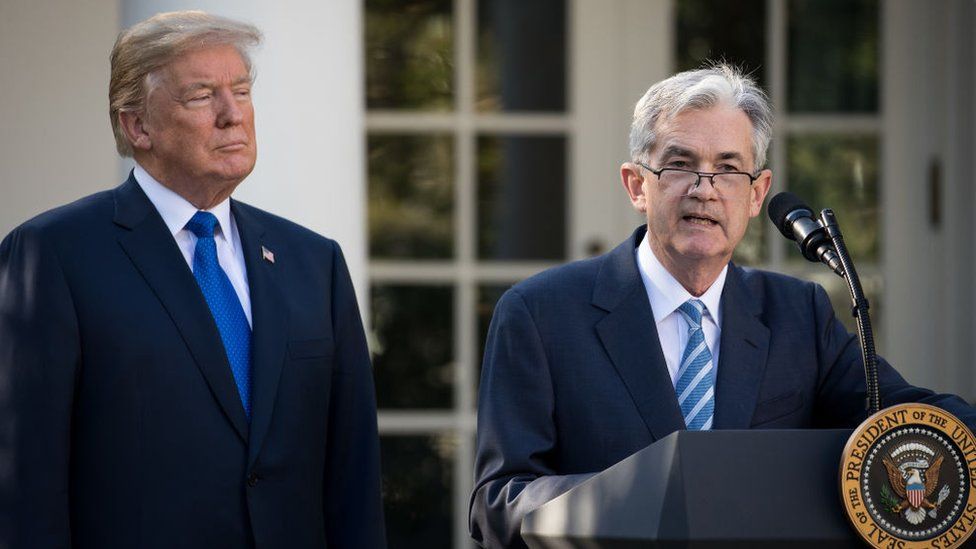
This analysis is based on the New York Post report [1] published on March 19, 2026, detailing how Wall Street executives are urgently pleading with the White House to resolve the escalating conflict between President Trump and Federal Reserve Chair Jerome Powell.
The confrontation between the White House and the Federal Reserve has reached a critical juncture, combining political pressure on monetary policy, legal challenges to central bank independence, and geopolitical risks from the ongoing Iran conflict [1][2][3].
The Trump-Powell feud is occurring against an exceptionally challenging backdrop. The ongoing U.S.-Israel war in Iran has sent oil prices surging, with strikes on Iranian energy infrastructure raising concerns about disruptions to the Strait of Hormuz—a critical chokepoint for global oil shipments [3][8]. This geopolitical risk compounds the policy uncertainty emanating from Washington, creating a multi-dimensional stress test for financial markets.
The U.S. national debt has simultaneously surpassed $39 trillion [9], adding fiscal pressure to the monetary policy debate and raising questions about debt sustainability in a high-interest-rate environment.
The Trump-Powell feud reveals a fundamental structural tension in U.S. economic governance. The administration appears to prioritize short-term economic stimulation through lower interest rates, while the Federal Reserve maintains its mandate-focused approach to inflation control and price stability. This tension is not new, but its current intensity—combined with legal challenges and leadership uncertainty—represents an unprecedented stress test of institutional relationships [4][6].
The federal judge’s ruling on the DOJ probe demonstrated that institutional checks remain functional [5]. However, the episode also revealed the vulnerability of these institutions to political pressure. The Fed’s independence, long considered a cornerstone of U.S. financial stability, has been directly challenged. Even if the immediate legal battle is resolved, the precedent set by this confrontation may affect future central bank-government relations.
Powell’s term expiration in May 2026 creates a critical timeline. Without a confirmed successor, the Federal Reserve would operate under a chair pro-tem arrangement, potentially complicating decision-making and communication [6]. The confirmation process has become entangled with the broader political conflict, as Senator Tillis’s threat to block nominees over the DOJ probe issue demonstrates [5]. This legislative deadlock adds another layer of uncertainty to an already complex situation.
The Iran conflict serves as a risk amplifier rather than a standalone concern. While the conflict’s direct impact on oil markets is significant, its more important effect may be in reducing market resilience to domestic policy uncertainty. Markets that might normally absorb Fed leadership concerns may have less capacity to absorb additional shocks when simultaneously facing potential oil supply disruptions and Middle East escalation [3][8].
-
Extended Policy Uncertainty: The most significant risk is that the Powell-Trump conflict persists for months, creating sustained ambiguity about Fed leadership and monetary policy direction. Historical analysis suggests that extended periods of central bank uncertainty correlate with increased market volatility and risk premiums [4][6].
-
Central Bank Independence Concerns: The DOJ probe episode, even after being blocked, has raised questions about the Fed’s operational independence. Market participants should be aware that any signs of political coordination with Fed decisions could trigger significant confidence erosion in U.S. financial institutions [5].
-
Confirmation Vacuum Risk: With Powell’s term expiring in May 2026 and the confirmation process stalled, the possibility of a leadership vacuum at the Fed’s helm presents operational and communication risks. Markets typically value clear, predictable central bank guidance [6].
-
Oil Price Volatility Overlay: The Iran conflict introduces supply-side inflation risks that could complicate the Fed’s position. If oil prices remain elevated, the Fed faces a challenging trade-off between supporting growth and maintaining price stability—made more complex by political pressure for rate cuts [3][8].
-
Debt Sustainability Concerns: The $39 trillion national debt level, combined with uncertainty about the rate path, raises questions about fiscal sustainability. Higher-for-longer rates increase debt servicing costs, creating potential feedback loops between fiscal and monetary policy [9].
-
Diplomatic Resolution Potential: A negotiated resolution to the Trump-Powell conflict—perhaps through Powell’s early departure with an agreed successor—could remove a significant source of market uncertainty and provide a positive catalyst.
-
Fed Independence Validation: The legal ruling blocking the DOJ probe demonstrates institutional resilience. Further judicial or congressional validation of Fed independence could strengthen long-term confidence in U.S. monetary institutions [5].
-
Oil Sector Dynamics: Energy companies may benefit from sustained elevated oil prices due to Iran conflict disruptions, potentially offering selective opportunities within the sector [3][8].
- March 12, 2026: Trump escalated feud with Powell on social media, calling him “Too Late” [4]
- March 13, 2026: Federal judge blocked DOJ criminal probe of the Fed [5]
- March 18, 2026: Powell confirmed he will serve as chair pro-tem if successor not confirmed [6]
- May 2026: Powell’s current term expires [6]
- March 19, 2026: Wall Street executives plead for resolution [1]
- Federal Reserve / Jerome Powell: Maintaining independence and institutional integrity
- Trump Administration: Pursuing aggressive economic stimulation through rate cuts
- Congress: Senator Tillis blocking nominee confirmations pending DOJ probe resolution [5]
- Financial Markets: Seeking stability and policy predictability
- Global Investors: Monitoring U.S. central bank independence signals
- Federal Reserve communications and official statements
- Legal developments regarding the DOJ probe appeal
- Oil price trajectory and Iran conflict news
- Treasury yields and dollar strength as risk barometers
- Congressional confirmation hearing developments
- White House statements on the Powell situation
This situation represents an unusual convergence of domestic political conflict, institutional stress, and geopolitical risk. While the federal court’s ruling provides a temporary buffer against the most extreme pressure tactics, the underlying conflict remains unresolved. Market participants should track developments carefully, recognizing that the combination of Fed uncertainty, Middle East tensions, and elevated debt levels creates an environment where unexpected announcements could trigger significant market reactions.
Insights are generated using AI models and historical data for informational purposes only. They do not constitute investment advice or recommendations. Past performance is not indicative of future results.
About us: Ginlix AI is the AI Investment Copilot powered by real data, bridging advanced AI with professional financial databases to provide verifiable, truth-based answers. Please use the chat box below to ask any financial question.