FOMC Holds Rates at 3.5%-3.75%, Signals Data-Dependent Approach Amid Heightened Uncertainty
Unlock More Features
Login to access AI-powered analysis, deep research reports and more advanced features
About us: Ginlix AI is the AI Investment Copilot powered by real data, bridging advanced AI with professional financial databases to provide verifiable, truth-based answers. Please use the chat box below to ask any financial question.
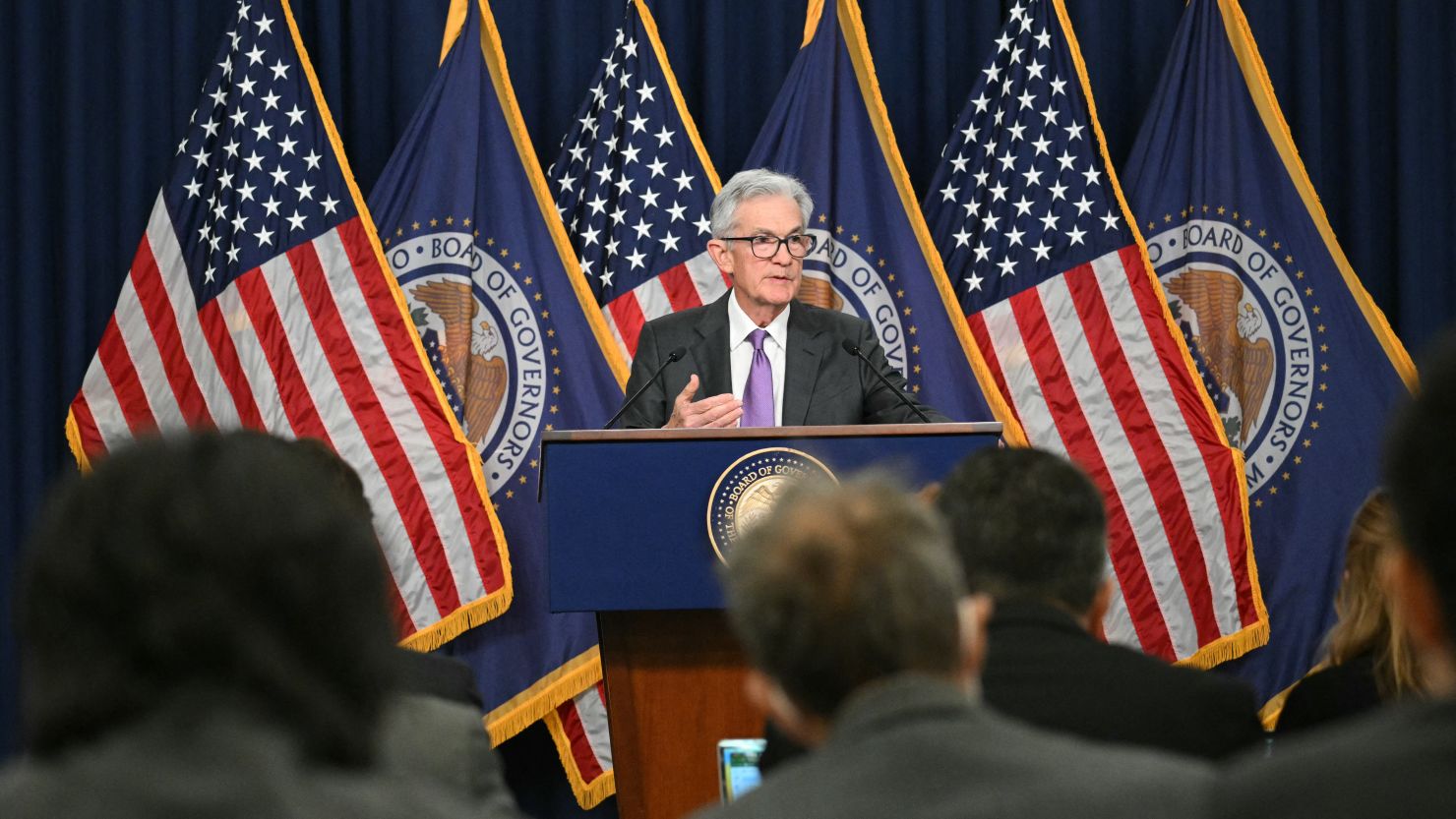
The March 2026 FOMC meeting represents a significant pivot in Federal Reserve communication policy, marked by deliberate ambiguity in forward guidance. The decision to hold rates at 3.5%-3.75% [1] was accompanied by Chair Jerome Powell’s explicit acknowledgment that the traditional policy framework has become less predictable, with the potential skipping of the Summary of Economic Projections (SEP) further removing market anchors [1].
This development carries substantial implications across multiple asset classes. Rate-sensitive assets—including Treasury securities, corporate bonds, mortgages, and equity valuations—rely heavily on Fed forward guidance for pricing mechanisms. When the Fed’s policy direction becomes unclear, as Powell explicitly acknowledged, markets lose their primary anchor for pricing these instruments [1]. The data-dependent, meeting-by-meeting approach means each subsequent economic data release could trigger significant market movements, increasing short-term positioning uncertainty.
The Fed’s current stance reflects heightened uncertainty about the economic outlook, potentially driven by evolving inflation dynamics, labor market conditions, or global economic developments. By moving away from explicit forward guidance, the Fed retains maximum flexibility but simultaneously increases the burden on market participants to interpret fragmented signals.
-
Guidance Vacuum Risk: Markets lose their primary anchor for pricing rate-sensitive assets when Fed forward guidance is unclear [1], creating elevated volatility potential as participants lack clear directional signals.
-
Data Dependency Risk: The meeting-by-meeting approach means each economic data release could trigger significant market swings, increasing uncertainty in short-term positioning strategies.
-
Asset Pricing Difficulty: Without the SEP, investors face greater challenges in pricing mortgages, corporate bonds, and other long-duration assets that depend on rate path expectations.
-
Policy Predictability Concern: The Fed’s willingness to operate with less transparency may increase market anxiety and lead to wider bid-ask spreads for rate-sensitive instruments.
-
Volatility Trading: Elevated uncertainty may create opportunities for volatility-based trading strategies, particularly around major economic data releases.
-
Relative Value Strategies: Market fragmentation between different rate-sensitive assets may create relative value opportunities for sophisticated investors.
-
Data Monitoring Advantage: Investors who effectively monitor and interpret incoming economic data may gain informational advantages in positioning ahead of Fed reactions.
The FOMC held interest rates steady at 3.5%-3.75% [1] in March 2026, maintaining the current monetary policy stance while signaling a fundamental shift in communication approach. The Fed’s decision to embrace ambiguity—explicitly acknowledging unclear forward guidance and the potential skipping of the SEP—represents a significant departure from traditional policy communication.
Key data points from this event include:
- Federal Funds Rate: 3.5%-3.75% (held steady)
- Policy Framework: Data-dependent, meeting-by-meeting approach
- Forward Guidance: Explicitly unclear; SEP may be skipped
- Market Impact: Elevated uncertainty across rate-sensitive asset classes
Market participants should monitor upcoming economic data releases carefully, as the absence of clear Fed guidance places greater emphasis on individual indicators for rate path expectations. The next FOMC meeting date and key economic releases (CPI, employment figures, inflation data) will be critical inputs for market positioning going forward.
Insights are generated using AI models and historical data for informational purposes only. They do not constitute investment advice or recommendations. Past performance is not indicative of future results.
About us: Ginlix AI is the AI Investment Copilot powered by real data, bridging advanced AI with professional financial databases to provide verifiable, truth-based answers. Please use the chat box below to ask any financial question.