Russia Announces LNG Market Shift as EU Ban Takes Effect
Unlock More Features
Login to access AI-powered analysis, deep research reports and more advanced features
About us: Ginlix AI is the AI Investment Copilot powered by real data, bridging advanced AI with professional financial databases to provide verifiable, truth-based answers. Please use the chat box below to ask any financial question.
Related Stocks
This analysis is based on the Reuters report published on March 20, 2026, which reported on the Kremlin’s response to the EU’s recently implemented ban on Russian LNG imports [1].
The European Union’s phased ban on Russian gas imports officially took effect on March 18, 2026. This landmark policy represents a significant escalation in the EU’s efforts to reduce energy dependence on Russia. The ban prohibits both short-term and long-term contracts for Russian gas imports that were concluded or amended after June 17, 2025 [2]. The implementation follows a carefully staged timeline designed to allow market adjustment: the first restrictions targeting spot and short-term contracts became effective in March 2026, while full bans on Russian LNG under long-term contracts are scheduled to take effect on January 1, 2027, and pipeline gas by September 30, 2027 [2][3].
Kremlin spokesperson Dmitry Peskov’s statement represents Moscow’s first major public response to the EU policy, framing the move as economically self-destructive for Europe while asserting Russia will find alternative markets. The characterization of the EU as “shooting itself in the foot” reflects the Kremlin’s position that European consumers will ultimately bear higher energy costs through the loss of relatively inexpensive Russian supply.
The global LNG market is experiencing significant price differentials between regions as this policy transition unfolds. As of March 17, 2026, spot LNG prices in Northeast Asia stood at approximately $22 per MMBtu, while Southwest Europe dropped to $16.50 per MMBtu [4]. These price levels indicate market adjustments ahead of the policy implementation, with European prices declining as Russian supply faces restrictions.
Russia’s stated strategy to redirect LNG exports toward Asian markets, particularly China and India, using discounted pricing to maintain competitiveness represents a significant geographic pivot [3]. This shift would require substantial reorganization of existing trade routes, infrastructure investments, and the development of new long-term relationships with Asian buyers. The economics of this transition depend heavily on the price discounts Russia would need to offer to attract Asian buyers away from established suppliers.
The EU-Russia energy relationship, which has been gradually deteriorating since 2022, has now reached a critical juncture. The implementation of the LNG ban represents the most significant decoupling measure since pipeline gas restrictions began. This development signals a fundamental restructuring of Europe’s energy security framework and Russia’s export orientation.
The Kremlin’s framing of the situation as Europe “shooting itself in the foot” serves multiple political purposes: it maintains a narrative of European self-harm rather than Russian weakness, it appeals to domestic audiences by suggesting Russia’s position is secure, and it attempts to create doubt among EU member states about the policy’s wisdom.
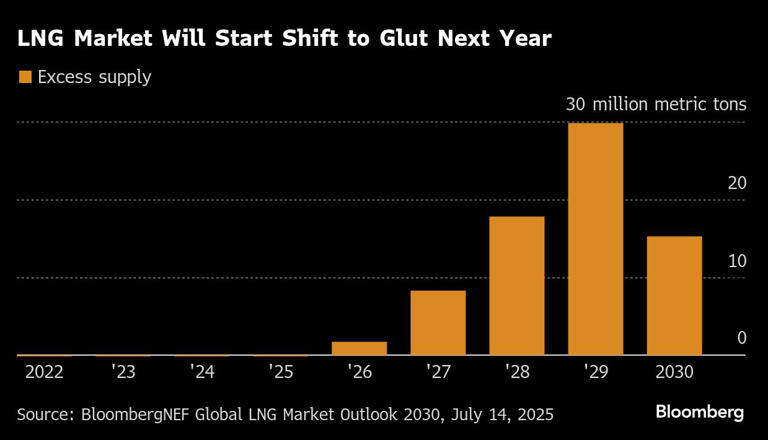
European energy-intensive industries face renewed pressure as the transition period unfolds. The loss of Russian LNG supply, even on a phased basis, removes a significant volume from the global market that must be replaced through alternative sources. This could intensify competition for LNG cargoes from the United States, Qatar, Australia, and other producers, potentially elevating prices for European buyers who currently benefit from relatively lower prices compared to Asian markets.
The timing of the ban’s implementation, coming ahead of the summer injection season for natural gas storage, creates additional complexity for European buyers attempting to secure alternative supplies while managing inventory requirements for the next heating season.
Russia’s stated intention to target Asian markets with discounted LNG creates potential competitive pressures in regions that have historically been tight markets. China and India, as the world’s largest and fastest-growing LNG importers respectively, represent natural destination markets for displaced Russian volumes. However, these nations have existing supplier relationships and may extract significant concessions from Russia regarding pricing and contract terms.
The effectiveness of Russia’s Asian pivot strategy will depend on several factors: the magnitude of discounts offered, the availability of sufficient shipping capacity to move volumes eastward, and the willingness of Asian buyers to accept additional Russian supply amid ongoing geopolitical considerations.
-
Energy Price Volatility: The redirection of Russian LNG toward Asian markets could create supply-demand imbalances in both regions. European buyers may face higher LNG prices as they compete with Asian buyers for alternative supplies, particularly during periods of high demand.
-
European Industrial Competitiveness: Higher energy costs could further disadvantage energy-intensive European industries including chemicals, manufacturing, steel, and fertilizers compared to global competitors in regions with cheaper energy access.
-
Geopolitical Escalation: The situation reflects deepening EU-Russia estrangement in energy relations, with potential for further retaliatory measures from Moscow that could affect other commodity flows or infrastructure.
-
Market Transition Uncertainty: The phased implementation creates uncertainty for long-term contract negotiations, infrastructure planning, and investment decisions across the LNG value chain.
-
Infrastructure Constraints: Moving Russian LNG to Asian markets requires substantial new shipping capacity and potentially new regasification infrastructure, creating potential bottlenecks during the transition period.
-
Alternative Supplier Growth: Non-Russian LNG producers in the United States, Qatar, Australia, and emerging markets have opportunities to expand market share in Europe.
-
European Energy Independence: The policy accelerates Europe’s long-term goal of diversifying energy sources and reducing strategic dependence on Russian supply.
-
New Trade Relationships: The restructuring creates opportunities for new long-term LNG supply arrangements between European buyers and alternative producers.
-
Infrastructure Investment: European LNG import infrastructure development continues to receive priority attention and investment.
The EU ban on Russian gas imports, effective since March 18, 2026, prohibits contracts concluded after June 17, 2025, with full LNG restrictions taking effect January 1, 2027 [2]. Russia has responded by announcing plans to completely redirect LNG exports to new markets, with Asia as the primary target destination using discounted pricing [1]. Spot LNG prices in Northeast Asia were approximately $22/MMBtu as of March 17, 2026, while Southwest Europe prices were around $16.50/MMBtu [4]. The Kremlin characterized the EU policy as the bloc “shooting itself in the foot,” reflecting the significant geopolitical and economic dimensions of this energy policy shift.
Market participants should monitor LNG spot price movements in both European and Asian markets, track European natural gas storage levels ahead of winter demand season, assess impacts on companies with significant Russian LNG exposure or European energy-intensive operations, and watch developments in Asian LNG demand dynamics.
Insights are generated using AI models and historical data for informational purposes only. They do not constitute investment advice or recommendations. Past performance is not indicative of future results.
About us: Ginlix AI is the AI Investment Copilot powered by real data, bridging advanced AI with professional financial databases to provide verifiable, truth-based answers. Please use the chat box below to ask any financial question.