Schwab CEO Aguilar Reports Dramatically Increasing Risk Aversion Amid Middle East Conflict
Unlock More Features
Login to access AI-powered analysis, deep research reports and more advanced features
About us: Ginlix AI is the AI Investment Copilot powered by real data, bridging advanced AI with professional financial databases to provide verifiable, truth-based answers. Please use the chat box below to ask any financial question.
Related Stocks
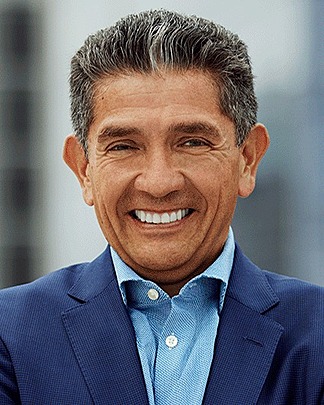
Schwab Asset Management CEO and CIO Omar Aguilar’s characterization of dramatically increasing risk aversion, as expressed in his March 20, 2026 appearance on Bloomberg Surveillance, reflects a confluence of geopolitical and market factors that have intensified investor anxiety over recent weeks [1]. The primary driver appears to be the escalating Middle East conflict, specifically the Iran war that began in early March 2026, which has created substantial uncertainty in global markets [1][2].
The market impact has been substantial and measurable. According to internal market data [0], major indices have shown significant weakness over the past two weeks, with the S&P 500 down approximately 3.7% from its March 9 peak, the NASDAQ down roughly 3.9%, and the Dow Jones Industrial Average declining about 4.1%. This synchronized selloff across all major indices indicates broad-based risk-off positioning rather than sector-specific concerns.
The sector rotation pattern provides concrete evidence of the risk aversion Aguilar described. Energy stocks have outperformed at +0.76%, driven by war-related oil supply concerns, while defensive healthcare stocks showed marginal gains at +0.07%. Conversely, rate-sensitive utilities declined 2.49%, technology fell 1.59%, and communication services dropped 1.43% [0]. This rotation pattern—where defensive sectors and commodity-related plays outperform while growth and rate-sensitive assets decline—is a classic hallmark of increasing risk aversion and flight-to-safety behavior.
Schwab’s own stock performance (SCHW) reflects interesting dynamics. Trading at $93.98, essentially flat at -0.01%, the stock has shown relative resilience despite significant market volatility [0]. This stability may reflect the company’s defensive characteristics as a financial services provider, though the relatively low average trading volume of 10.31 million shares suggests reduced trading activity during this period of uncertainty.
The alignment between Aguilar’s qualitative assessment and quantitative market data is notable and provides strong corroboration of his observations. The Middle East conflict has escalated beyond simple risk aversion to include fundamental questions about global growth outlook and inflation trajectory, particularly given oil’s role as an input cost across the economy [1][2].
The current market environment differs from typical risk-off periods in that inflation concerns remain salient alongside growth fears. Higher oil prices resulting from supply disruptions create a challenging situation for the Federal Reserve, potentially forcing a difficult choice between supporting growth and combating inflation. This dual pressure scenario distinguishes the current environment from simpler flight-to-quality episodes.
From an asset management industry perspective, Schwab’s positioning is instructive. The company reported attracting $27.8 billion in core net new assets in January 2026, demonstrating continued client trust, though the question remains whether this trend continues amid heightened uncertainty [search result]. Asset managers typically experience increased flows into money market funds and fixed income products during risk-off periods, which could benefit Schwab’s asset gathering capabilities despite equity market weakness.
- Continued geopolitical escalation in the Middle East could intensify risk aversion further
- Oil price volatility remains elevated, with supply disruptions potentially pushing energy costs higher
- Trading volume declines during uncertainty periods may impact Schwab’s transaction-based revenue
- Higher oil prices may keep inflation elevated, complicating Federal Reserve policy decisions
- Risk aversion and growth concerns could increase recession probability
- Asset management flows typically favor money market funds and fixed income over equities during uncertainty
- Defensive positioning during risk-off periods may present entry points for longer-term investors
- Schwab’s scheduled investor day on May 14, 2026, may provide clarity on company strategy
- Potential for increased advisory services as clients seek guidance during volatile periods
This analysis synthesizes multiple data points to provide a comprehensive view of the current market environment. Omar Aguilar’s observation about dramatically increasing risk aversion is substantiated by clear evidence of sector rotation away from growth assets and toward defensive positions. The Middle East conflict represents a significant geopolitical risk factor that continues to influence investor behavior and market dynamics. Schwab’s relatively stable stock performance despite broader market weakness may reflect its defensive characteristics as a financial services company, though continued monitoring of client flows and asset positioning is warranted given the evolving geopolitical situation. The intersection of war-related supply concerns with inflation and growth considerations creates a complex market environment that requires careful observation of both geopolitical developments and Federal Reserve policy responses.
Insights are generated using AI models and historical data for informational purposes only. They do not constitute investment advice or recommendations. Past performance is not indicative of future results.
About us: Ginlix AI is the AI Investment Copilot powered by real data, bridging advanced AI with professional financial databases to provide verifiable, truth-based answers. Please use the chat box below to ask any financial question.