Matt Tuttle's Bullish Metals Outlook: Stagflation Fears, MU Strength Amid Iran War Volatility
Unlock More Features
Login to access AI-powered analysis, deep research reports and more advanced features
About us: Ginlix AI is the AI Investment Copilot powered by real data, bridging advanced AI with professional financial databases to provide verifiable, truth-based answers. Please use the chat box below to ask any financial question.
Related Stocks
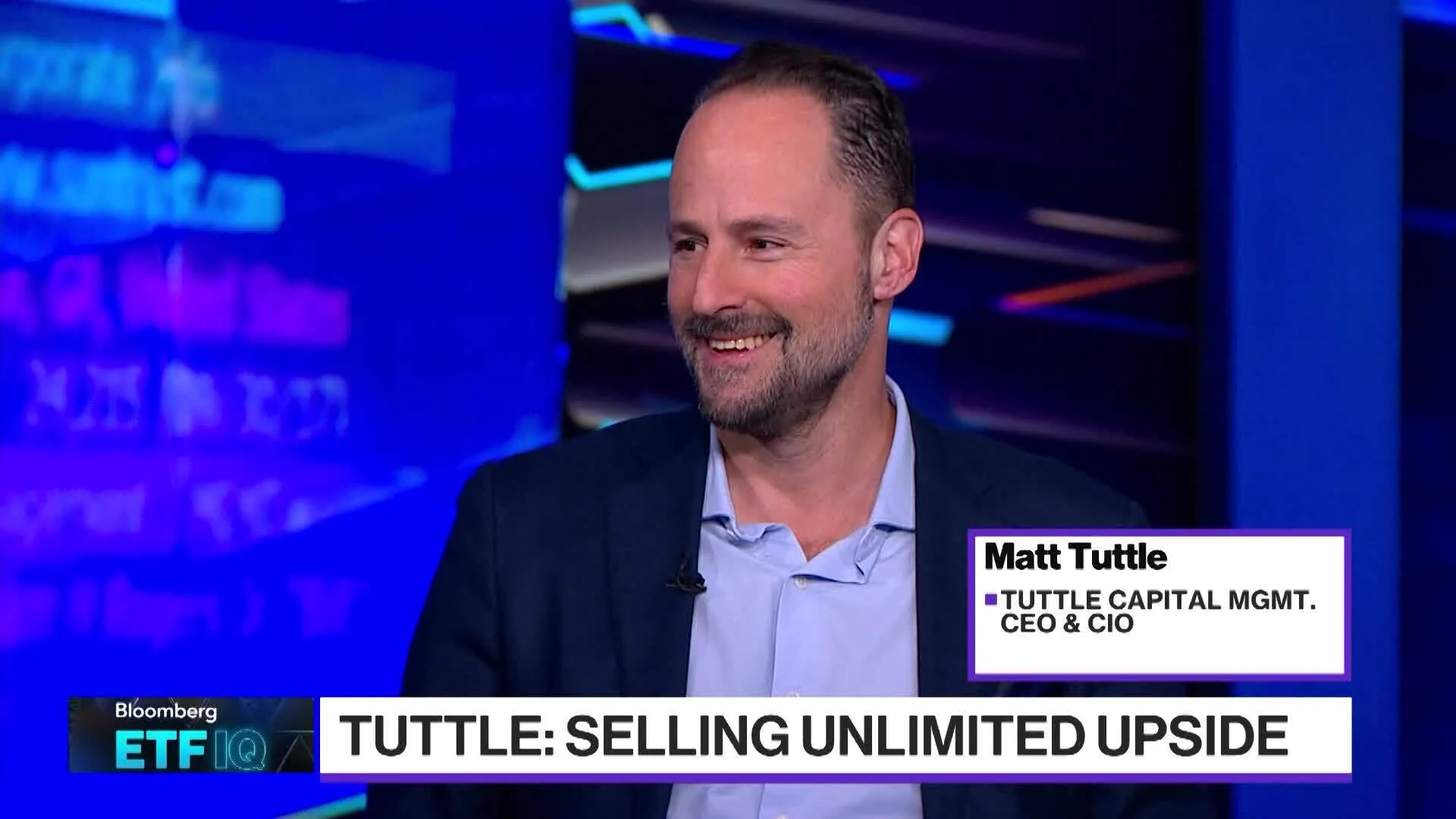
This analysis is based on the YouTube interview with Matthew Tuttle [1] published on March 20, 2026, which outlined his perspectives on commodity markets amid ongoing geopolitical tensions.
The Iran war continues to serve as the primary driver of commodity market volatility and inflation concerns in early 2026. Matthew Tuttle, CEO of Tuttle Capital Management, explicitly identified war resolution as the critical inflection point that could alleviate stagflation fears and reduce crude oil price volatility [1]. This viewpoint aligns with broader market sentiment, as the conflict has maintained elevated energy prices and created uncertainty about the Federal Reserve’s policy trajectory.
Market data from March 20, 2026, reveals the sector rotation dynamics reflecting these concerns [0]. Energy emerged as the top-performing S&P 500 sector with a gain of +0.58385%, while Utilities suffered the most significant decline at -3.68397%. This divergence underscores investor preferences for energy-related assets amid supply concerns, though the underlying drivers remain closely tied to war-related disruptions.
The precious metals complex has demonstrated remarkable strength, with gold trading above $5,000 per ounce and silver surging over 150% year-on-year to $85.22 in March 2026 [5][6]. UBS projects potential gold highs of $6,200 by mid-year before consolidation to $5,900 by December 2026 [5]. Silver’s dual role as both a safe-haven asset and industrial input—where 60% of global demand is tied to manufacturing sectors including solar panels, EVs, and data center infrastructure—creates unique demand dynamics that distinguish it from gold [6].
Copper represents what analysts describe as “the cleanest medium-term commodity trade of 2026,” driven by structural demand from AI infrastructure, electrification, and energy transition—factors that remain independent of the Iran crisis [7]. This decoupling from geopolitical concerns provides investors with exposure to secular growth trends rather than purely conflict-driven volatility.
The Energy sector has been the best-performing S&P 500 sector since the Iran conflict began [3], reflecting the direct impact of supply disruptions and demand shifts. Money market fund assets have reached record levels as investors seek safety amid war-related risks [4], suggesting significant capital is positioning defensively rather than aggressively in commodities.
Micron Technology represents a significant beneficiary of the technology sector’s strength, with the company demonstrating exceptional fundamental performance [0]:
- Market Cap: $481.34 billion
- Current Price: $427.66
- 1-Year Performance: +315.20%
- YTD Performance: +35.58%
- 6-Month Performance: +162.80%
The company reported outstanding Q2 FY2026 results with EPS of $12.20 versus $9.19 estimate (a 32.75% surprise) and revenue of $23.86 billion versus $19.97 billion estimate (a 19.50% surprise) [0]. Revenue composition shows strong demand in memory products: DRAM at $18.77 billion (79% of revenue) and NAND at $5.00 billion (21% of revenue). The analyst consensus stands at BUY with 80.9% of analysts recommending purchase, with a price target of $434.00 representing 1.5% upside from current levels [0].
Federal Reserve Chair Jerome Powell has acknowledged the current economic situation differs from 1970s-style stagflation, noting that current inflation is only one percentage point above target with low unemployment [8]. However, market participants remain concerned about war-induced energy price spikes and their transmission through the economy.
The analysis reveals several important cross-market relationships:
-
War Resolution as Inflection Point: Tuttle’s emphasis on war resolution as the key to alleviating stagflation concerns connects geopolitical developments directly to commodity pricing. The end of the Iran war would significantly reduce energy price volatility and potentially ease inflation pressures, creating a more stable environment for metals trading.
-
Sector Rotation Patterns: The clear rotation from defensive sectors (Utilities, Communication Services) toward energy and commodity-related exposures reflects how geopolitical risks drive capital allocation decisions. Money market fund inflows reaching records [4] indicate significant defensive positioning is occurring alongside equity market participation.
-
Technology-Commodity Linkages: The emergence of leveraged ETF products linking precious metals with technology storage companies (such as the T-REX 2X Long SNDU ETF providing exposure to Western Digital/SanDisk) reflects the growing intersection between precious metals investment and technology-related demand [10].
A critical distinction emerges between commodities driven by conflict-related volatility versus those with structural demand tailwinds:
- Gold and Silver: While serving as inflation hedges, these metals have been significantly influenced by war-related uncertainty and monetary volatility [6]
- Copper: Benefits from secular trends in AI infrastructure, electrification, and energy transition that operate independently of the Iran crisis [7]
- Energy: Directly tied to conflict dynamics and represents the most war-sensitive commodity sector
This distinction has important implications for portfolio construction, as investors may seek copper exposure for structural growth while using precious metals for geopolitical risk hedging.
-
Metals Recovery Potential: As uncertainty continues, Tuttle believes the metals trade will regain traction in commodities [1]. This view is supported by record money market fund assets [4], which suggest significant dry powder exists for rotation into commodities when war-related risks diminish.
-
Copper’s Structural Tailwinds: AI infrastructure buildout, global electrification efforts, and energy transition requirements create medium-term demand visibility for copper independent of short-term geopolitical concerns [7].
-
Supply Constraints in Silver: Approximately 70% of global silver production occurs as a byproduct of base metal mining, and new primary silver mine development typically requires 10+ years from exploration to production [6]. This structural constraint means sustained price increases may be required before new supply can materially address deficits.
-
MU Strong Fundamentals: Exceptional earnings performance with 32.75% EPS beat and 19.50% revenue beat, combined with 80.9% analyst buy consensus, suggests continued strength in memory semiconductor demand.
-
War-Related Volatility Persistence: The Iran conflict may continue to drive energy price spikes and inflation expectations, potentially maintaining elevated volatility in commodity markets [2][9].
-
Stagflation Concerns: While Fed Chair Powell has distinguished current conditions from 1970s stagflation [8], market participants remain concerned about war-induced energy price shocks affecting economic growth.
-
Sector Rotation Uncertainty: The underperformance of Basic Materials (-0.43%) contrasts with Energy’s strength, suggesting market uncertainty about the durability of metals demand amid economic growth concerns.
-
China Inflation Risks: The Iran conflict could flip China’s deflation concerns into “bad inflation” due to energy price transmission effects [9], potentially creating additional global inflationary pressure.
This analysis synthesizes multiple analytical dimensions to provide a comprehensive view of the current commodity and technology market landscape:
- Energy sector leads (+0.58%) while Utilities lag (-3.68%) [0]
- Gold above $5,000/oz with potential highs of $6,200 projected by mid-year [5]
- Silver at $85.22, up 150%+ year-over-year [6]
- MU trading at $427.66 with +315% YoY performance [0]
- War resolution represents critical inflection point for commodity stability [1]
- Copper offers decoupling from geopolitical risk through structural demand [7]
- Supply inelasticity supports elevated silver pricing [6]
- MU demonstrates exceptional fundamentals with strong memory demand [0]
The convergence of geopolitical tensions, commodity dynamics, and technology sector strength creates a complex environment for investors. Metals trading, particularly in gold, silver, and copper, presents differentiated risk-return profiles depending on whether investors seek war-related hedges (precious metals) or structural growth exposure (copper). Micron Technology’s exceptional performance reflects broader semiconductor demand trends, though the stock’s valuation at $427.66 with a $434 price target suggests limited near-term upside despite strong fundamental momentum.
This report integrates internal analytical data [0] with external sources including the original YouTube interview with Matthew Tuttle [1], Reuters coverage of market themes and Fed commentary [2][3][4][8][9], and commodity analysis from specialized financial publications [5][6][7][10].
Insights are generated using AI models and historical data for informational purposes only. They do not constitute investment advice or recommendations. Past performance is not indicative of future results.
About us: Ginlix AI is the AI Investment Copilot powered by real data, bridging advanced AI with professional financial databases to provide verifiable, truth-based answers. Please use the chat box below to ask any financial question.