Oil Prices Stabilize at Elevated Levels After 72-Hour Middle East Escalation
Unlock More Features
Login to access AI-powered analysis, deep research reports and more advanced features
About us: Ginlix AI is the AI Investment Copilot powered by real data, bridging advanced AI with professional financial databases to provide verifiable, truth-based answers. Please use the chat box below to ask any financial question.
The global energy markets experienced a dramatic 72-hour period of heightened volatility and geopolitical risk premiums as the Middle East conflict escalated to directly target critical energy infrastructure. Based on the event details and supporting market data [0], oil prices began stabilizing on March 20, 2026, albeit at still elevated levels, following three days of intense trading.
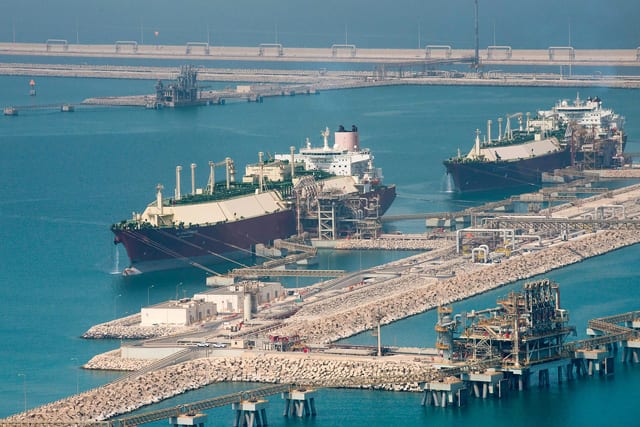
The conflict entered a dangerous new phase when Israel struck Iran’s South Pars gasfield on March 18, 2026 [1][2], representing the first direct attack on Iran’s energy infrastructure. Iran’s retaliatory strike on Qatar’s Ras Laffan LNG facility—the world’s largest—on March 18-19 caused “extensive damage” [1][3], effectively disrupting global LNG supply. This escalation pushed Brent crude prices from approximately $75/barrel to briefly touching $119 before settling above $100 [1][2][3].
The timing of this crisis is particularly significant given that Qatar had already suspended LNG production since March 2, 2026 [3], creating an already tightening global energy supply situation. The combination of existing supply constraints and new infrastructure damage has fundamentally altered the risk calculus for energy markets.
Market reactions were pronounced across asset classes. The S&P 500 declined 1.08% on March 18, while NASDAQ fell 1.2% [0], reflecting broader market uncertainty. The Canadian central bank explicitly warned that the conflict has “heightened risks to the global economy” and increased volatility in energy markets [1]. These developments suggest the geopolitical risk premium embedded in energy prices may persist even if immediate hostilities cease.
-
Sustained Supply Disruption: The targeting of energy infrastructure suggests the conflict may continue to directly impact supply. If either facility experiences prolonged shutdown, global energy balances could remain tight for months.
-
Further Escalation Potential: The conflict is approaching its fourth week with no diplomatic resolution in sight [2]. Each iteration of attacks raises the probability of additional energy facility targeting or chokepoint disruption.
-
Inflation Revival: Energy prices at current levels (Brent above $100) represent a significant inflation input. If sustained, this could force central banks to maintain restrictive monetary policy longer than anticipated.
-
Market Volatility: Historical patterns suggest geopolitical crises involving energy infrastructure generate prolonged volatility. Trading ranges may remain elevated until clear resolution signals emerge.
-
Alternative Supply Corridors: Saudi Arabia has revived exports via Hormuz bypass routes [2], creating opportunities for alternative suppliers and pipeline infrastructure development.
-
Strategic Reserve Releases: Potential petroleum reserve deployments could moderate price spikes while providing supply buffers.
-
Energy Infrastructure Investment: The crisis highlights vulnerabilities in global energy infrastructure, potentially accelerating investment in diversified supply chains and strategic storage facilities.
The March 20, 2026 stabilization of oil prices represents a temporary respite rather than resolution of the underlying geopolitical crisis. Key data points indicate elevated risk persistence:
- Brent crude briefly reached $119/barrel, stabilizing above $100 [1][2][3]
- LNG prices surged 25% following Ras Laffan attack [1]
- Qatar’s LNG production remains suspended since March 2 [3]
- Strait of Hormuz faces potential disruption [2]
- Market indices showed significant volatility (S&P 500 down 1.08% on March 18) [0]
The direct targeting of major energy facilities represents a qualitative change in the conflict with implications extending beyond immediate price movements. While prices have stabilized temporarily, the structural vulnerability of global energy infrastructure to geopolitical conflict remains elevated. Analysts note that $200/barrel scenarios can no longer be dismissed as far-fetched [4], suggesting risk premiums may persist regardless of short-term price movements.
Insights are generated using AI models and historical data for informational purposes only. They do not constitute investment advice or recommendations. Past performance is not indicative of future results.
About us: Ginlix AI is the AI Investment Copilot powered by real data, bridging advanced AI with professional financial databases to provide verifiable, truth-based answers. Please use the chat box below to ask any financial question.