Iranian Missile Strikes Devastate Qatar's Ras Laffan LNG Hub - Global Energy Supply Shock
Unlock More Features
Login to access AI-powered analysis, deep research reports and more advanced features
About us: Ginlix AI is the AI Investment Copilot powered by real data, bridging advanced AI with professional financial databases to provide verifiable, truth-based answers. Please use the chat box below to ask any financial question.
Related Stocks
This analysis is based on the Benzinga report [1] published on March 20, 2026, which reported that Iranian missile strikes on Qatar’s giant Ras Laffan liquefied natural gas (LNG) hub have created a significant supply shock in global energy markets. The attack represents a major escalation in the Israel-Iran conflict, transitioning into what analysts describe as an “energy total war” phase.
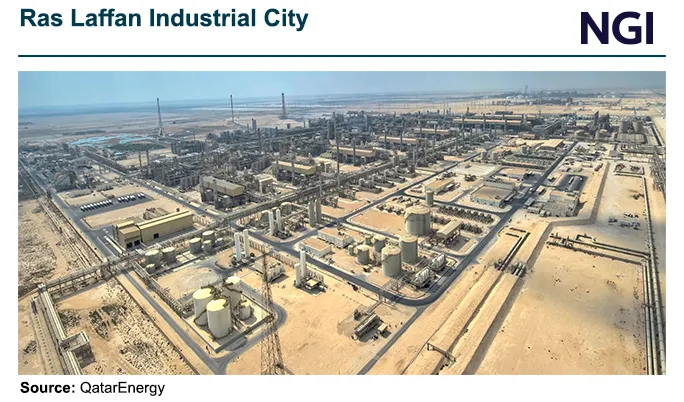
The strikes on Ras Laffan Industrial City—the world’s largest LNG export facility—have handed U.S.-based natural gas producers a substantial tailwind as traders scramble to reprice a market that suddenly appears much tighter for years rather than months.
Qatar’s Ras Laffan facility accounts for approximately 20% of global LNG exports, making it the world’s second-largest LNG exporter after the United States [2][3]. The QatarEnergy CEO confirmed that 17% of Qatar’s LNG export capacity has been sidelined for a period of 3-5 years due to extensive damage [4]. Initial production suspension occurred on March 2, 2026, following preliminary attacks, with the major damaging strike reported on March 18-19, 2026.
This disruption differs significantly from previous LNG supply outages—such as the 2022 Freeport incident—due to its extended expected duration and the scale of capacity affected.
U.S. natural gas producer stocks experienced dramatic rallies following the news:
- Cheniere Energy (LNG): Hit an all-time high, trading at $280.89 in after-hours trading [0]
- Venture Global (VG): Surged +10.64% to $15.81 on Thursday, with earlier spikes reaching +13% [0][4]
These gains reflect market expectations that U.S. LNG exporters will benefit significantly from filling the supply gap created by Qatar’s diminished export capacity.
The supply disruption triggered substantial price movements across global energy markets:
- European TTF Futures: Surged 35% this week, climbing past €55/MWh to reach a 3-year high [4]
- Henry Hub Natural Gas: Rallied above $3.50/MMBtu [4]
- Asian JKM Spot Prices: Expected to remain elevated given the supply disruption
The magnitude of these price increases indicates the market is fundamentally repricing for extended LNG scarcity rather than a temporary supply disruption.
The attack represents a significant escalation in regional conflicts, with Qatar responding by expelling Iranian security officials following the strikes. Iran has reportedly threatened additional attacks on Saudi Arabian and UAE energy facilities, suggesting the potential for further supply disruptions [2]. The strategic targeting of energy infrastructure marks a dangerous precedent in the conflict.
Unlike previous LNG disruptions that resolved within months, the 3-5 year repair timeline creates a structural supply deficit that cannot be quickly addressed through inventory draws or demand destruction alone. This longer timeframe increases the importance of:
- Accelerated U.S. LNG export terminal approvals
- Alternative supply source development (Australia, Nigeria, other producers)
- Potential strategic inventory releases by consuming nations
The Strait of Hormuz handles approximately 20% of the world’s oil and LNG shipments [5]. Any disruption to traffic through this critical chokepoint would compound the current supply shock significantly.
- Geopolitical Escalation: Additional Iranian threats against Saudi and UAE energy infrastructure could extend supply disruptions beyond Qatar [2]
- Prolonged Supply Gap: The 3-5 year repair timeline creates sustained market tightness [4]
- Inflation Implications: Energy price shocks could influence inflation expectations and complicate monetary policy
- Force Majeure Claims: QatarEnergy may invoke force majeure on long-term supply contracts, disrupting buyer relationships [4]
- U.S. Inventory Draw: Despite high U.S. storage levels (1,883 Bcf as of March 13), extended market tightness may accelerate inventory depletion [6]
- U.S. LNG Exporters: Cheniere Energy, Venture Global, and other U.S. producers positioned to capture increased export volumes
- Alternative LNG Suppliers: Australia, Nigeria, and other exporters may benefit from arbitrage opportunities
- Natural Gas Producers: Domestic producers benefit from elevated Henry Hub pricing
The Iranian missile attack on Qatar’s Ras Laffan LNG hub represents a major global energy supply shock with significant market implications:
- Capacity Impact: 17% of Qatar’s LNG exports offline for 3-5 years
- Global Share: Qatar accounts for ~20% of global LNG exports
- Price Response: European TTF up 35% to 3-year highs; Henry Hub above $3.50/MMBtu
- Stock Movement: U.S. LNG exporters rallied sharply (Cheniere at all-time high; Venture Global +13%)
- Duration: Unlike previous outages, this disruption expected to last years rather than months
The market is fundamentally repricing for extended LNG scarcity, with significant implications for global energy security and inflation dynamics.
Insights are generated using AI models and historical data for informational purposes only. They do not constitute investment advice or recommendations. Past performance is not indicative of future results.
About us: Ginlix AI is the AI Investment Copilot powered by real data, bridging advanced AI with professional financial databases to provide verifiable, truth-based answers. Please use the chat box below to ask any financial question.