Menstrual Product Prices Surge Nearly 40% Amid Inflation and Tariff Pressures
Unlock More Features
Login to access AI-powered analysis, deep research reports and more advanced features
About us: Ginlix AI is the AI Investment Copilot powered by real data, bridging advanced AI with professional financial databases to provide verifiable, truth-based answers. Please use the chat box below to ask any financial question.
Related Stocks
This analysis is based on the CNBC report [1] published on March 22, 2026, which documented the substantial price increases in menstrual products including tampons and sanitary pads. The near-40% price surge represents one of the most significant consumer product inflation events in recent years, affecting millions of American women and creating both market opportunities and reputational challenges for manufacturers.
The root causes of these price increases stem from two primary factors. First, broad-based inflation has increased costs across the entire supply chain, from raw materials (cotton, plastics, pulp) to manufacturing and distribution. Second, new tariff policies have directly impacted manufacturing costs, particularly for companies with significant production in China. Procter & Gamble disclosed a $1 billion total annual tariff impact, leading to price increases on 25% of its personal care products [1]. Kimberly-Clark faced $300 million in gross costs from tariffs, with more than half related to China tariffs specifically [1].
Market data reveals a complex consumer response to these price increases. While companies have successfully maintained revenue through pricing, volume declines tell a concerning story. Annual pad sales have declined 12% and tampon sales have fallen 16% since 2020 [2]. This disconnect between revenue stability and volume erosion suggests that consumers are either purchasing fewer units, switching to private label alternatives, or adopting reusable products.
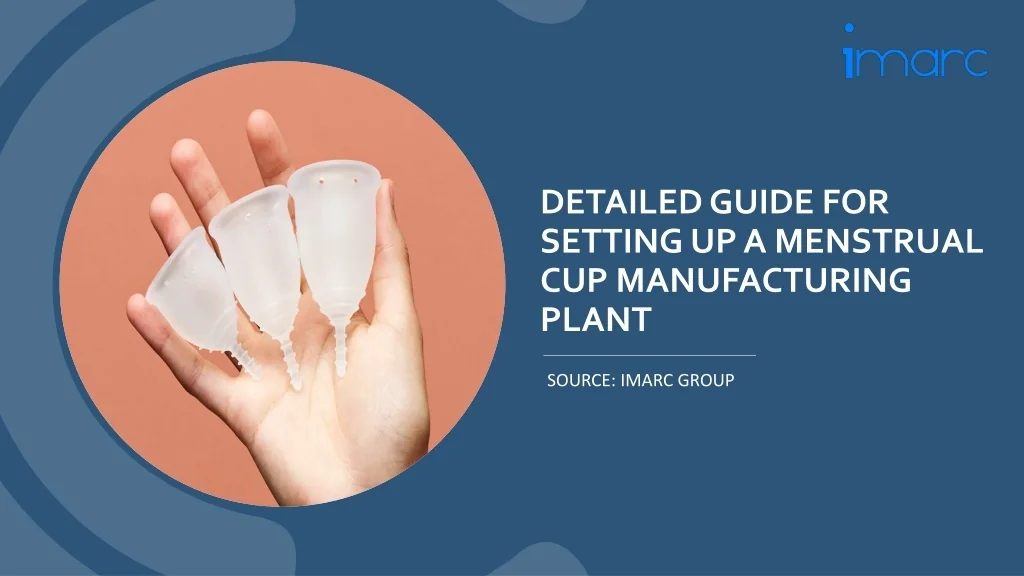
The price increases have accelerated competitive dynamics in the feminine care market. Saalt, a reusable period products company, estimates that 16-20% of U.S. consumers have tried or used reusable menstrual products, with younger demographics leading this shift [1]. This represents a structural threat to traditional manufacturers that goes beyond simple price competition.
The price increase cycle follows a clear causal chain: Tariff implementation → Increased input costs → Price pass-through to consumers → Volume decline → Potential for accelerated consumer substitution. The critical question for investors is whether we are in the middle of this cycle or approaching its resolution. Piper Sandler’s recent reduction of Kimberly-Clark’s price target from $133 to $114, citing Q1 top-line momentum concerns [3], suggests the market perceives ongoing pressure.
-
Tariff Exposure and Stock Performance Correlation: Companies with higher tariff exposure have experienced greater stock price weakness. Edgewell (EPC), the smallest player with limited scale to absorb costs, saw the largest daily decline at -1.22%, compared to P&G’s -0.29% [0]. This suggests market participants are differentiating between companies based on their ability to manage tariff impacts.
-
Price-Volume Trade-off Sustainability: The current environment represents a delicate balance. Companies can only increase prices so much before triggering permanent demand destruction. The 12-16% volume decline may represent the upper bound of consumer tolerance, or it could accelerate if additional price increases are implemented.
-
Political and Regulatory Vulnerability: The combination of visible price increases on essential products and high poverty rates among menstruating women (an estimated 16.9 million in the U.S. live in poverty) creates regulatory risk. Twenty states have already eliminated the “tampon tax” [2], and advocacy groups continue pushing for classification of menstrual products as healthcare necessities.
The menstrual product price increases reveal broader themes about pricing power in consumer staples. In an inelastic demand category where consumers cannot simply stop purchasing, companies have demonstrated ability to pass through substantial cost increases. However, this power comes with limits, as evidenced by meaningful volume declines.
The demographic shift toward reusable products represents a potential long-term structural challenge that transcends current pricing dynamics. If 16-20% of consumers have already experimented with reusable alternatives, the addressable market for traditional products may be permanently shrinking, particularly among environmentally-conscious younger consumers.
-
Volume Decline Acceleration: If current price increases drive additional consumers to reusable alternatives or private label products, volume declines could accelerate beyond the 12-16% range, threatening long-term revenue stability.
-
Regulatory Intervention: Increased political visibility around menstrual product pricing could lead to tariff reductions, price caps, or requirements to classify these products as medical necessities, potentially limiting pricing power.
-
Margin Compression: If raw material costs (cotton, oil-based plastics) continue rising faster than companies can implement price increases, gross margins may compress despite top-line revenue stability.
-
Reputational Risk: High-profile pricing on essential products used by half the population creates ongoing reputational vulnerability, particularly for companies positioning themselves as consumer-centric brands.
-
Private Label Expansion: Retailers with strong private label programs may capture share from branded products as price-conscious consumers trade down, potentially benefiting companies like Costco, Walmart, or Target.
-
Reusable Product Market: The structural shift toward reusable menstrual products creates opportunity for companies like Saalt or established players that successfully launch competing products.
-
Tariff Policy Reversal: Potential policy changes under different administrations could reduce tariff costs, improving margin profiles for major manufacturers.
The menstrual product industry faces a challenging environment characterized by significant cost pressures and deliberate consumer pushback. Procter & Gamble ($337.46B market cap) has absorbed $1 billion in annual tariff costs through selective pricing, maintaining relative stock stability [0]. Kimberly-Clark ($32.59B market cap) faces $300 million in tariff costs and recently received a price target cut from Piper Sandler to $114 from $133 [3]. Edgewell ($907.70M market cap), as the smallest player, has experienced the most significant stock pressure with a 1.22% daily decline [0].
The fundamental question for market participants is whether current pricing can be sustained without triggering further volume deterioration. The 12-16% volume decline since 2020 suggests consumers are approaching their tolerance threshold. Combined with the growing adoption of reusable alternatives and heightened political scrutiny, these factors create an uncertain outlook for traditional menstrual product manufacturers.
Insights are generated using AI models and historical data for informational purposes only. They do not constitute investment advice or recommendations. Past performance is not indicative of future results.
About us: Ginlix AI is the AI Investment Copilot powered by real data, bridging advanced AI with professional financial databases to provide verifiable, truth-based answers. Please use the chat box below to ask any financial question.