Strait of Hormuz Crisis: Corporate Two-Week Deadline Amid US-Iran Military Escalation
Unlock More Features
Login to access AI-powered analysis, deep research reports and more advanced features
About us: Ginlix AI is the AI Investment Copilot powered by real data, bridging advanced AI with professional financial databases to provide verifiable, truth-based answers. Please use the chat box below to ask any financial question.
Related Stocks
The current Strait of Hormuz crisis represents a critical juncture in the US-Iran conflict with significant implications for global energy markets and economic stability. President Trump’s 48-hour deadline, issued Saturday evening (March 21, 2026), escalates the confrontation dramatically, with the President threatening to destroy Iranian power plants if the waterway is not reopened [1][3]. This represents an unprecedented pressure tactic on Tehran, backed by intensified military operations on both sides.
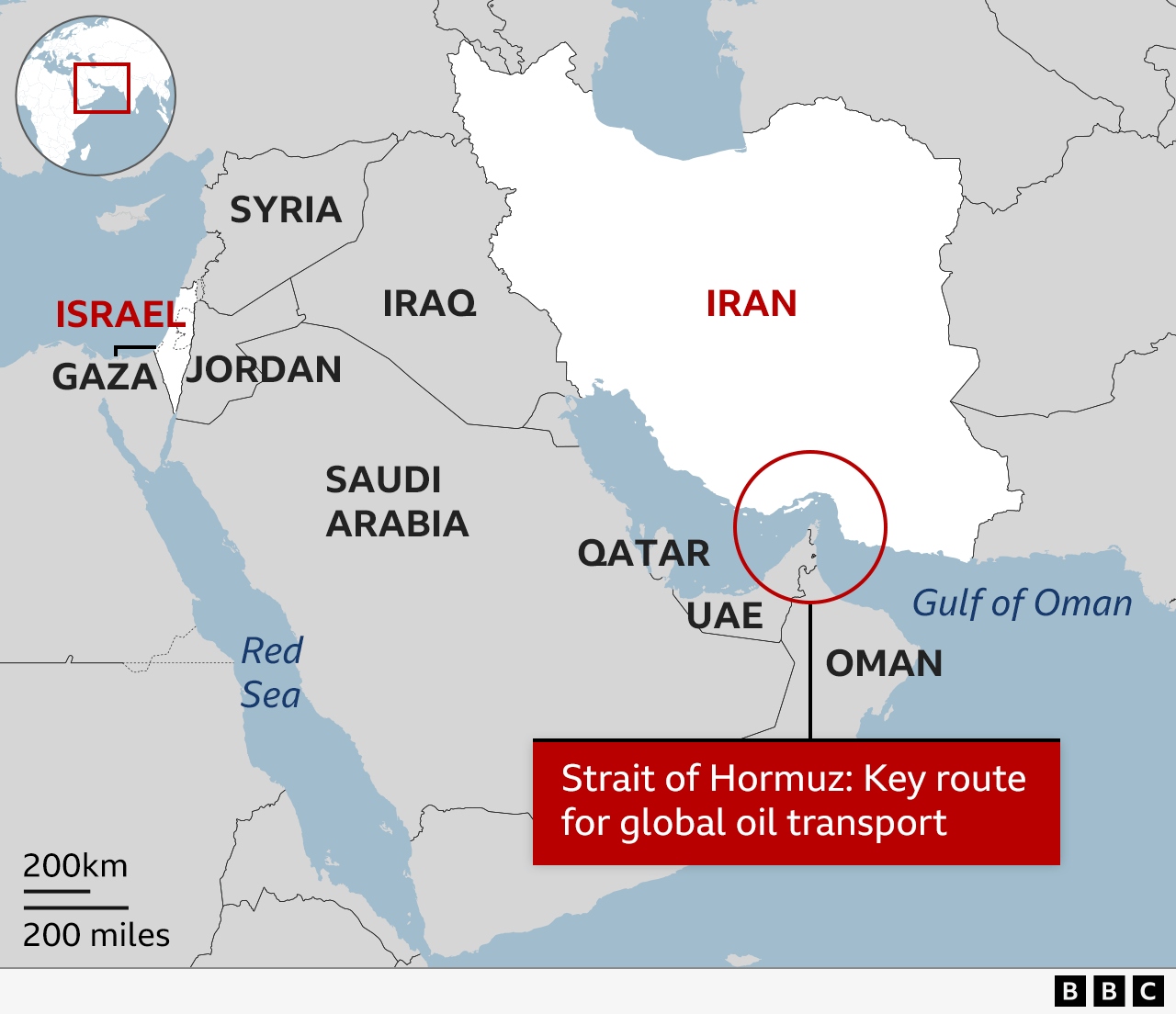
The Strait of Hormuz serves as a vital artery for approximately 20% of global oil and liquefied petroleum gas (LPG) shipments, making any prolonged closure a supply shock event of considerable magnitude [1]. The current de facto blockade by Iran has drawn international condemnation, with 22 countries publicly expressing opposition to the closure [1]. This international consensus may apply diplomatic pressure on Iran while simultaneously emboldening US military posturing.
Military escalation has accelerated significantly in recent days. US strikes have targeted Iran’s Natanz enrichment facility, while Israeli forces have hit missile production sites. Iran has responded with missile barrages on Israel and attempted attacks on the Diego Garcia military base [3][4]. This multi-front escalation increases the risk of unintended escalation and widens the geopolitical footprint of the conflict.
From a market perspective, corporate America is signaling significant concern. The CNBC CFO Council’s two-week deadline suggests that business leaders anticipate meaningful economic pain if the strait remains closed beyond this timeframe [1]. This private sector deadline may ultimately prove more consequential than the political deadline, as sustained energy price spikes would ripple through inflation, consumer spending, and Federal Reserve policy considerations.
The divergence between the political deadline (48 hours) and the corporate deadline (two weeks) reveals a critical insight: business leaders anticipate a more prolonged crisis than the Trump administration’s public posture suggests. While the President has issued ultimatums, corporate executives are planning for a scenario where the strait remains partially or fully closed for a more extended period.
The energy market dynamics present a complex picture. Oil futures have shown extreme volatility, with the United States Oil Fund (USO) experiencing a 12.64% drop on March 9 before recovering significantly [0]. This volatility reflects genuine uncertainty about the resolution timeline and the potential scope of supply disruption. Historical precedent suggests that prolonged chokepoint disruptions can trigger sustained price spikes, but the current strategic ambiguity makes forecasting particularly challenging.
The international dimension adds layers of complexity. While 22 countries have condemned the closure, the degree of coordinated international response remains unclear. Iran’s signals suggest some diplomatic flexibility for neutral nations while maintaining a hardline stance toward adversaries [4]. This nuanced approach may create divisions within the international community and complicate unified pressure tactics.
The humanitarian situation continues to deteriorate alongside the military escalation. Civilian casualties have been reported in Israel, and Iranian civilians are increasingly affected by the conflict [3][4]. This human cost adds urgency to diplomatic efforts while potentially complicating public messaging around military operations.
The Strait of Hormuz crisis represents a high-stakes confrontation with significant implications for energy markets, economic stability, and geopolitical security. President Trump’s 48-hour deadline creates immediate time pressure, while corporate America’s two-week economic threshold reflects more realistic business planning horizons [1]. The Strait’s critical role in global oil transportation—handling approximately 20% of worldwide shipments—means that sustained closure would have far-reaching consequences for inflation, supply chains, and consumer prices.
Market indicators show growing investor concern, with major indices declining this week as the crisis has escalated [0]. The volatility in energy markets, demonstrated by significant USO price swings, reflects genuine uncertainty about resolution timelines and potential escalation paths [0]. The involvement of multiple nations—22 countries condemning the closure, missile attacks on Israel, and regional actors like Hezbollah—transforms this from a bilateral dispute into a broader Middle Eastern security crisis.
The human cost is accumulating, with civilian casualties reported in Israel and Iranian civilians increasingly affected by military operations [3][4]. This dimension adds complexity to the political calculus and may influence public and international responses to continued military operations.
Monitoring priorities include the Trump deadline expiration (approximately Sunday evening EDT), corporate deadline trajectory, weekly EIA inventory reports for supply disruption indicators, Federal Reserve commentary on energy-driven inflation risks, and any signs of international diplomatic mediation [1][3]. The situation remains highly fluid, with multiple escalating threats on both sides creating significant uncertainty for markets and policymakers alike.
Insights are generated using AI models and historical data for informational purposes only. They do not constitute investment advice or recommendations. Past performance is not indicative of future results.
About us: Ginlix AI is the AI Investment Copilot powered by real data, bridging advanced AI with professional financial databases to provide verifiable, truth-based answers. Please use the chat box below to ask any financial question.