Fed Policy Uncertainty: Powell's Rate Decision and Warsh's Stalled Nomination Drive Market Volatility
Unlock More Features
Login to access AI-powered analysis, deep research reports and more advanced features
About us: Ginlix AI is the AI Investment Copilot powered by real data, bridging advanced AI with professional financial databases to provide verifiable, truth-based answers. Please use the chat box below to ask any financial question.
This analysis synthesizes findings from multiple analytical dimensions regarding the Federal Reserve’s current policy uncertainty and its market implications.
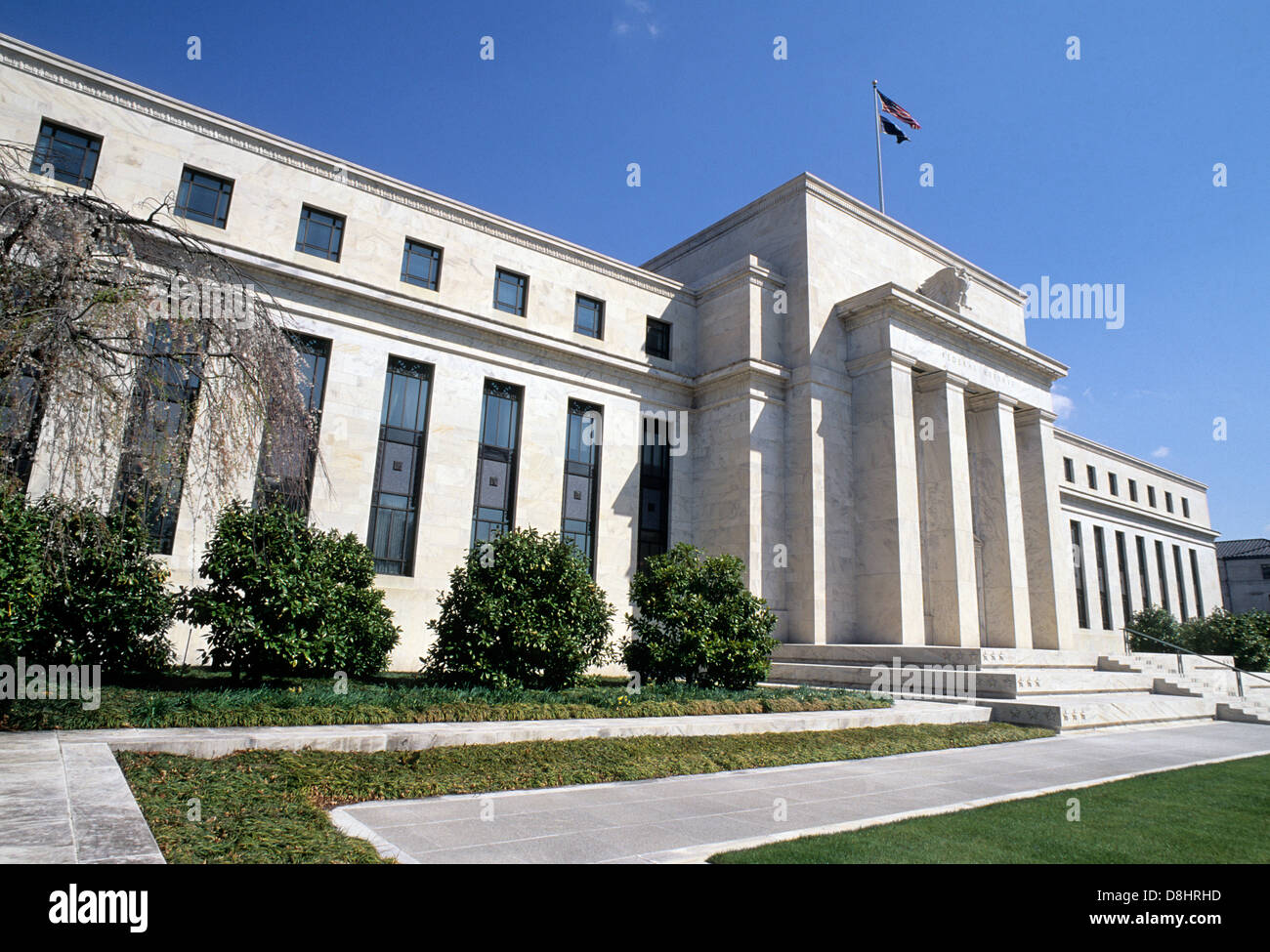
The Federal Reserve’s decision to hold rates unchanged at its March 18, 2026 meeting reflects the complex balancing act facing monetary policymakers amid elevated geopolitical and inflationary pressures [3]. Chairman Jerome Powell’s administration has projected higher inflation for the remainder of 2026, signaling only a single rate cut for the entire year—a marked departure from earlier expectations of more accommodative policy. This hawkish stance comes as the Iran war continues to create uncertainty in energy markets, a critical variable in inflation projections.
The timing of this decision is particularly significant given that Powell’s term as Fed Chair expires on May 15, 2026, creating a leadership vacuum at the precise moment when markets demand clarity on monetary policy direction [3]. The Trump administration has nominated Kevin Warsh to replace Powell, but this nomination remains stalled due to a legal battle surrounding an investigation into Powell’s conduct [3]. This political entanglement introduces additional layers of uncertainty that markets must navigate.
The market response to this confluence of factors has been notably negative. According to internal market data [0], the week of March 16-20, 2026 saw significant equity declines across major indices. The Dow Jones Industrial Average fell to what RealClearPolitics described as a “new 2026 low” [2]. The S&P 500 declined approximately 1.34% on March 20 alone, while the NASDAQ fell 1.55% and the Russell 2000—often viewed as a barometer of small-cap sentiment—dropped 2.24% on the same day [0].
This market weakness reflects trader paring of bets on Federal Reserve rate cuts in 2026, as the uncertain policy environment and elevated inflation outlook dampen expectations for monetary easing [3]. The decline in rate cut expectations creates a challenging environment for rate-sensitive sectors, particularly growth stocks and real estate investment trusts.
Larry Kudlow’s public campaign for Kevin Warsh, framed through the #FreeKevin movement on social media, represents more than just political advocacy—it encapsulates a fundamental debate over monetary policy philosophy [2]. Kudlow, known for his free-market libertarian perspective, has criticized Fed models that suggest stronger economic growth leads to higher inflation, characterizing such frameworks as “garbage in, garbage out” [2].
If confirmed, Kevin Warsh’s leadership would likely represent a significant philosophical shift from the Powell administration. Warsh’s history demonstrates hawkish tendencies—he opposed the Federal Reserve’s 2011 bond-buying programs and has been critical of loose monetary policy [4]. However, analysts at J.P. Morgan note that Warsh may still make the case for rate cuts in 2026 despite his hawkish reputation, particularly if economic conditions warrant accommodation [4].
The stalled nomination creates a governance gap that complicates market planning. Until the legal challenges surrounding the Powell investigation are resolved and Warsh’s confirmation proceeds, markets must contend with uncertainty about who will shape monetary policy in the medium term.
The interconnected nature of geopolitical risk, monetary policy, and market dynamics is clearly evident in this event. The Iran war’s impact on energy prices serves as a transmission mechanism that constrains the Federal Reserve’s policy options, simultaneously elevating inflation expectations while potentially dampening growth. This creates a difficult tradeoff for policymakers: accommodating growth through lower rates risks fueling inflation further, while maintaining restrictive policy to combat inflation may exacerbate economic weakness.
The political dimension adds another layer of complexity. The Trump administration’s demand for lower rates while investigators examine Powell’s conduct creates potential conflicts between fiscal and monetary policy objectives [3]. Powell has stated he has “no intention” of leaving the Fed board until the probe is concluded, suggesting prolonged uncertainty [3].
The current environment highlights how leadership uncertainty affects market functioning. Typically, markets prefer clarity—even unfavorable policy is often priced in more efficiently than policy ambiguity. The pending transition at the Federal Reserve, combined with the unresolved legal questions surrounding Powell’s position, creates a situation where market participants cannot confidently price in future policy directions.
The debate over Fed models also carries structural implications. If the current framework linking growth to inflation is fundamentally flawed—as Kudlow and other free-market advocates contend—then the entire analytical apparatus guiding monetary policy may require reconsideration. This represents a potential paradigm shift that could affect market expectations for years to come.
- Elevated uncertainty around Fed leadership transition
- Limited visibility on rate path for remainder of 2026
- Potential for continued equity market weakness until clarity emerges
- Kevin Warsh nomination stalled pending legal resolution
- Unclear how a potential Warsh Fed would differ from Powell administration
- Political interference concerns in monetary policy independence
- Iran war continues to create energy price volatility
- Fed projecting higher inflation with only one rate cut in 2026
- Kudlow’s critique of growth-inflation models may prove correct or incorrect depending on empirical outcomes
- If Warsh confirmation proceeds, markets may benefit from reduced uncertainty
- Potential for policy pivot if inflation concerns moderate
- Strategic positioning opportunities around rate-sensitive sectors once leadership clarifies
The urgency around this situation is heightened by Powell’s May 15, 2026 term expiration. Markets have limited time to prepare for a potential leadership change before the current chair’s term ends. Any breakthrough in the legal proceedings surrounding Warsh’s nomination could trigger significant market movements, particularly in rate-sensitive sectors.
This analysis presents factual information and market context to support decision-making without providing prescriptive recommendations.
- Fed held rates unchanged at March 18, 2026 meeting [3]
- Only one rate cut projected for 2026 [3]
- S&P 500 down 1.34%, NASDAQ down 1.55% on March 20, 2026 [0]
- Kevin Warsh nomination stalled due to legal battle over Powell investigation [3]
- Powell’s term expires May 15, 2026 [3]
- Iran war continues to influence energy prices and inflation expectations [3]
- The debate over whether Fed models correctly link growth to inflation remains unresolved
- Historical precedent suggests Warsh may take hawkish positions but could adapt to economic conditions
- Market participants should monitor confirmation proceedings, inflation data, and energy market developments
- Resolution timing of legal challenges to Warsh nomination remains uncertain
- Precise nature of investigation into Powell not fully detailed in available sources
- Extent of Trump administration pressure on Fed policy unclear
Insights are generated using AI models and historical data for informational purposes only. They do not constitute investment advice or recommendations. Past performance is not indicative of future results.
About us: Ginlix AI is the AI Investment Copilot powered by real data, bridging advanced AI with professional financial databases to provide verifiable, truth-based answers. Please use the chat box below to ask any financial question.