Market Rally on Iran Diplomatic Talks: Investment Analysis
Unlock More Features
Login to access AI-powered analysis, deep research reports and more advanced features
About us: Ginlix AI is the AI Investment Copilot powered by real data, bridging advanced AI with professional financial databases to provide verifiable, truth-based answers. Please use the chat box below to ask any financial question.
Related Stocks
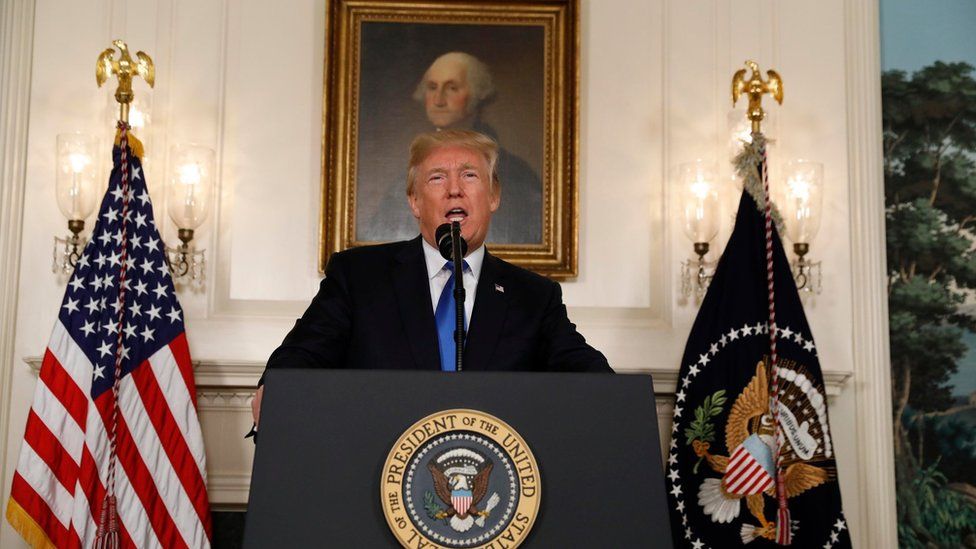
This analysis examines the significant market reaction following President Trump’s announcement on March 23, 2026, indicating a temporary de-escalation in U.S.-Iran tensions. The President stated he instructed the Pentagon to postpone planned strikes on Iranian energy infrastructure for five days while diplomatic negotiations continue, describing the talks as “very good and productive” [1][2].
The announcement triggered a sharp risk-on movement in global markets, with equity indices rallying while energy prices collapsed. This reflects market pricing of reduced immediate supply disruption risk in the Middle East, a region responsible for a significant portion of global oil production and transit through the Strait of Hormuz.
The confirmed market data reveals distinct sector and factor rotations [0]:
- Dow Jones Industrial Average: +1.25% (closed at 46,375)
- S&P 500: +0.41% (closed at 6,602)
- Russell 2000: +1.67% (small caps outperformed significantly)
- Nasdaq Composite: -0.05% (essentially flat, technology laggard)
- Oil Prices: WTI crude fell approximately $8/barrel to around $90; Brent crude declined to approximately $99
The Russell 2000’s strong relative performance (+1.67%) suggests market participants viewed this as a risk reconciliation event favoring domestic-oriented and smaller-capitalization equities, which tend to be more sensitive to economic cycle expectations. The Nasdaq’s flat performance indicates technology stocks neither benefited from the risk-on environment nor suffered from the oil price decline, potentially reflecting portfolio rebalancing.
The market response follows a clear geopolitical risk-off to risk-on transition:
-
Oil Price Decline → Energy Sector Impact: The approximately $8/barrel drop in crude represents roughly an 8% decline in a single trading session, driven by reduced supply disruption fears. This immediately pressures energy sector equities while benefiting consumers and transport industries.
-
Geopolitical De-escalation → Risk Assets: The five-day diplomatic window reduces tail-risk pricing that had been embedded in equity valuations and volatility indices. This typically benefits cyclically-sensitive sectors and higher-beta exposures.
-
Inflation Expectations → Federal Reserve Policy: Lower oil prices reduce imported inflation pressure, potentially providing the Federal Reserve additional flexibility in monetary policy decisions. This creates a favorable backdrop for rate-sensitive sectors.
The diverging performance between the Russell 2000 (+1.67%) and Nasdaq (-0.05%) reveals important market structure insights. Small-capitalization stocks, which are more domestically focused and economically sensitive, benefited disproportionately from the risk reconciliation. This suggests investors are pricing a scenario where reduced geopolitical risk improves domestic economic outlooks.
The technology sector’s flat performance despite the broadly positive market environment may reflect profit-taking in previously strong performers or rotation into more cyclically-exposed positions. The Nasdaq’s relative weakness warrants monitoring as it could indicate sector rotation dynamics.
While the market response has been positive, several contextual factors suggest caution [3]:
- Israeli Operations Continue: Despite the U.S. pause, Israel has continued strikes against Tehran, indicating the broader conflict remains unresolved
- IRGC Threats: The Islamic Revolutionary Guard Corps has threatened retaliation, maintaining adversarial posture
- Iranian Narrative: Iranian state media has characterized the pause as American “backing down,” suggesting the diplomatic framework may be contested
- Hormuz Risk: The Strait of Hormuz remains a critical chokepoint with approximately 20% of global oil and LNG transiting through these waters [1]
The $8/barrel oil price swing within minutes represents extreme intraday volatility [4]. This highlights that while the immediate geopolitical tension has subsided, market participants should expect elevated volatility throughout the five-day diplomatic window and potentially beyond, regardless of outcome.
| Risk Category | Assessment |
|---|---|
Duration Risk |
HIGH - The five-day pause is inherently temporary. Markets may reverse sharply if talks fail or collapse |
Geopolitical Continuity |
MEDIUM - Underlying U.S.-Iran tensions and Israel-Iran conflict remain unresolved |
Diplomatic Uncertainty |
MEDIUM - Iranian characterization of the talks as U.S. “backing down” suggests potential for miscommunication or breakdown |
Energy Infrastructure |
MEDIUM - Strikes on Iranian power plants remain “on the table” if diplomacy fails |
Market Volatility |
HIGH - The rapid $8 oil swing demonstrates potential for significant price movements |
Given the current market configuration, several opportunity considerations emerge:
-
Energy Sector Positioning: The sharp oil decline creates potential mean-reversion opportunities if diplomatic talks falter, though this requires careful risk management given the five-day timeline.
-
Volatility Strategies: Elevated implied volatility in both equity and energy markets may present opportunities for volatility-selling strategies, though tail-risk hedges remain prudent given geopolitical uncertainty.
-
Sector Rotation: The divergence between small caps and technology suggests monitoring for potential continued rotation into economically-sensitive sectors if the diplomatic window extends.
This event represents a significant but temporary geopolitical de-escalation with material market implications. The five-day diplomatic window provides a defined timeframe during which market participants should monitor for breaking news on negotiation progress [1][2].
Key metrics to watch include: daily oil inventory data, any statements from Iranian or U.S. diplomatic officials, Israel activity levels, and global equity market follow-through. The Federal Reserve’s reaction to the reduced oil prices will also influence broader market dynamics.
The current market pricing reflects optimism about diplomatic success, but investors should maintain awareness that the underlying geopolitical situation remains complex and potentially volatile. Historical patterns suggest that temporary geopolitical pauses often precede resumed tensions, warranting continued vigilance.
Insights are generated using AI models and historical data for informational purposes only. They do not constitute investment advice or recommendations. Past performance is not indicative of future results.
About us: Ginlix AI is the AI Investment Copilot powered by real data, bridging advanced AI with professional financial databases to provide verifiable, truth-based answers. Please use the chat box below to ask any financial question.