Middle East Oil Crisis: Largest Supply Disruption in History Triggers Extreme Volatility
Unlock More Features
Login to access AI-powered analysis, deep research reports and more advanced features
About us: Ginlix AI is the AI Investment Copilot powered by real data, bridging advanced AI with professional financial databases to provide verifiable, truth-based answers. Please use the chat box below to ask any financial question.
Related Stocks
This analysis is based on the Benzinga opinion piece [1] published on March 23, 2026, reporting on an ongoing Iran War that has escalated into the most significant global oil supply disruption in history.
The International Energy Agency (IEA), led by Executive Director Fatih Birol, has confirmed that this crisis exceeds the combined impact of the 1973 and 1979 oil crises
Current market data [0] reflects this historic disruption:
- Brent crude: $102.31/barrel (down 8.8% on the day)
- WTI crude: ~$88/barrel (down 10% on the day)
- Year-over-year increase: approximately 40% ($72.34 to current levels)
The energy sector ETF (XLE) showed resilience, rallying 2.97% to $59.61 despite the oil price decline, with trading volume reaching 69-73 million shares versus the normal 39-40 million—indicating significant repositioning activity [0].
Today’s 9% oil price plunge resulted from comments by former President Trump indicating “productive” US-Iran ceasefire talks [2]. This dramatic intra-day move exemplifies the “COVID-scale volatility” characterization in the Benzinga analysis—extreme price swings driven by geopolitical newsflow rather than fundamental supply-demand shifts.
Goldman Sachs has simultaneously raised its 2026 Brent crude average price forecast by $8-85/barrel, reflecting institutional concerns that the underlying supply damage may prove structural rather than transitory [2]. The disconnect between today’s price drop and the bullish forecast suggests markets remain uncertain about the duration and resolution of the conflict.
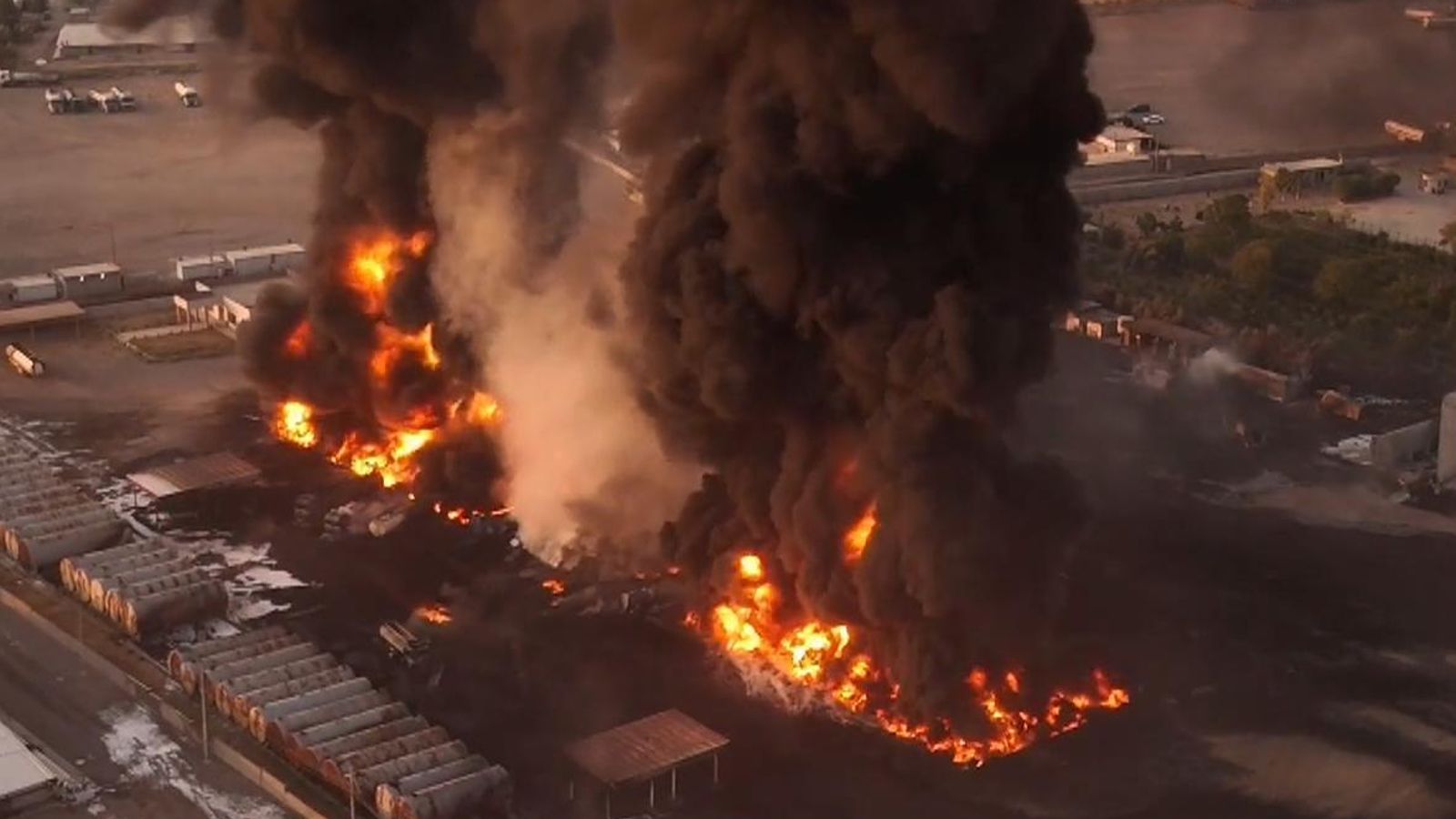
The crisis escalated through a clear progression: initial attacks on Gulf energy infrastructure → escalating damage to 40+ assets → Strait of Hormuz closure → 10+ million barrels/day removed from global supply → IEA emergency response mobilization. The attack on Ras Laffan represents a particularly significant escalation, as Qatar hosts the world’s largest LNG facilities, potentially extending the crisis beyond crude oil into natural gas markets [4].
The New York Times reports that attacks on energy infrastructure threaten “months or even years” of disruption [4]. Unlike previous crises driven by supply embargoes, physical damage to processing facilities, pipelines, and export terminals requires actual reconstruction—not merely political resolution.
The market’s sharp reaction to Trump’s ceasefire comments demonstrates how fragile the situation remains. A single statement caused a 9% intraday price swing, indicating that traders are positioned for continued volatility and will react strongly to any development—positive or negative.
Multiple mitigating factors are in play: the IEA is coordinating strategic petroleum reserve releases, the US is allowing the sale of stranded Iranian oil to cap fuel prices, and diplomatic channels remain active [0]. However, these measures may prove insufficient to offset a 10+ million barrel/day supply loss.
While energy stocks (XLE) showed relative strength, the ripple effects will impact refining, transportation, airlines, and chemical sectors. Additionally, sustained high oil prices could accelerate EV adoption—analysts at Mackenzie suggest price parity flip could occur by 2027 [6].
- Historical-scale disruption confirmed: This is the first time the IEA has characterized a supply event as exceeding the combined 1970s crises—warranting elevated risk awareness
- Infrastructure damage may be irreversible in the short-term: Physical reconstruction timelines extend months to years
- Regional retaliation could expand the conflict: Current damage assessment may understate potential escalation
- European and Asian economies more exposed than the US: Geographic proximity to the conflict zone and higher reliance on Middle East imports create differential regional impacts
- Energy sector resilience: XLE’s ability to rally despite oil price drops suggests underlying sector strength
- Strategic reserve deployment: IEA-coordinated releases provide temporary supply relief
- US shale response potential: Domestic production increases could partially offset Middle East losses
- Diplomatic path visibility: Today’s price pullback indicates markets see a potential resolution pathway
The ongoing Iran War has created the largest oil supply disruption in global market history, with the IEA confirming this exceeds the combined scale of the 1973 and 1979 oil crises plus the 2022 gas crisis. Over 40 Middle East energy assets have sustained severe damage, more than 10 million barrels per day are offline, and the Strait of Hormuz remains closed. Current Brent crude trades at $102.31/barrel (down 8.8% on the day following ceasefire signals), representing a 40% year-over-year increase. While diplomatic developments caused today’s price plunge, the underlying supply damage and historical severity of this event suggest continued elevated volatility. The energy sector (XLE) has shown relative resilience, rallying 2.97% amid heavy volume, though the broader market remains sensitive to developments in both the geopolitical and diplomatic spheres.
Insights are generated using AI models and historical data for informational purposes only. They do not constitute investment advice or recommendations. Past performance is not indicative of future results.
About us: Ginlix AI is the AI Investment Copilot powered by real data, bridging advanced AI with professional financial databases to provide verifiable, truth-based answers. Please use the chat box below to ask any financial question.