ETF Innovation: Managed Futures Strategies Gain Traction Amid Iran War Volatility
Unlock More Features
Login to access AI-powered analysis, deep research reports and more advanced features
About us: Ginlix AI is the AI Investment Copilot powered by real data, bridging advanced AI with professional financial databases to provide verifiable, truth-based answers. Please use the chat box below to ask any financial question.
Related Stocks
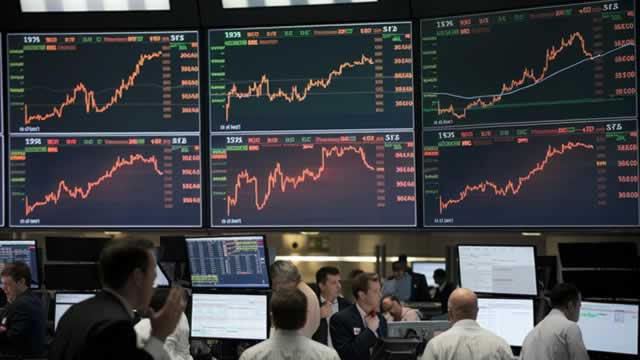
The ETF Edge segment published on March 23, 2026 [Event Source] highlights a significant industry trend: the growing adoption of managed futures strategies within ETF wrappers as investors seek sophisticated tools to navigate unprecedented market volatility stemming from the Iran war conflict.
The analysis is grounded in the dramatic market movements observed on March 23, 2026. President Trump announced a temporary pause on planned U.S. strikes against Iranian energy facilities following “constructive conversations” with Iran [1]. This announcement triggered a sharp reversal in oil prices, which had previously surged on threats that Iran would target Gulf power infrastructure [4]. The S&P 500 seesawed throughout the session, reflecting the extreme uncertainty confronting investors [3].
Sector performance data reveals the divergent impact of these geopolitical developments. Energy (+1.29%) emerged as the best-performing sector, directly benefiting from the commodity market turbulence, while Basic Materials lagged significantly at -1.92% [0]. Technology also declined (-0.42%), reflecting the risk-off sentiment that typically affects growth-oriented sectors during periods of geopolitical tension.
The technical analysis of SPY indicates a
The trend toward packaging complex strategies into single ETF instruments reflects several converging industry dynamics. Asset managers face intensifying pressure to innovate as passive indexing becomes increasingly commoditized. Simultaneously, both retail and institutional investors have grown more sophisticated in their demand for risk management tools that extend beyond traditional long-only equity exposure.
Managed futures strategies offer distinct characteristics that appeal to investors navigating the current environment:
- Multi-asset exposure: These strategies can follow trends across commodities, currencies, and interest rates, providing diversification benefits
- Bidirectional potential: Unlike traditional equity approaches, managed futures can profit from both rising and falling markets
- Systematic execution: The quantitative nature of these strategies removes emotional decision-making from the investment process
The rapid reversal in oil prices—from gains on Iran threats to sharp declines on the strike pause—exemplifies the exact type of market environment where managed futures strategies can potentially add value [2][4]. Their systematic approach allows them to identify and capitalize on trend movements across multiple asset classes, potentially providing returns uncorrelated with traditional equity portfolios.
The oil market dynamics had cascading effects on related ETF products. The United States Oil Fund (USO) experienced significant volatility, tumbling on the Iran strike pause news [1]. This performance highlights the direct exposure that commodity ETFs provide to energy market movements—and the corresponding risk that investors must manage.
Perhaps the most notable market anomaly during this period was gold’s continued retreat despite ongoing Middle East tensions. The precious metal fell for a fourth straight session, reaching near-three-month lows as interest rate concerns outweighed safe-haven demand [5]. This unusual behavior underscores the complex interplay between geopolitical risks and monetary policy expectations, suggesting that traditional safe-haven strategies may not function as expected when inflation concerns remain elevated.
The oil surge and associated inflation concerns have complicated the Federal Reserve’s policy trajectory. Potential rate cuts in 2026 are being reassessed amid energy-driven inflation fears [6], creating additional uncertainty for equity markets and influencing the attractiveness of various ETF strategies.
- Alternative Strategy Demand: The current volatility environment creates significant demand for innovative solutions, presenting growth opportunities for ETF issuers offering managed futures and similar products
- Product Innovation: Managed futures and alternative strategy products represent a competitive frontier where specialized providers can differentiate from traditional index fund giants
- Institutional Adoption: Institutional investors seeking uncorrelated returns may increase allocations to these strategies, driving assets under management growth
- Geopolitical Escalation: Any sudden escalation or de-escalation in the Iran conflict will immediately impact volatility levels and potentially alter demand patterns for alternative strategies
- Strategy Performance Uncertainty: Managed futures strategies carry unique risk considerations, and their performance during different market regimes varies significantly
- Investor Education Gap: As strategies become more complex, the need for investor education about managed futures and similar products increases—misunderstanding of these products could lead to inappropriate allocations
- Market Structure Changes: The continued growth of active ETFs and alternative strategy products represents a structural shift that may disrupt traditional asset allocation approaches
This analysis is based on the ETF Edge segment [Event Source] published on March 23, 2026, which examines how ETF innovation is packaging complex managed futures strategies to help investors navigate volatility during the Iran war conflict.
The market context reveals significant sector divergence, with Energy (+1.29%) outperforming while Technology (-0.42%) lagged [0]. Oil prices experienced dramatic swings, plunging after Trump announced the pause on Iranian energy facility strikes [2]. The S&P 500 remains in a sideways trend between $650.42 support and $674.32 resistance [0].
The structural shift toward alternative strategy ETFs reflects industry pressure to innovate beyond commoditized passive products. Managed futures strategies offer potential diversification benefits in volatile environments but carry unique risk considerations that require investor understanding and appropriate expectations.
Insights are generated using AI models and historical data for informational purposes only. They do not constitute investment advice or recommendations. Past performance is not indicative of future results.
About us: Ginlix AI is the AI Investment Copilot powered by real data, bridging advanced AI with professional financial databases to provide verifiable, truth-based answers. Please use the chat box below to ask any financial question.