
2025 Dollar Hegemony: Slow Multipolarization and Limited U.S. Economic Impact
Unlock More Features
Login to access AI-powered analysis, deep research reports and more advanced features
About us: Ginlix AI is the AI Investment Copilot powered by real data, bridging advanced AI with professional financial databases to provide verifiable, truth-based answers. Please use the chat box below to ask any financial question.
Related Stocks
A Xueqiu post [0] highlights consensus between Keynesian and institutionalist economists on the dollar’s role:
- Keynesians: Dollar reserve status is a result of U.S. strength (innovation, capital markets) with minimal seigniorage (0.1-0.3% of GDP).
- Institutionalists: U.S. institutional advantages (deep capital markets, rule of law) make the dollar irreplaceable in the short term.
Both agree the dollar’s decline will have limited U.S. economic impact, predicting slow multipolarization of the global monetary system instead of a sudden collapse.
2025 empirical data confirms the slow multipolarization trend:
- Dollar Dominance: The dollar’s global reserve share dropped to a 30-year low of 56.32% but remains the dominant reserve currency.
- RMB Internationalization: RMB is the 4th largest global payment currency (3.89%) and ranks 2nd in trade financing [1]. Over 30% of Belt and Road Initiative trade is settled in RMB [1].
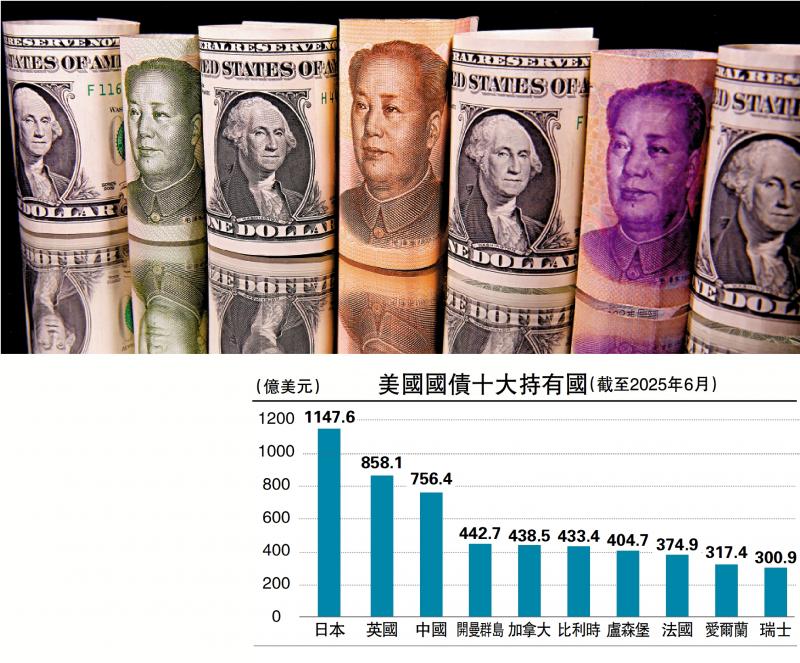
- Stablecoin Growth: Stablecoins have a total market cap exceeding $3000 billion, reshaping cross-border payments. Tether is the 17th largest holder of U.S. Treasury bonds [2][5].
- SWIFT Transformation: SWIFT is advancing the development of blockchain-based digital ledgers with participation from over 30 global financial institutions [3].
The Xueqiu post’s consensus aligns with 2025 research: the dollar’s decline is gradual, not catastrophic. U.S. institutional advantages and path dependency slow its replacement, while RMB and stablecoins gain incremental market share. This confirms the slow multipolarization trend of the global monetary system.
- Risks:
- Slightly higher U.S. debt financing costs due to reduced global demand for dollar assets.
- Regulatory uncertainty for stablecoins as governments adapt to their growing influence [2][5].
- Opportunities:
- Investments related to RMB internationalization (e.g., cross-border payment infrastructure) [1].
- Stablecoin ecosystem plays (e.g., custody, settlement platforms) [2][5].
- Regional currency cooperation in the Belt and Road Initiative [1].
Insights are generated using AI models and historical data for informational purposes only. They do not constitute investment advice or recommendations. Past performance is not indicative of future results.
About us: Ginlix AI is the AI Investment Copilot powered by real data, bridging advanced AI with professional financial databases to provide verifiable, truth-based answers. Please use the chat box below to ask any financial question.