Market Analysis Report: Forbes Article on Overlooked Buy Signal (2025-11-22)
Unlock More Features
Login to access AI-powered analysis, deep research reports and more advanced features
About us: Ginlix AI is the AI Investment Copilot powered by real data, bridging advanced AI with professional financial databases to provide verifiable, truth-based answers. Please use the chat box below to ask any financial question.
Related Stocks
On November 22, 2025, Forbes published an article titled
- Closed-End Fund (CEF) discounts to Net Asset Value (NAV) are narrower than historical averages, signaling potential buying opportunities.
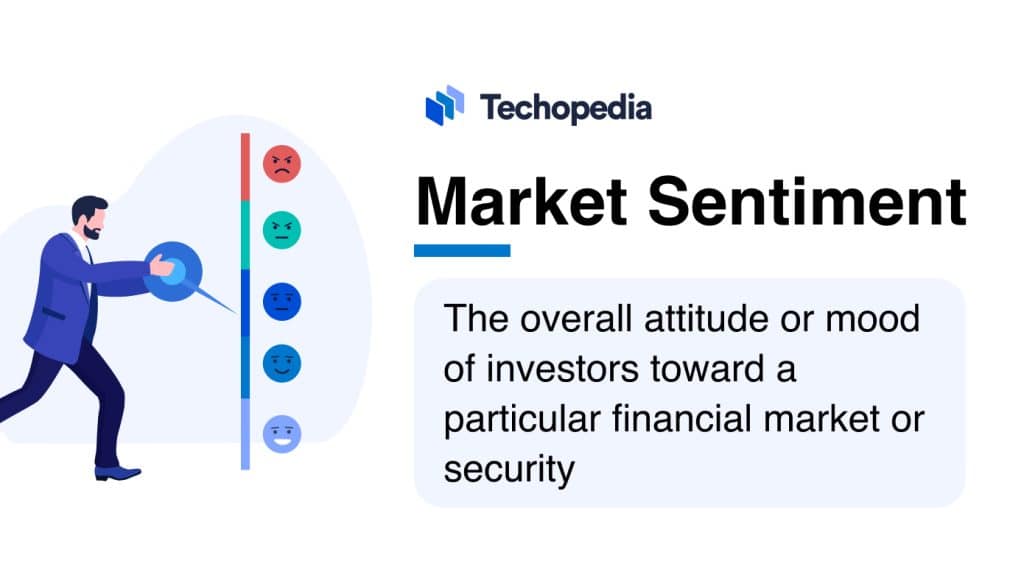
- The CNN Fear and Greed Index shows extreme investor fear despite positive market performance.
- The S&P 500 index has delivered solid returns over the past year, contradicting pessimistic media narratives.
The article argues that media-driven fear masks data-backed buying signals, particularly in CEFs [1].
- Sentiment Disconnect: The CNN Fear and Greed Index (10.51 as of Nov 21, 2025) indicates “extreme fear” [2], but the S&P 500 has risen11.08%over the past year [3]. This gap suggests retail investors may be overreacting to negative news, while data-driven traders could be accumulating assets.
- CEF Sector Interest: The article’s focus on CEF discounts may increase short-term demand for CEFs, especially equity CEFs (with deeper discounts: -6.78% [4]).
- Recovery Signal: If CEF discounts continue to narrow (current average: -5.50% [4]), it could precede a broader market recovery, as CEF discounts often widen during stress and narrow in bull markets.
- Sentiment Shift Watch: A sustained rise in the Fear and Greed Index above25(exit from extreme fear) would indicate improving investor confidence.
- Fear vs. Fundamentals: Retail sentiment remains bearish, but fundamentals (S&P returns, CEF trends) suggest a positive outlook. This divergence creates opportunities for contrarian investors.
| Metric | Value | Source |
|---|---|---|
| Average CEF Discount to NAV | -5.50% | [4] |
| Equity CEF Discount | -6.78% | [4] |
| Bond CEF Discount | -4.40% | [4] |
| CNN Fear and Greed Index | 10.51 (Extreme Fear) |
[2] |
| S&P500 1-Year Return | +11.08% | [3] |
| S&P500 20-Day Moving Average | $6763.17 | [3] |
| S&P500 50-Day Moving Average | $6711.41 | [3] |
- Closed-End Funds: All CEFs, especially equity-focused funds (e.g., Royce Small-Cap Trust, abrdn Healthcare Invest [4]).
- High-Yield CEFs: Bond CEFs with higher yields may benefit from demand for income-generating assets.
- Financial Services: Asset managers (Nuveen, BlackRock) and brokers offering CEF trading could see increased activity.
- Equity/Bond Markets: CEF performance ties to underlying assets, so small-cap stocks and municipal bonds may see indirect impacts.
- Upstream: Investment banks involved in CEF issuance may experience higher activity.
- Downstream: Retail brokers could see increased CEF transaction volumes.
- Real-Time CEF Price Movements: Monitor CEF prices post-article to assess if demand has increased (e.g., narrowing discounts).
- CEF Distribution Sustainability: Verify if CEF yields rely on net income or return of capital (ROC) for individual funds.
- Macro Indicators: Check upcoming Fed rate decisions or inflation data that could impact CEF performance.
- CEF Discount Trends: Track weekly updates from CEFA [4].
- Fear and Greed Index: Watch for a rise above25[2].
- S&P500 Moving Averages: Reclaiming the20-day MA($6763) would confirm a short-term reversal [3].
- Interest Rate Changes: Rising rates may pressure bond CEFs; falling rates could boost them.
- Prolonged Extreme Fear: Extreme fear can last weeks/months (e.g., 2020 COVID crash). Avoid assuming immediate sentiment shifts [2].
- CEF Discount Widening: Market stress (recession, geopolitical shocks) could widen discounts, leading to short-term losses.
- S&P Volatility: The index is below its20-day/50-day MAs[3], indicating short-term downward momentum.
- CEF Liquidity: Low-volume CEFs may be hard to exit without price impact.
- Users should be aware that extreme fear does not guarantee an immediate rebound; historical data shows it can persist.
- CEF investors should verify distribution sources (income vs. ROC) to avoid unexpected risks.
- The S&P500’s short-term downward momentum (below MAs) warrants caution for short-term traders.
[1] Foster, M. (2025). “This Ignored Stock Indicator Just Flashed Green (Time To Buy!)”. Forbes. Retrieved from https://www.forbes.com/sites/michaelfoster/2025/11/22/this-ignored-stock-indicator-just-flashed-green-time-to-buy/
[2] MacroMicro. (2025). “US - CNN Fear and Greed Index”. Retrieved from https://en.macromicro.me/series/22748/cnn-fear-and-greed
[3] Stock Price Data: ^GSPC (2024-11-22 to 2025-11-22). Retrieved via get_stock_daily_prices tool.
[4] Closed-End Fund Association (CEFA). (2025). “U.S. Closed-End Funds Premium & Discount Reports”. Retrieved from https://www.cefa.com/investor-tools/premium-discount-reports/
Insights are generated using AI models and historical data for informational purposes only. They do not constitute investment advice or recommendations. Past performance is not indicative of future results.
About us: Ginlix AI is the AI Investment Copilot powered by real data, bridging advanced AI with professional financial databases to provide verifiable, truth-based answers. Please use the chat box below to ask any financial question.