Analysis of Google's Aggressive AI Capacity Scaling Plan and Market Impact on Alphabet (GOOGL)
Unlock More Features
Login to access AI-powered analysis, deep research reports and more advanced features
About us: Ginlix AI is the AI Investment Copilot powered by real data, bridging advanced AI with professional financial databases to provide verifiable, truth-based answers. Please use the chat box below to ask any financial question.
Related Stocks
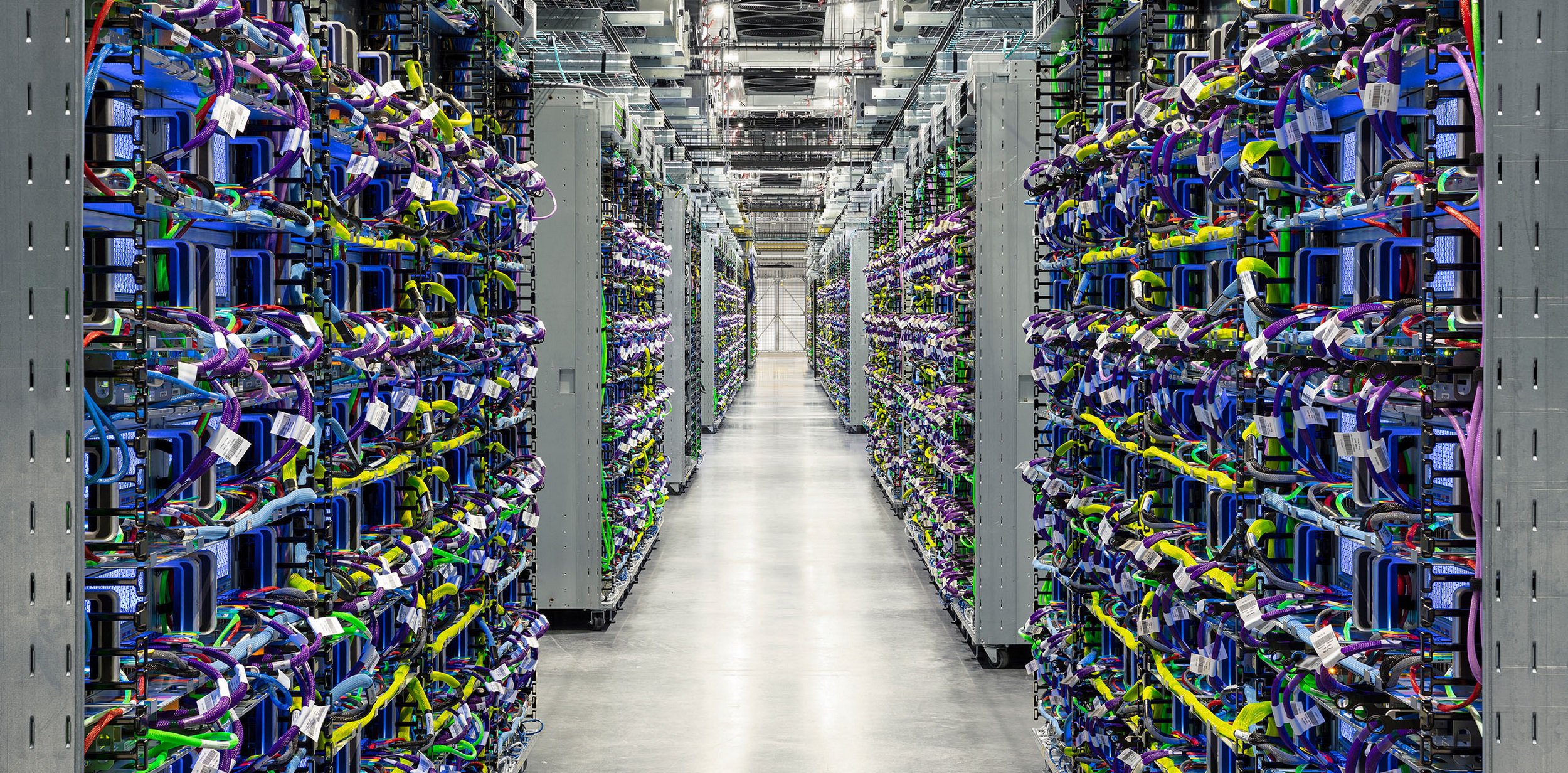
Google’s AI infrastructure head Amin Vahdat announced plans to scale AI serving capacity by 1000x over 4-5 years, requiring a doubling every six months [1][2]. This strategy leverages three pillars: expanding physical infrastructure, optimizing model efficiency, and custom silicon (Ironwood TPUs) [1]. The announcement drove a 3.53% gain in GOOGL stock with volume doubling the average, outperforming the tech sector’s 0.146% rise [0]. Google’s strong net profit margin (32.23%) provides a buffer for scaling investments [0], but competition from Microsoft Azure and OpenAI remains a concern.
- Investor confidence in Google’s AI strategy is evident from the stock’s outperformance relative to the tech sector.
- Custom TPUs may reduce reliance on Nvidia, offering a competitive edge in cost and energy efficiency.
- The 1000x scaling target is highly ambitious, requiring sustained cross-functional innovation across infrastructure and AI models.
- Execution Risk: Failure to meet the aggressive scaling timeline could lead to lost market share to competitors like Microsoft Azure or OpenAI.
- Cost Pressure: Increased capital expenditures for AI infrastructure may compress short-term profit margins despite strong current profitability.
- Successful scaling could solidify Google’s leadership in AI infrastructure and drive significant growth in Google Cloud’s AI revenue.
- Custom silicon development may create long-term cost advantages over peers依赖 on third-party chips.
Google’s AI scaling plan represents a long-term growth initiative, but investors should monitor execution progress, CapEx trajectory, and margin impact. Critical metrics to track include Google Cloud’s AI revenue growth, custom TPU adoption rates, and infrastructure deployment timelines. The plan reflects broader industry trends of massive AI investment, contrasting with some market concerns about an AI bubble.
Insights are generated using AI models and historical data for informational purposes only. They do not constitute investment advice or recommendations. Past performance is not indicative of future results.
About us: Ginlix AI is the AI Investment Copilot powered by real data, bridging advanced AI with professional financial databases to provide verifiable, truth-based answers. Please use the chat box below to ask any financial question.