Analysis of Reddit's 'Fade the First15' Day Trading Strategy: Performance & Risk Assessment
Unlock More Features
Login to access AI-powered analysis, deep research reports and more advanced features
About us: Ginlix AI is the AI Investment Copilot powered by real data, bridging advanced AI with professional financial databases to provide verifiable, truth-based answers. Please use the chat box below to ask any financial question.
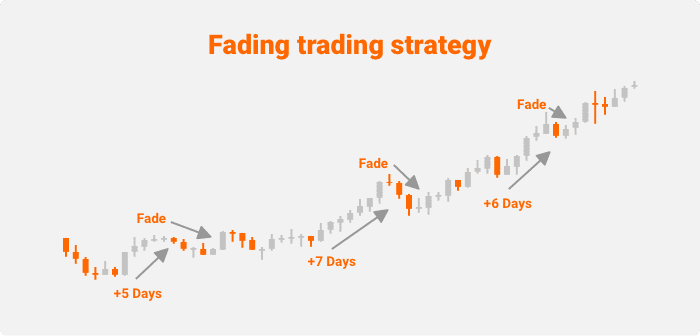
A Reddit user shared the ‘Fade the First15’ day trading strategy, which generated a9.13% return ($45k→$49k) over70 days via505 trades (≈7/day) with a49% win rate and1.54x reward-to-risk (R:R) ratio [1]. The strategy involves fading extreme moves (>0.5% ATR) in the first15 minutes of market openings for indices and forex, with strict risk management (0.5% per trade, max5 trades/day).
Analytical findings indicate the strategy has positive expectancy: (0.49×1.54)−(0.51×1)=0.2446 per trade [2]. However, high trade frequency exposes returns to hidden costs (spreads, slippage, commissions) which could reduce net gains by up to10% (e.g., $1/trade costs would erase $505 of the $4k profit) [3]. The strategy’s reported performance outperforms average day traders, who underperform indices by10.3% annually [6], but this depends on excluding hidden costs.
- Cross-Domain Performance: The strategy’s positive expectancy aligns with risk management principles [2], but its high trade volume makes it sensitive to transaction costs (a critical factor often overlooked in retail strategies) [3,7].
- Community Reactions: Mixed feedback highlights a tension between short-term consistency (praised) and long-term scalability (criticized). The9.13%70-day return translates to ~47% annualized [4], which is above realistic benchmarks but unvalidated for longer periods.
- Validation Gaps: The strategy lacks testing across diverse market conditions (e.g., Fed meetings) and long-term backtesting, essential for confirming sustainability [5].
- Hidden Cost Risk: Frequent trades (505 over70 days) may significantly reduce net returns if transaction costs are unaccounted for [3].
- Short Track Record Risk: The70-day period does not capture diverse market cycles, increasing unexpected drawdown likelihood [5].
- Win Rate Sensitivity: A 2% drop in win rate (to47%) could turn positive expectancy negative, especially with added costs [2].
- General Day Trading Risk:70% of retail forex traders lose money quarterly [6], emphasizing rigorous validation need.
- If validated across market conditions and cost-adjusted, the strategy could offer consistent returns above average benchmarks [4].
- Strict risk management (0.5% per trade) provides a template for responsible day trading [1].
The ‘Fade the First15’ strategy reports strong short-term performance with positive expectancy, but critical gaps remain:
- Transaction Cost Clarity: No confirmation of whether spreads/slippage were included in returns.
- Long-Term Testing: Lack of data over ≥1 year to validate consistency.
- Market Adaptability: Unclear performance during high-volatility events.
Decision-makers should cross-verify these gaps before considering the strategy, as hidden costs and untested conditions can negate reported gains [3,5].
Insights are generated using AI models and historical data for informational purposes only. They do not constitute investment advice or recommendations. Past performance is not indicative of future results.
About us: Ginlix AI is the AI Investment Copilot powered by real data, bridging advanced AI with professional financial databases to provide verifiable, truth-based answers. Please use the chat box below to ask any financial question.