Credit Card Delinquency and Systemic Risk: Market Data vs Reddit Claims
Unlock More Features
Login to access AI-powered analysis, deep research reports and more advanced features
About us: Ginlix AI is the AI Investment Copilot powered by real data, bridging advanced AI with professional financial databases to provide verifiable, truth-based answers. Please use the chat box below to ask any financial question.
Related Stocks
A Reddit discussion (user-provided) explored potential systemic impacts of rising credit card delinquency rates, with key debates including:
- Whether consumer credit defaults could spike bond rates and harm AI datacenter demand (targeting NVDA/AMD).
- Concerns over private credit delinquency as a “2008-style bomb” and risks to 401k accounts.
- Counterarguments that subprime credit issues are isolated and major banks have sufficient buffers.
Authoritative data from financial sources provides context:
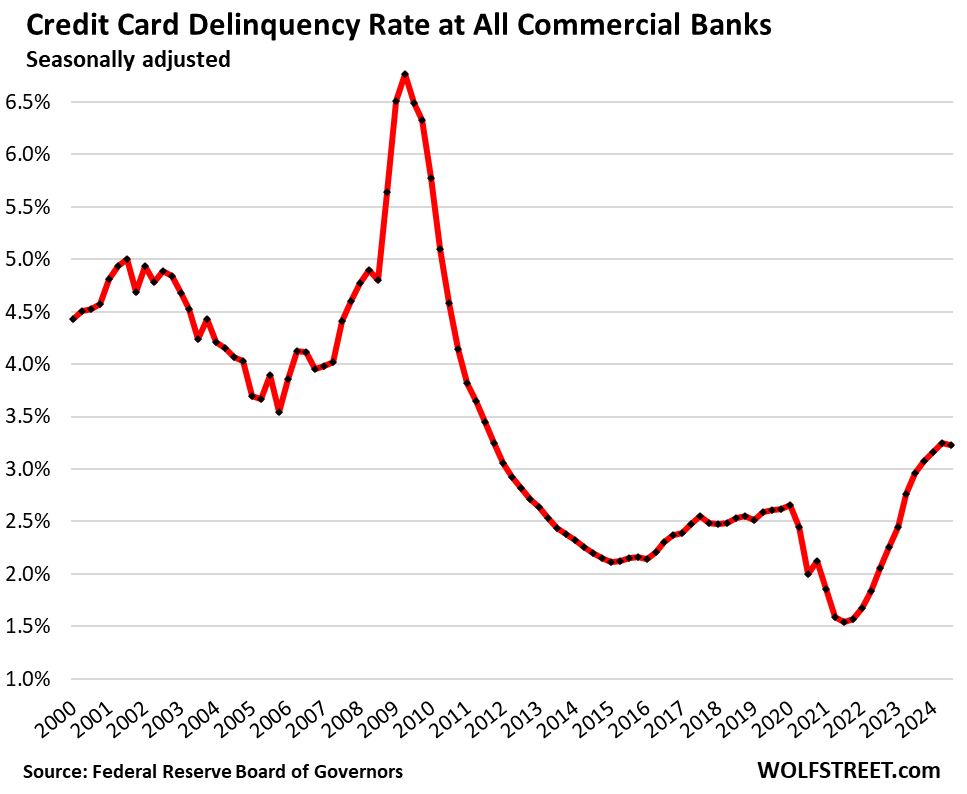
- Credit card delinquency rates (30+ days) for all commercial banks stood at 2.98% in Q3 2025, down from 3.04% in Q2 2025 [0].
- Private credit default rates declined to 1.76% in Q2 2025(Proskauer Index) after peaking at 2.67% in Q4 2024 [3].
- Nvidia’s vendor financing program (including $100B to OpenAI) totals $110B, but the company reported $15.4B in operating cash flow in Q2 FY26(strong liquidity buffer) [2].
- Consumer Credit: Delinquency rates are stable or declining, with no immediate threat to bank solvency [0]. Major banks’ credit card portfolios show resilience (e.g., top 100 banks had a 2.87% delinquency rate in Q3 2025 [0]).
- AI Stocks: NVDA’s strong cash flow mitigates risks from its vendor financing program [2]. No short-term impact on AI datacenter demand is evident from current data.
- Private Credit: Elevated default rates (5.2% TTM as of July 2025 per Fitch) could spread to leveraged loan markets if economic conditions deteriorate [3].
- AI Financing: A sustained spike in bond yields (unrelated to consumer credit) could increase refinancing costs for datacenter operators, but this link is not supported by current consumer credit trends [1].
The Reddit debate reflects mixed retail investor sentiment, but institutional data suggests consumer credit risks are contained. Private credit remains a watchlist item but not an imminent crisis.
| Metric | Value | Source |
|---|---|---|
| Q3 2025 Credit Card Delinquency Rate (All Banks) | 2.98% | [0] |
| Q2 2025 Private Credit Default Rate (Proskauer Index) | 1.76% | [3] |
| Nvidia Vendor Financing Program Size | $110B | [2] |
| Nvidia Q2 FY26 Operating Cash Flow | $15.4B | [2] |
| TTM Private Credit Default Rate (Fitch, July2025) | 5.2% | [3] |
##4. Affected Instruments
- Directly Impacted: Regional banks with high subprime credit card exposure; private credit funds holding leveraged loans [0,3].
- Indirectly Impacted: AI stocks (NVDA/AMD) via potential refinancing costs for datacenter customers (no current evidence of impact) [2].
- Related Sectors: Financial services (credit card issuers), technology (datacenter infrastructure).
##5. Context for Decision-Makers
- No data linking consumer credit defaults to bond rate spikes for AI datacenter financing [1,2].
- Lack of transparency on 401k exposure to private credit (Reddit claim unsubstantiated by tool results) [3].
- Missing data on datacenter operators’ refinancing schedules and sensitivity to rate changes [2].
- Bull Case: Consumer credit risks are isolated; Nvidia’s strong cash flow supports its vendor financing program [0,2].
- Bear Case: Elevated private credit defaults could spill over to broader markets if economic growth slows [3].
- Private Credit: Users should be aware that elevated private credit default rates (5.2% TTM) may impact leveraged loan portfolios and related investment products [3].
- AI Financing: Nvidia’s $110B vendor financing program raises concerns about concentration risk (OpenAI accounts for91% of the total) that warrant careful monitoring [2].
- Monthly updates on private credit default rates (Proskauer/Fitch indices) [3].
- Nvidia’s quarterly financial reports for changes in vendor financing repayment trends [2].
- Bond yield movements for high-yield securities (indicator of refinancing costs for leveraged borrowers) [1].
- Unemployment rate trends (critical for consumer credit stability) [0].
Insights are generated using AI models and historical data for informational purposes only. They do not constitute investment advice or recommendations. Past performance is not indicative of future results.
About us: Ginlix AI is the AI Investment Copilot powered by real data, bridging advanced AI with professional financial databases to provide verifiable, truth-based answers. Please use the chat box below to ask any financial question.