NVDA Chip Obsolescence and AI Bubble Risks: Accounting Practices, Capex Sustainability, and Market Sentiment
Unlock More Features
Login to access AI-powered analysis, deep research reports and more advanced features
About us: Ginlix AI is the AI Investment Copilot powered by real data, bridging advanced AI with professional financial databases to provide verifiable, truth-based answers. Please use the chat box below to ask any financial question.
Related Stocks
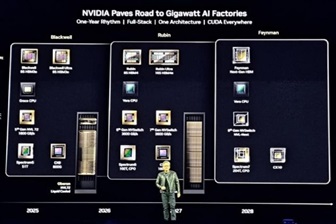
On November 22, 2025, a Reddit discussion [7] focused on NVDA chip obsolescence and its implications for the AI industry. Key concerns included AI firms extending chip depreciation periods (Meta from 4.5→5.5 years [3]) to inflate earnings, with Michael Burry estimating top 5 AI firms will understate depreciation by $176B (2026-2028) [3]. Tech giants’ $1T AI infrastructure spending faces sustainability risks due to NVDA’s annual chip cycles [2], leading Barclays to cut AI firms’ 2025 earnings by up to10% [4]. NVDA dominates the market with 88.3% of FY2025 revenue from data centers [0], but the Tech sector lagged other gainers (up0.146% [6]) reflecting investor caution. Industry developments include Burry’s Substack warning comparing NVDA to Cisco (78% post-dot-com crash [1]), Amazon reversing its 6-year depreciation policy [3], and CoreWeave’s claim of 6-year chip life vs Burry’s 2-3 years [2].
- Accounting practices (depreciation extensions) mask capex unsustainability, with Burry’s $176B understatement claim potentially triggering regulatory scrutiny [3].
- A disconnect exists between analyst consensus (73.4% Buy [0]) and sector underperformance, indicating divergent institutional and retail sentiment.
- NVDA’s annual chip cycles create an ‘upgrade trap’ for customers, as noted by Microsoft’s Nadella [5], while non-frontier workload optimization (inference) offers a path to extend chip life [7].
- Burry’s Cisco comparison highlights systemic risks if AI demand wanes, contrasting with CoreWeave’s optimistic chip life estimate [2].
- AI Bubble: Unsustainable free adoption models and diminishing returns could lead to a bubble burst [7].
- Accounting Transparency: Regulatory scrutiny over depreciation practices may result in earnings restatements [3].
- Capex Sustainability: Annual chip replacements turn long-term investments into recurring costs [2].
- Obsolescence: Rapid innovation reduces ROI for AI firms [5].
- Workload Optimization: Using chips for non-frontier tasks (inference) extends their useful life [7].
- Diversification: NVDA expanding beyond data centers (gaming:8.7% of revenue [0]) mitigates risks.
- Regulatory Clarity: Standardized depreciation guidelines could resolve disputes over chip life [2].
- NVDA’s data center revenue:88.3% of FY2025 total [0].
- Analyst consensus:73.4% Buy with $250 target (+39.8% upside [0]).
- Burry’s understatement estimate: $176B (2026-2028 [3]).
- Tech sector performance: up0.146% vs Healthcare (+1.73% [6]).
- Meta’s depreciation extension:4.5→5.5 years [3].
- Barclays’ earnings cut: up to10% for AI firms [4].
Insights are generated using AI models and historical data for informational purposes only. They do not constitute investment advice or recommendations. Past performance is not indicative of future results.
About us: Ginlix AI is the AI Investment Copilot powered by real data, bridging advanced AI with professional financial databases to provide verifiable, truth-based answers. Please use the chat box below to ask any financial question.