Fed Policy Shift: QT End in December 2025 & Potential QE Implications for Markets
Unlock More Features
Login to access AI-powered analysis, deep research reports and more advanced features
About us: Ginlix AI is the AI Investment Copilot powered by real data, bridging advanced AI with professional financial databases to provide verifiable, truth-based answers. Please use the chat box below to ask any financial question.
This analysis evaluates the Reddit claim that the Federal Reserve will stop Quantitative Tightening (QT) in December 2025 and pivot to Quantitative Easing (QE) in January 2026, potentially triggering a bull run. The report integrates tool-derived data on Fed policy, market performance, economic indicators, and valuations to assess the claim’s validity and implications.
- The Federal Reserve will end QT effective December 1, 2025, with broad policymaker support [1][2].
- Some analysts predict QE or large-scale liquidity operations in January 2026 to address post-government shutdown liquidity concerns [3][4].
- Major US indices rose on November 26, 2025: S&P500 (+0.37%), NASDAQ (+0.27%), Dow Jones (+0.61%) [0].
- US Q3 2025 GDP growth is estimated at 2.1–2.7% [6][7], indicating moderate expansion.
- Unemployment stood at 4.3–4.4% in recent months, reflecting a cooling labor market [8][9].
- October 2025 CPI inflation was 2.9–3.25% YoY, above the Fed’s 2% target [10][11].
- S&P500 forward PE (~22.42) and trailing PE (~29.8) are elevated vs historical averages [12][13].
- October 2025 economic data (CPI, employment) is unavailable due to a government shutdown [14].
- Fed Policy Clarity: The Fed’s QT end is confirmed [1][2], but the January pivot to QE is uncertain. Critical distinction: QE is large-scale, fixed-schedule asset purchases; liquidity operations are short-term, as-needed tools [5]. Given sticky inflation [10][11], the Fed may prioritize liquidity support over full QE.
- Economic Context: Moderate GDP growth (2.1–2.7%) [6][7] is offset by cooling labor markets (4.3–4.4% unemployment) [8][9] and above-target inflation [10][11]. This mixed data limits aggressive QE, as it could reignite inflation.
- Valuation Risks: Elevated S&P500 valuations (forward PE ~22.42, trailing PE ~29.8) [12][13] reduce upside potential for a bull run. Historical median forward PE is ~16.8x [13], meaning current valuations are ~33% above average.
- Investor Sentiment: Recent market gains [0] reflect anticipation of Fed easing, but missing October data [14] adds uncertainty. The Fed may adjust policy once full data is available.
- Market Outcomes: Full QE would likely boost asset prices [3], but liquidity operations would have a muted, short-term impact [5].
- Inflation Risk: Aggressive QE could exacerbate inflation [10][11], forcing the Fed to reverse course and trigger volatility.
- Valuation Constraints: High valuations [12][13] limit upside, even if QE is implemented.
- Growth Stability: Liquidity support may stabilize short-term growth, but long-term growth depends on structural factors (productivity, labor) rather than monetary policy.
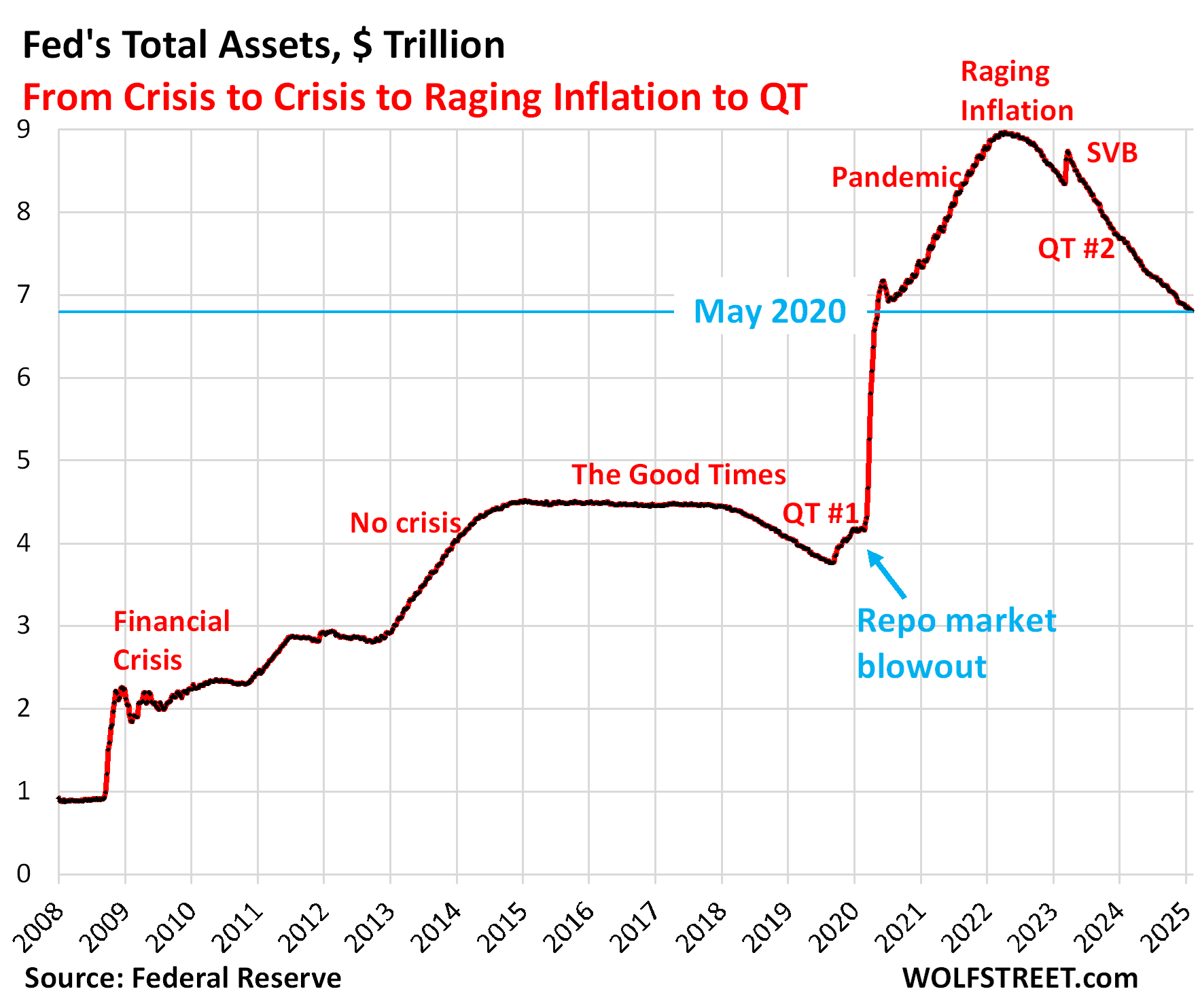
- Fed Balance Sheet: Expected to stabilize at ~$6.5 trillion post-QT [3].
- Policy Tools: QE (stimulus) vs repo operations (short-term liquidity) [5].
- Historical Precedent: Previous QE cycles (2008,2020) boosted assets, but 2008 took years for full recovery [original Reddit post].
- Valuation Benchmark: S&P500 historical median forward PE is ~16.8x [13].
- Missing October 2025 CPI/employment data [14] hinders precise policy trajectory assessment.
- Unclear nature of Fed’s January actions (full QE vs liquidity support) [3][4].
- Unconfirmed long-term rate cut timeline (50–100 bps in Q2/Q3 2026 as per Reddit claim).
- Uncertain inflation trajectory (persistence vs moderation to 2% target).
Insights are generated using AI models and historical data for informational purposes only. They do not constitute investment advice or recommendations. Past performance is not indicative of future results.
About us: Ginlix AI is the AI Investment Copilot powered by real data, bridging advanced AI with professional financial databases to provide verifiable, truth-based answers. Please use the chat box below to ask any financial question.