CME Futures Outage Analysis: Data Center Cooling Failure and AI-Era Infrastructure Implications
Unlock More Features
Login to access AI-powered analysis, deep research reports and more advanced features
About us: Ginlix AI is the AI Investment Copilot powered by real data, bridging advanced AI with professional financial databases to provide verifiable, truth-based answers. Please use the chat box below to ask any financial question.
Related Stocks
On November 28, 2025, CME Group (CME) halted trading across futures markets (WTI crude, US 10-Year Treasuries, S&P 500 futures) due to a cooling system failure at a CyrusOne (CONE) data center in Chicago [1][2]. The outage disrupted global derivatives benchmarks during thin post-Thanksgiving liquidity [3][6]. CyrusOne deployed temporary cooling to resolve the issue, but no immediate resumption timeline was provided [2].
The outage highlights systemic gaps in supporting AI-era data center demands:
- AI-Driven Density Stress: AI workloads push rack densities to 125 kW+ (up from 5-10 kW), with 300 kW forecasts for 2026 [5]. Traditional air cooling cannot handle this heat [4][3].
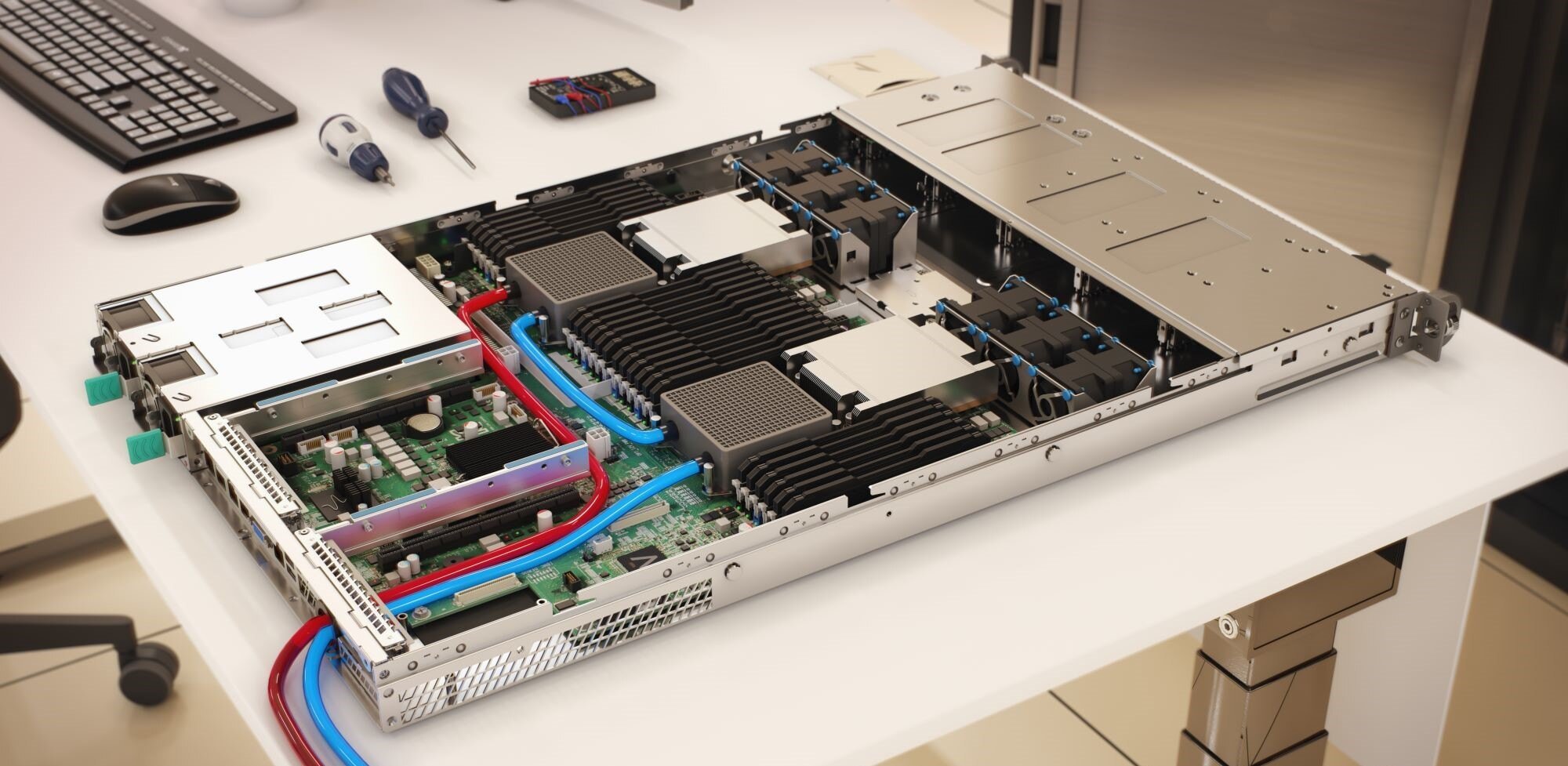
- Cooling Technology Shift: 53% of industry respondents expect liquid cooling to dominate high-density projects [3]. Direct-to-chip (DLC) liquid cooling is becoming standard for AI facilities [5].
- Grid Risks: 79% of US power executives expect AI to increase long-term grid stress [6].
- Data Center Operators: CyrusOne (CONE) may face reputational damage; Equinix (EQIX) and Digital Realty (DLR) could gain share via AI-optimized facilities [3][5].
- Cooling Providers: Comfort Systems USA (FIX) and AIRSYS North America will see increased demand for liquid cooling and AI-driven monitoring tools [4][7].
- Exchanges: CME’s failure to failover (due to HFT latency concerns [7]) may prompt hybrid low-latency/resilient models.
- Operators: Invest in liquid cooling and AI monitoring to avoid outages [3][5].
- Exchanges: Reassess failover strategies to balance latency and resilience [7].
- Investors: Opportunities exist in cooling providers (FIX) and AI-optimized data centers (EQIX, DLR) [3][4].
- Risks: Legacy infrastructure gaps, grid stress, regulatory scrutiny post-outage [1][6].
- Opportunities: Liquid cooling adoption, AI-driven infrastructure management tools [3][4].
Insights are generated using AI models and historical data for informational purposes only. They do not constitute investment advice or recommendations. Past performance is not indicative of future results.
About us: Ginlix AI is the AI Investment Copilot powered by real data, bridging advanced AI with professional financial databases to provide verifiable, truth-based answers. Please use the chat box below to ask any financial question.